

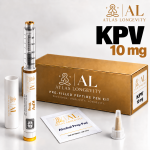
KPV 10mg Pen
Price range: Rp1,500,000.00 through Rp2,100,000.00 ~$90.91–$127.27
KPV 10mg Pen is a convenient, ready-to-use peptide commonly associated with inflammation balance, gut support, and recovery.
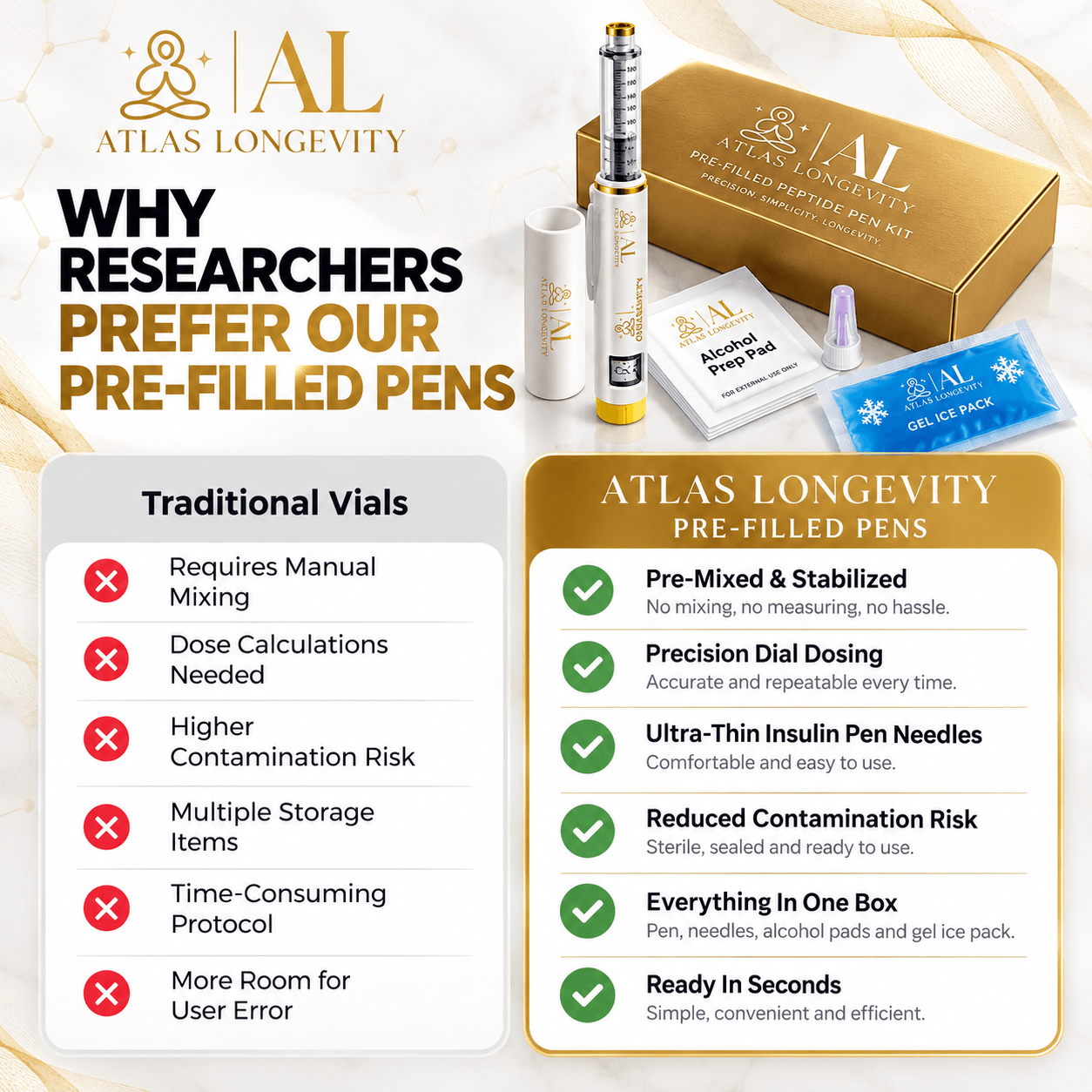
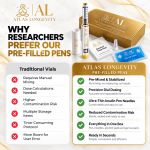
No mixing required — simple and easy to use.
KPV 10 mg Pen
Product Description
KPV (Lysine-Proline-Valine) is a short tripeptide derived from the C-terminal region of alpha-melanocyte-stimulating hormone (α-MSH). It is studied primarily for its potential role in inflammatory signalling, cytokine regulation, epithelial-barrier biology, and localized immune regulation.
Unlike broader melanocortin compounds, KPV is investigated for anti-inflammatory activity that may occur without activating the full range of melanocortin signalling pathways.
Preclinical research has examined KPV in models involving TNF-α, interleukin signalling, NF-κB activity, intestinal epithelial integrity, inflammatory bowel models, and dermatological inflammation. Pasted text
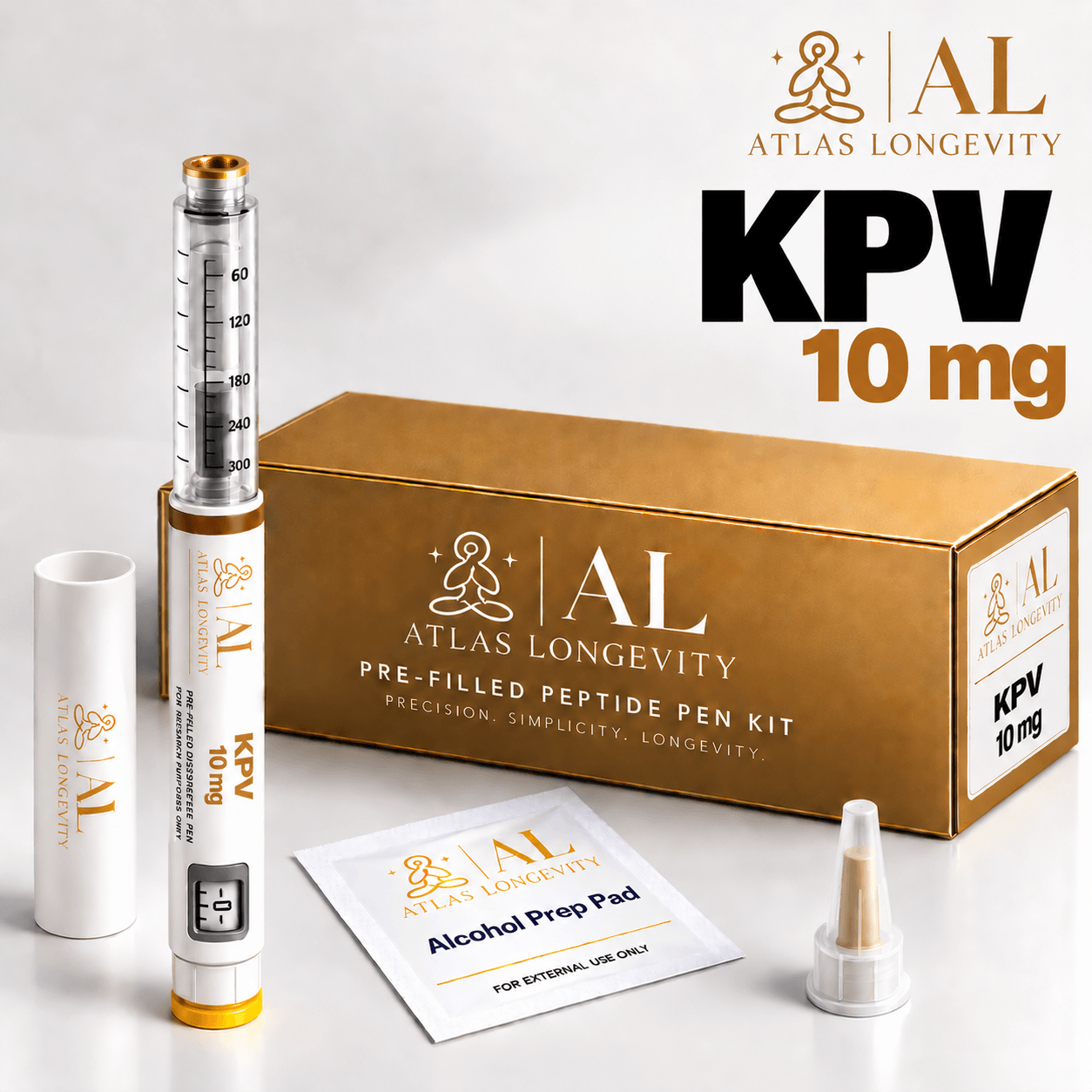
The Atlas Longevity KPV pen contains 10 mg in a 3 mL pre-mixed cartridge with 300 total units/clicks.
KPV remains an investigational research peptide. It should not be presented as an approved treatment for inflammatory bowel disease, dermatitis, autoimmune disease, chronic inflammation, or other medical conditions.
Clinical / Research Status
The evidence supplied for KPV is predominantly preclinical, with animal and in-vitro studies forming the strongest part of the research base.
| Evidence Type | Status Based on Supplied Material |
|---|---|
| Human randomized clinical research | Not established |
| Human observational research | Limited / indirect |
| Animal research | Yes |
| In-vitro research | Yes |
| Regulatory therapeutic approval | Not established |
The supplied source itself identifies KPV primarily with inflammatory-modulation and epithelial-barrier research. Pasted text
Evidence involving α-MSH or related melanocortin peptides should not automatically be treated as direct clinical evidence for KPV.
Evidence Type
The supplied material includes research involving:
- mouse colitis models;
- nanoparticle-delivered KPV in inflammatory bowel models;
- murine atopic dermatitis;
- LPS-stimulated macrophage cultures;
- keratinocyte and fibroblast assays;
- allergic contact dermatitis models;
- intestinal epithelial cell lines. Pasted text
This means most proposed applications should be described as experimental research areas rather than established human benefits.
Mechanism of Action
KPV is studied primarily for its effects on NF-κB-associated inflammatory signalling.
NF-κB is a transcription factor involved in controlling expression of numerous inflammatory genes.
According to the supplied material, experimental KPV activity has been associated with:
- inhibition of IKK-related activity;
- reduced IκB degradation;
- decreased NF-κB nuclear translocation;
- reduced transcription of TNF-α;
- changes in IL-6 and other inflammatory mediators;
- modulation of mast-cell activity. Pasted text
These pathways provide the main mechanistic basis for research into KPV’s potential anti-inflammatory properties.
Potential Benefits / Research Areas
Inflammatory Signalling Research
KPV is studied for its potential to regulate excessive inflammatory signalling rather than simply suppressing all immune activity.
Experimental models have reported changes in pro-inflammatory mediators such as:
TNF-α, IL-6, NF-κB and related cytokine pathways. Pasted text
This does not establish KPV as a clinically proven anti-inflammatory treatment.
Gut and Epithelial Barrier Research
One of the more prominent areas of KPV research involves intestinal epithelial biology.
Experimental inflammatory bowel models have investigated its potential influence on:
- epithelial integrity;
- mucosal recovery;
- tight-junction proteins;
- intestinal inflammatory signalling;
- barrier stability. Pasted text
These findings are primarily preclinical.
Cytokine Regulation Research
Cytokines coordinate communication between immune cells.
Excessive cytokine signalling can contribute to persistent inflammatory processes.
KPV has therefore been investigated for its ability to modify the intensity of certain inflammatory signals rather than completely eliminating normal immune communication. Pasted text
Skin Inflammation Research
KPV has also been investigated in experimental dermatological models.
Research involving keratinocytes and animal skin models has examined changes in:
- inflammatory-marker expression;
- mast-cell activity;
- edema;
- leukocyte infiltration;
- wound-associated signalling. Pasted text
Evidence from these models should not be presented as proof that injectable KPV treats human dermatological conditions.
Immune-Regulation Research
A central research concept surrounding KPV is immune modulation rather than broad immune suppression.
Its relatively small structure and focused signalling profile make it relevant to experimental models examining localized inflammatory regulation. Pasted text
The clinical significance of this selectivity remains uncertain.
Chronic Low-Grade Inflammation Research
KPV has also been investigated in experimental systems designed to model prolonged inflammatory stress.
These models are relevant to research examining how persistent inflammatory signalling affects epithelial barriers, metabolism, and tissue integrity. Pasted text
This does not establish KPV as a treatment for systemic or chronic inflammatory disease.
Research Data
| Study / Model | Reported Finding |
|---|---|
| DSS-induced colitis mouse model | Reduced colonic inflammation and TNF-α/IL-6 expression with improved mucosal recovery |
| Nanoparticle-delivered KPV in IBD models | Reduced histological damage and improved epithelial-barrier integrity |
| Murine atopic dermatitis model | Reduced lesion severity, mast-cell infiltration and Th2-associated cytokine activity |
| LPS-stimulated macrophage culture | Reduced NF-κB nuclear translocation and inflammatory cytokine output |
| Keratinocyte and fibroblast assays | Reduced inflammatory signalling with changes in wound-closure dynamics |
| Allergic contact dermatitis model | Reduced edema and leukocyte infiltration |
| Intestinal epithelial cell lines | Reduced NF-κB activation with restoration of tight-junction protein expression |
These findings are predominantly animal and in-vitro observations and should not be represented as established human therapeutic outcomes. Pasted text
Potential Stack / Combination Research
The supplied source discusses experimental research combinations involving:
- KPV + BPC-157;
- KPV + TB-500;
- KPV + LL-37;
- KPV + GHK-Cu. Pasted text
The proposed research rationale involves combining inflammatory signalling with tissue-repair, barrier, antimicrobial, or extracellular-matrix pathways.
However, the supplied evidence does not establish human safety, compatibility, efficacy, or validated dosing for these combinations.
They should therefore be treated only as experimental research concepts.
Atlas Longevity KPV Pen Dosage / Click Chart
The Atlas Longevity KPV pen contains:
10 mg KPV
3 mL cartridge volume
300 total clicks
1 click = 0.01 mL
Maximum selectable dial amount = 60 clicks
Pen Specification
| Pen Strength | Volume | Concentration | Amount Per Click |
|---|---|---|---|
| 10 mg | 3 mL | ≈3.333 mg/mL | ≈0.0333 mg / 33.3 mcg |
Concentration Calculation
10 mg ÷ 3 mL = 3.3333 mg/mL
Rounded:
≈3.333 mg/mL
Amount Per Click
10 mg ÷ 300 clicks = 0.033333 mg per click
Therefore:
1 click ≈0.0333 mg
or:
≈33.3 mcg KPV
KPV Click Conversion Chart
| Clicks | Volume | KPV Amount |
|---|---|---|
| 1 | 0.01 mL | ≈0.0333 mg / 33.3 mcg |
| 3 | 0.03 mL | 0.100 mg / 100 mcg |
| 5 | 0.05 mL | ≈0.1667 mg / 166.7 mcg |
| 6 | 0.06 mL | 0.200 mg / 200 mcg |
| 7 | 0.07 mL | ≈0.233 mg / 233 mcg |
| 8 | 0.08 mL | ≈0.267 mg / 267 mcg |
| 10 | 0.10 mL | ≈0.333 mg / 333 mcg |
| 15 | 0.15 mL | 0.500 mg / 500 mcg |
| 20 | 0.20 mL | ≈0.667 mg / 667 mcg |
| 30 | 0.30 mL | 1.000 mg |
| 40 | 0.40 mL | ≈1.333 mg |
| 50 | 0.50 mL | ≈1.667 mg |
| 60 | 0.60 mL | 2.000 mg |
Useful Conversions
- 3 clicks = 0.10 mg / 100 mcg
- 6 clicks = 0.20 mg / 200 mcg
- 15 clicks = 0.50 mg / 500 mcg
- 30 clicks = 1 mg
- 60 clicks = 2 mg
The maximum selectable amount in one dial operation is:
60 clicks = 0.60 mL = 2 mg KPV
This is a mathematical concentration conversion and not a dosing recommendation.
Protocol / Dosage Information
The supplied reference describes experimental quantities between approximately 0.10 mg and 1 mg across several proposed research protocols. Pasted text
Its original click values were based on a different 10 mg / 2 mL formulation and therefore must not be applied to the Atlas 3 mL pen.
Using the Atlas 10 mg / 3 mL / 300-click formulation:
| Source-Referenced Amount | Atlas Pen Mathematical Equivalent |
|---|---|
| 0.10 mg / 100 mcg | 3 clicks |
| 0.20 mg / 200 mcg | 6 clicks |
| 0.25 mg / 250 mcg | ≈7.5 clicks* |
| 0.50 mg / 500 mcg | 15 clicks |
| 1.00 mg | 30 clicks |
*A calculated value of 7.5 clicks cannot be selected exactly using whole pen units.
The source also includes frequency, duration, and cycling examples. Because these are experimental protocols rather than established clinical dosing standards, they should not be converted into self-administration instructions for the Atlas product.
The values above are concentration mathematics only.
Possible Side Effects
The supplied material describes relatively few adverse effects, but the evidence base is limited and predominantly preclinical.
Reported or proposed effects include:
- localized irritation or redness;
- temporary flushing or warmth;
- mild headache;
- gastrointestinal sensitivity in oral research formulations. Pasted text
The source states that hormonal, hepatic, or systemic adverse effects were not observed in the available data.
However, absence of observed adverse effects in limited studies does not establish absence of risk, particularly for repeated systemic exposure.
Important uncertainties remain around:
- long-term injectable exposure;
- immune-system effects;
- hypersensitivity;
- medication interactions;
- pregnancy and reproductive exposure;
- chronic inflammatory conditions;
- combination protocols;
- formulation-specific safety.
Product Attributes
| Attribute | Information |
|---|---|
| Compound Name | KPV |
| Full Name | Lysine-Proline-Valine |
| CAS Number | 67727-97-3 |
| Molecular Formula | C16H30N4O4 |
| Amino Acid Sequence | KPV |
| Molecular Weight | 342.43 g/mol |
| PubChem CID | 125672 |
| Half-Life listed by source | Approximately 30–60 minutes |
| Synonyms | Lysine-Proline-Valine, Lys-Pro-Val, α-MSH (11–13), KPV tripeptide |
| Compound Type | Synthetic research tripeptide / α-MSH C-terminal fragment |
| Research Focus | Inflammation, immune signalling and epithelial-barrier biology |
These specifications are reported in the supplied reference material.
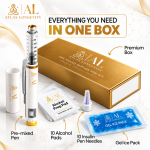
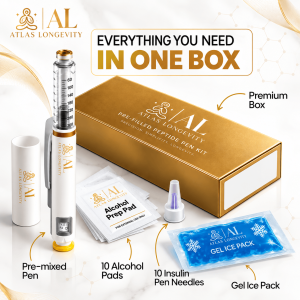
Included in the Box
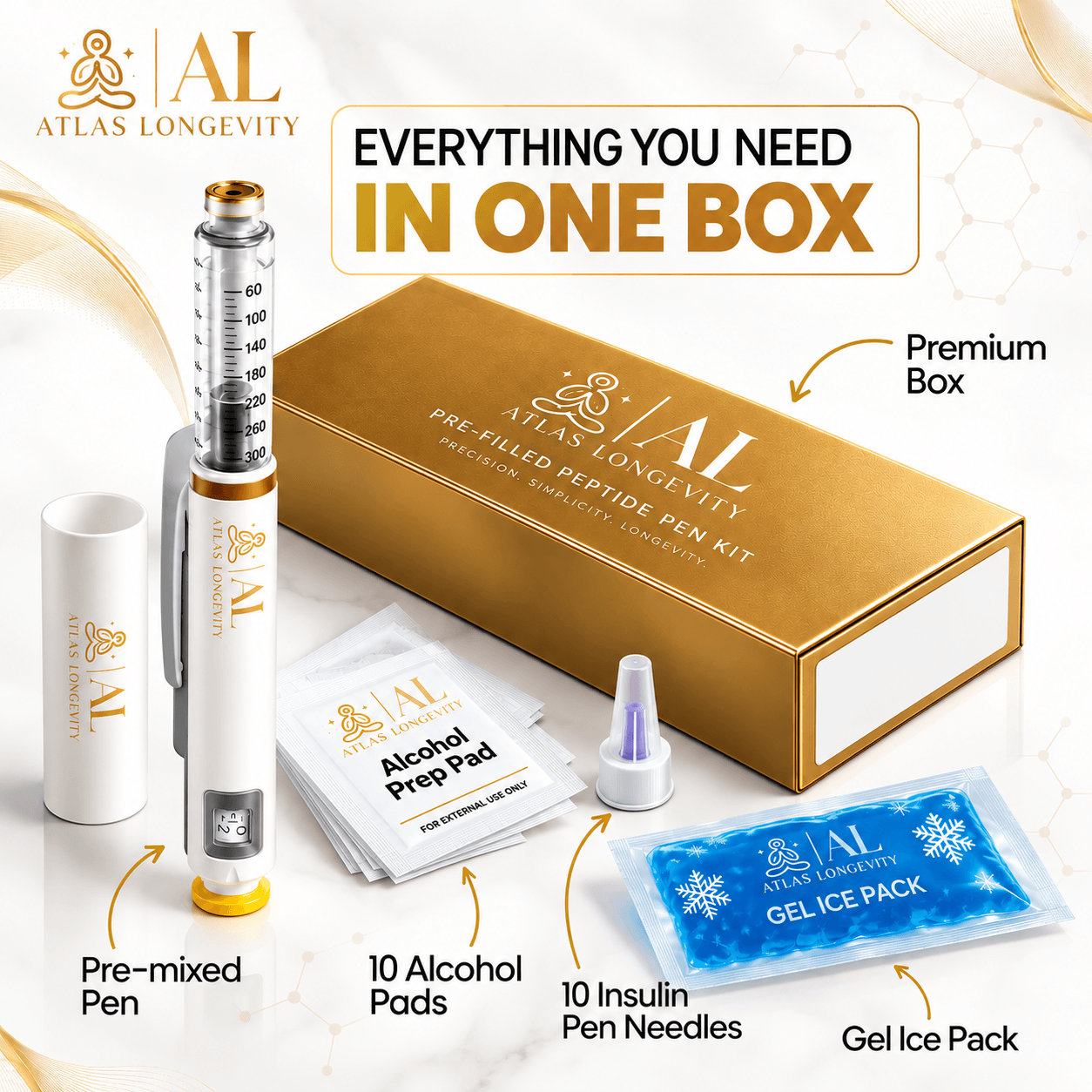
Each Atlas Longevity product is carefully packed to support secure storage, clean handling, and convenient research use. Inside the package, you’ll find the essential items needed for organized laboratory handling:
- 1× Ready-to-Use Injection Pen
- 10× Ultra-Fine Needles (33G, 4 mm)
- 10× Alcohol Prep Pads
- Protective Foam Insert to help keep the pen secure during transport
- Quick-Reference Instruction Panel inside the packaging
- Tamper-Evident Security Seal for added package protection
Each component is arranged in a clean, protective presentation designed to keep the product secure and easy to access.
Storage
Storage conditions should follow the instructions supplied specifically with the Atlas Longevity KPV formulation.
The reference product provides refrigeration and stability specifications for its own finished formulation. Those conditions should not automatically be transferred to Atlas Longevity without formulation-specific stability evidence.
Follow the temperature requirements, light-protection guidance, handling instructions, and shelf-life information printed on the Atlas Longevity product label or accompanying documentation.
Frequently Asked Questions
What is KPV?
KPV stands for Lysine-Proline-Valine.
It is a three-amino-acid peptide derived from the C-terminal region of α-MSH and is primarily studied for its effects on inflammatory and epithelial-barrier signalling. Pasted text
Is KPV the same as alpha-MSH?
No.
KPV is a short three-amino-acid fragment derived from α-MSH.
It retains some of the anti-inflammatory properties associated with the parent peptide while being investigated for a more focused signalling profile.
How does KPV work?
KPV is studied primarily for its ability to influence NF-κB signalling.
Experimental studies suggest that it may reduce NF-κB nuclear translocation and influence downstream inflammatory mediators such as TNF-α and IL-6. Pasted text
What is NF-κB?
NF-κB is an important transcription factor involved in regulating genes associated with inflammation, immune activity, cellular stress, and survival.
KPV research frequently focuses on its potential ability to moderate excessive NF-κB-associated inflammatory signalling.
What is KPV researched for?
Major research areas include:
- inflammatory signalling;
- NF-κB regulation;
- cytokine modulation;
- intestinal epithelial integrity;
- gut-barrier biology;
- inflammatory bowel models;
- skin inflammation;
- mast-cell activity.
Most of the evidence is currently preclinical.
Has KPV been studied in humans?
The supplied source does not establish a substantial controlled human clinical evidence base for KPV.
Most of the specific research presented involves animal and in-vitro models. Pasted text
Is KPV researched for gut health?
Yes.
KPV has been investigated extensively in experimental intestinal-inflammation and epithelial-barrier models.
Animal and cell studies described in the source report changes in inflammation, mucosal recovery, tight-junction proteins, and epithelial integrity. Pasted text
These findings do not establish KPV as an approved treatment for inflammatory bowel disease or other gastrointestinal conditions.
Is KPV researched for skin inflammation?
Yes.
Preclinical research includes keratinocyte studies, atopic dermatitis models, and allergic contact dermatitis models.
However, these findings should not be interpreted as proof of effectiveness for human dermatological conditions.
Does KPV suppress the immune system?
The supplied material characterizes KPV primarily as an immune-modulating research peptide, rather than a broad immune suppressant. Pasted text
Its actual systemic effects in humans remain insufficiently established.
How much KPV is in each Atlas Longevity pen?
Each Atlas Longevity KPV pen contains:
10 mg KPV in 3 mL.
What is the concentration of the KPV pen?
The concentration is:
10 mg ÷ 3 mL = approximately 3.333 mg/mL
How many clicks are in the KPV pen?
Each Atlas Longevity pen contains:
300 total clicks / units
with:
1 click = 0.01 mL
How much KPV is in one click?
Each click contains approximately:
0.0333 mg
or:
33.3 mcg KPV
How many clicks equal 100 mcg?
3 clicks = 100 mcg.
How many clicks equal 200 mcg?
6 clicks = 200 mcg.
How many clicks equal 500 mcg?
15 clicks = 500 mcg.
How many clicks equal 1 mg?
30 clicks = 1 mg.
These values are concentration calculations rather than dosing recommendations.
What is the maximum selectable amount on the KPV pen?
The maximum single dial selection is:
60 clicks
which equals:
0.60 mL
and:
2 mg KPV
This describes the mechanical range of the pen rather than a recommended amount.
How long does a KPV pen last?
The full cartridge contains:
300 clicks and 10 mg KPV.
The number of administrations depends on the number of clicks selected each time.
For cartridge-capacity calculations only:
- 3 clicks at a time = 100 administrations
- 5 clicks at a time = 60 administrations
- 10 clicks at a time = 30 administrations
- 15 clicks at a time = 20 administrations
- 30 clicks at a time = 10 administrations
- 60 clicks at a time = 5 administrations
These examples describe cartridge capacity only.
Does the product disappear when the dial returns to zero?
No.
The dial returns to zero after administration while the unused formulation remains inside the cartridge.
The remaining KPV stays in the pen until all 300 units have been used.
Can KPV be combined with BPC-157?
The supplied material discusses KPV + BPC-157 as an experimental research concept involving inflammatory and tissue-repair pathways. Pasted text
The evidence supplied does not establish validated human safety, efficacy, compatibility, or dosing for this combination.
Can KPV be combined with GHK-Cu?
The source also discusses KPV + GHK-Cu for experimental skin-inflammation and extracellular-matrix research.
Again, this is a research concept rather than an established clinical combination.
Is there an established human KPV dosage?
No universal approved human therapeutic dosage is established by the supplied material.
The source includes experimental quantities, but those should not be interpreted as a validated treatment protocol.
The Atlas click chart therefore provides concentration mathematics only.
How should the Atlas Longevity KPV pen be stored?
Follow the storage instructions supplied with the actual Atlas Longevity formulation.
The reference product specifies refrigeration and stability conditions for its own finished formulation, but these should not automatically be applied to Atlas without product-specific stability evidence.
Related products
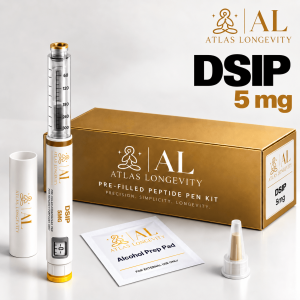
DSIP Pen
Price range: Rp1,300,000.00 through Rp3,100,000.00 ~$78.79–$187.88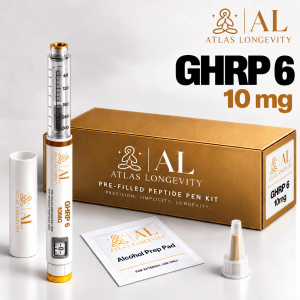
GHRP 6 10MG
Price range: Rp1,900,000.00 through Rp2,500,000.00 ~$115.15–$151.52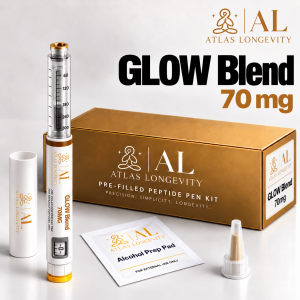
Glow Plus 70mg Pen (GHK-Cu + BPC-157 + TB-500)
Price range: Rp3,000,000.00 through Rp3,600,000.00 ~$181.82–$218.18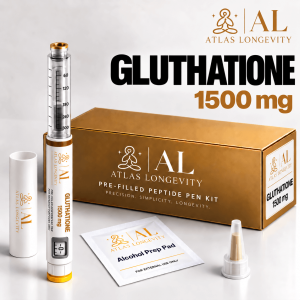
Glutathione 1500mg Pen
Price range: Rp2,500,000.00 through Rp3,100,000.00 ~$151.52–$187.88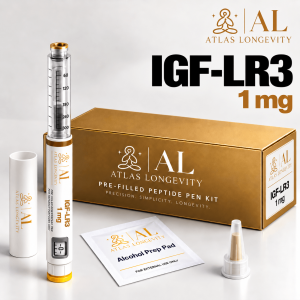
IGF-LR3 1mg Pen
Price range: Rp2,700,000.00 through Rp3,300,000.00 ~$163.64–$200.00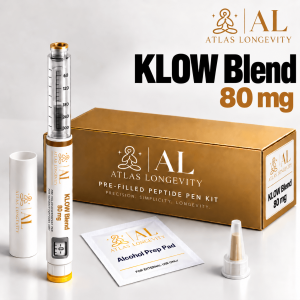
KLOW 80mg Pen (GHK-Cu + KPV + BPC-157 + TB-500)
Price range: Rp3,200,000.00 through Rp3,800,000.00 ~$193.94–$230.30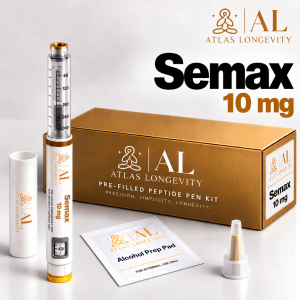
Semax 10mg Pen
Price range: Rp1,600,000.00 through Rp2,200,000.00 ~$96.97–$133.33
 Peptide Vials
 Peptide Nasal Sprays
 Peptide Protocols
 Bundles