

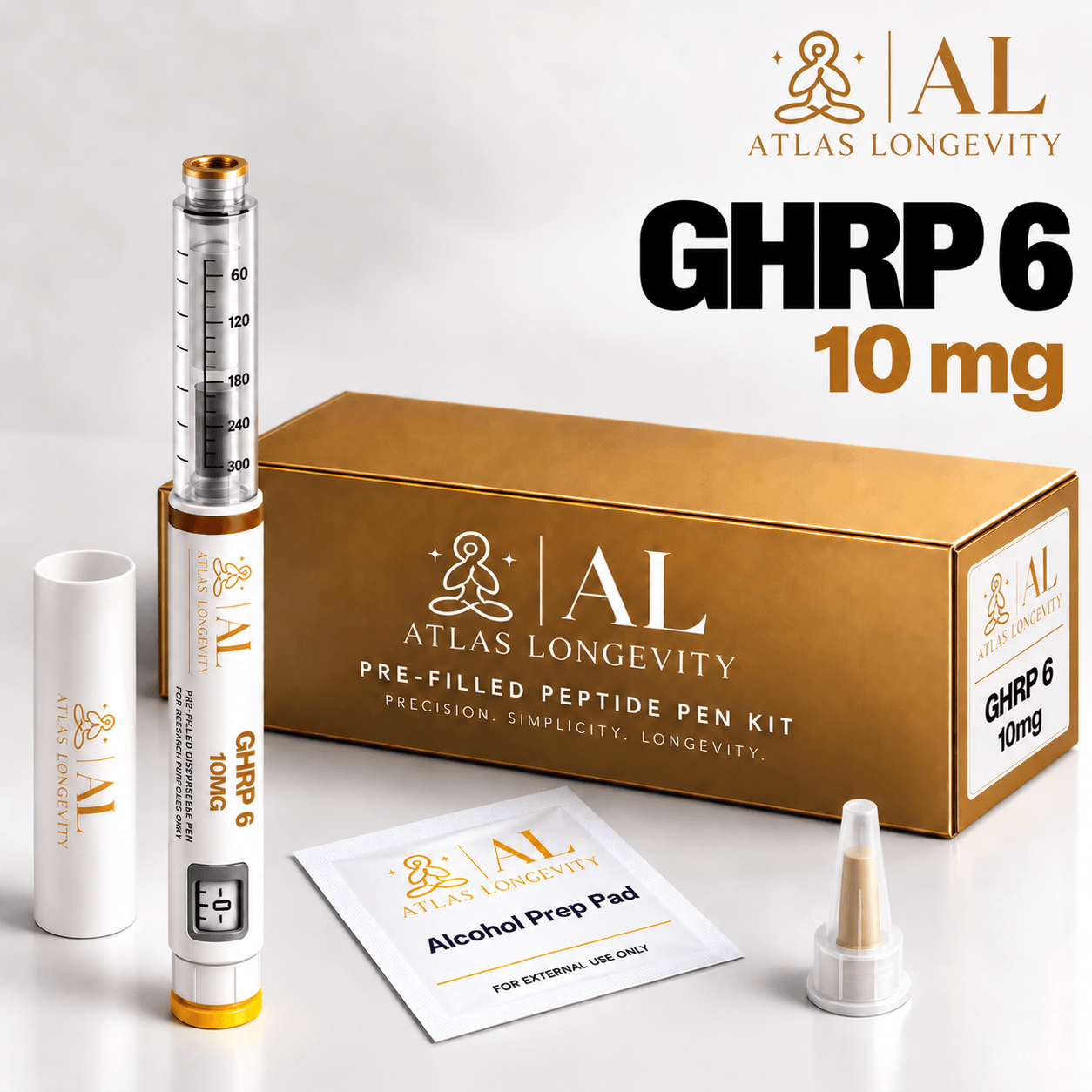
GHRP 6 10MG
Price range: Rp1,900,000.00 through Rp2,500,000.00 ~$115.15–$151.52
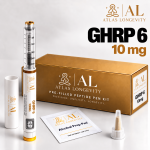
GHRP-6 10mg Pen is a convenient, ready-to-use peptide commonly associated with growth hormone support, recovery, and performance.
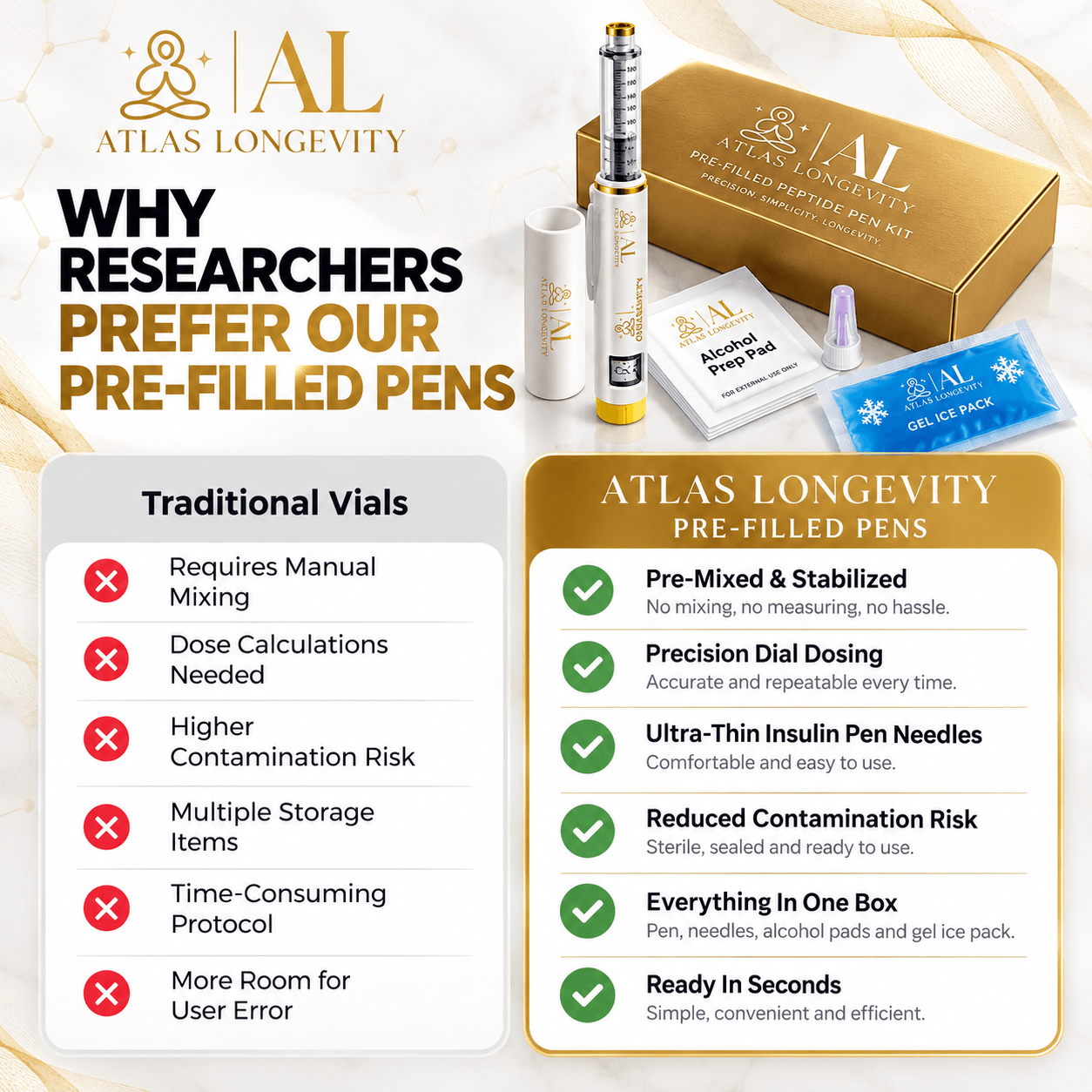
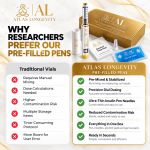
No mixing required — simple and easy to use.
✔ No mixing required
✔ Easy-to-use pen
✔ GH & recovery support
✔ Fast Bali delivery
GHRP-6 Pen
Product Description
GHRP-6 (Growth Hormone-Releasing Peptide-6) is a synthetic peptide and growth hormone secretagogue studied for its interaction with the growth hormone secretagogue receptor (GHS-R1a).
GHRP-6 is part of the ghrelin-mimetic family. By activating GHS-R1a receptors within the hypothalamic and pituitary systems, it has been investigated for its ability to stimulate pulsatile endogenous growth hormone release while also influencing neural pathways involved in appetite and energy balance. Pasted text
Research areas include growth hormone and IGF-1 signalling, appetite regulation, metabolic signalling, endocrine function, recovery biology, and tissue-repair pathways.
Atlas Longevity GHRP-6 pens use the standard 3 mL / 300-click cartridge system and are available in:
- 5 mg GHRP-6
- 10 mg GHRP-6
GHRP-6 remains an investigational peptide and should not be presented as an approved treatment for growth hormone deficiency, appetite disorders, muscle growth, recovery, or other medical conditions.
Clinical / Research Status
GHRP-6 has been investigated in animal studies, laboratory research, and exploratory human research involving growth hormone secretion and endocrine signalling.
The supplied material describes the evidence base as primarily preclinical and exploratory, with limited human research. Pasted text
| Evidence Type | Status Based on Supplied Material |
|---|---|
| Human controlled research | Limited / exploratory |
| Human observational research | Limited |
| Animal research | Yes |
| In-vitro research | Yes |
| Regulatory therapeutic approval | Not established |
Human GH-response studies demonstrate biological activity, but this does not establish approved therapeutic efficacy or long-term safety.
Evidence Type
The supplied research material includes:
- healthy adult GH-response studies;
- exploratory human endocrine research;
- pediatric GH-related research;
- rodent appetite models;
- pituitary-cell studies;
- aged animal models;
- experimental cardiovascular research;
- wound-healing animal models. Pasted text
The findings should be interpreted according to the specific study population and model.
Mechanism of Action
GHRP-6 acts primarily through the growth hormone secretagogue receptor GHS-R1a, a receptor also activated by the naturally occurring hormone ghrelin.
Receptor activation within the hypothalamus and pituitary can stimulate the release of endogenous growth hormone in pulses rather than supplying growth hormone directly.
Increased GH signalling can subsequently influence hepatic production of insulin-like growth factor-1 (IGF-1) and downstream cellular pathways associated with protein synthesis, metabolism, and tissue biology. Pasted text
GHRP-6 is less selective than some other secretagogues. Experimental research indicates that it may also influence additional endocrine pathways, including ACTH, cortisol, prolactin, and appetite-related signalling.
This broader activity is an important distinction when interpreting GHRP-6 research.
Potential Benefits / Research Areas
Growth Hormone Secretion Research
GHRP-6 is primarily investigated for its ability to stimulate the body’s own growth hormone release.
Human and experimental studies have reported increases in circulating GH following GHRP-6 administration. The compound is therefore useful in research examining pituitary secretory responses and endogenous GH pulsatility. Pasted text
This does not establish GHRP-6 as an approved growth hormone treatment.
GH / IGF-1 Axis Research
Growth hormone can stimulate hepatic production of IGF-1, connecting GHRP-6 research with the broader GH–IGF-1 endocrine axis.
Experimental research examines downstream pathways involved in:
- protein synthesis;
- cellular growth;
- connective-tissue biology;
- metabolic regulation;
- recovery signalling.
These mechanisms should not be translated into guaranteed muscle growth or recovery outcomes.
Appetite and Ghrelin Signalling
A major feature distinguishing GHRP-6 from more selective secretagogues is its effect on appetite-related neural signalling.
Because GHRP-6 mimics aspects of ghrelin receptor activation, animal and exploratory human research has examined its influence on hunger and food-intake signalling. Pasted text
This makes GHRP-6 relevant to research into the relationship between endocrine signalling, energy intake, and metabolic regulation.
Metabolic Research
Growth hormone and ghrelin systems both participate in energy metabolism.
GHRP-6 therefore provides an experimental model for studying interactions between:
- GH secretion;
- lipid metabolism;
- nutrient utilisation;
- appetite;
- energy balance.
Its metabolic effects are complex because appetite stimulation can occur alongside GH-related metabolic signalling.
Recovery and Tissue Biology
Growth hormone and IGF-1 participate in pathways associated with cellular growth and tissue repair.
For this reason, GHRP-6 has been studied in experimental models involving recovery, connective tissue, collagen deposition, and wound healing. Pasted text
Animal recovery findings should not be interpreted as established human clinical benefits.
Hypothalamic-Pituitary Research
GHRP-6 is of particular interest because its activity involves both hypothalamic and pituitary signalling.
This makes it useful for research examining communication between central nervous system pathways and pituitary somatotroph cells involved in GH secretion. Pasted text
Broader Endocrine Signalling
Unlike highly selective GH secretagogues, GHRP-6 may affect additional hormone pathways.
Experimental models have reported effects involving:
- ACTH;
- cortisol;
- prolactin;
- GH;
- IGF-1. Pasted text
This broader endocrine activity is scientifically relevant but also means GHRP-6 should not be described as affecting GH alone.
Research Data
| Study / Model | Reported Finding |
|---|---|
| Healthy adult male volunteers | Increased GH secretion following subcutaneous exposure, with a dose-related secretory response |
| Rodent appetite models | Increased food intake associated with ghrelin-receptor activation |
| In-vitro pituitary cells | Increased GH release through GHS-R1a-associated signalling |
| Rat cardiac-ischaemia model | Changes in infarct size and cardiomyocyte-survival markers |
| GH-related pediatric research | Increased serum GH and IGF-1 measurements were reported |
| Aged rat models | Partial restoration of GH pulsatility and changes in lean-tissue markers |
| Rodent wound-healing model | Increased collagen deposition and tissue-repair activity |
The supplied evidence includes both human and preclinical research, but animal findings should not be interpreted as established human benefits. Pasted text
Potential Stack / Combination Research
The supplied reference discusses experimental combinations involving GHRP-6 with:
- CJC-1295;
- Ipamorelin;
- BPC-157;
- MOD-GRF (1-29). Pasted text
The proposed research rationale generally involves combining different pathways related to GHRH signalling, ghrelin-receptor activation, or tissue-repair biology.
However, the supplied material does not establish validated human safety, efficacy, compatibility, or optimal dosing for these combinations.
They should therefore be considered experimental research concepts rather than recommended stacks.
Atlas Longevity GHRP-6 Pen Dosage / Click Chart
All Atlas Longevity pens use:
3 mL cartridge volume
300 total clicks
1 click = 0.01 mL
Maximum selectable amount = 60 clicks per dial operation
GHRP-6 5 mg Pen
| Pen Strength | Volume | Concentration | Amount Per Click |
|---|---|---|---|
| 5 mg | 3 mL | ≈1.667 mg/mL | ≈0.0167 mg / 16.7 mcg |
Calculation
5 mg ÷ 3 mL = 1.6667 mg/mL
5 mg ÷ 300 clicks = 0.016667 mg per click
Therefore:
1 click ≈ 0.0167 mg = 16.7 mcg
5 mg Pen Click Conversion
| Clicks | Volume | GHRP-6 Amount |
|---|---|---|
| 1 | 0.01 mL | ≈0.0167 mg / 16.7 mcg |
| 5 | 0.05 mL | ≈0.0833 mg / 83.3 mcg |
| 6 | 0.06 mL | 0.100 mg / 100 mcg |
| 9 | 0.09 mL | 0.150 mg / 150 mcg |
| 10 | 0.10 mL | ≈0.1667 mg / 166.7 mcg |
| 15 | 0.15 mL | 0.250 mg / 250 mcg |
| 18 | 0.18 mL | 0.300 mg / 300 mcg |
| 20 | 0.20 mL | ≈0.333 mg / 333 mcg |
| 30 | 0.30 mL | 0.500 mg / 500 mcg |
| 40 | 0.40 mL | ≈0.667 mg / 667 mcg |
| 50 | 0.50 mL | ≈0.833 mg / 833 mcg |
| 60 | 0.60 mL | 1.000 mg |
GHRP-6 10 mg Pen
| Pen Strength | Volume | Concentration | Amount Per Click |
|---|---|---|---|
| 10 mg | 3 mL | ≈3.333 mg/mL | ≈0.0333 mg / 33.3 mcg |
Calculation
10 mg ÷ 3 mL = 3.3333 mg/mL
10 mg ÷ 300 clicks = 0.033333 mg per click
Therefore:
1 click ≈ 0.0333 mg = 33.3 mcg
10 mg Pen Click Conversion
| Clicks | Volume | GHRP-6 Amount |
|---|---|---|
| 1 | 0.01 mL | ≈0.0333 mg / 33.3 mcg |
| 3 | 0.03 mL | 0.100 mg / 100 mcg |
| 5 | 0.05 mL | ≈0.1667 mg / 166.7 mcg |
| 6 | 0.06 mL | 0.200 mg / 200 mcg |
| 9 | 0.09 mL | 0.300 mg / 300 mcg |
| 10 | 0.10 mL | ≈0.333 mg / 333 mcg |
| 15 | 0.15 mL | 0.500 mg / 500 mcg |
| 20 | 0.20 mL | ≈0.667 mg / 667 mcg |
| 30 | 0.30 mL | 1.000 mg |
| 40 | 0.40 mL | ≈1.333 mg |
| 50 | 0.50 mL | ≈1.667 mg |
| 60 | 0.60 mL | 2.000 mg |
Useful Conversions
5 mg pen:
- 6 clicks = 0.10 mg
- 9 clicks = 0.15 mg
- 15 clicks = 0.25 mg
- 18 clicks = 0.30 mg
- 30 clicks = 0.50 mg
- 60 clicks = 1.00 mg
10 mg pen:
- 3 clicks = 0.10 mg
- 6 clicks = 0.20 mg
- 9 clicks = 0.30 mg
- 15 clicks = 0.50 mg
- 30 clicks = 1.00 mg
- 60 clicks = 2.00 mg
These are concentration conversions and not dosing recommendations.
Protocol / Dosage Information
The supplied source discusses experimental quantities of approximately 0.1 mg to 0.3 mg in several research protocols. Pasted text
Its original click calculations were based on a different 2 mL formulation, so they do not apply to Atlas Longevity pens.
Using the Atlas 3 mL / 300-click system:
| Source-Referenced Amount | 5 mg Atlas Pen | 10 mg Atlas Pen |
|---|---|---|
| 0.10 mg | 6 clicks | 3 clicks |
| 0.15 mg | 9 clicks | ≈4.5 clicks* |
| 0.20 mg | 12 clicks | 6 clicks |
| 0.25 mg | 15 clicks | ≈7.5 clicks* |
| 0.30 mg | 18 clicks | 9 clicks |
*These quantities do not correspond exactly to whole clicks on the 10 mg pen.
The table translates quantities mentioned in the supplied material into the Atlas pen concentration only.
It does not establish a recommended human dose, administration frequency, treatment duration, cycle, or timing strategy.
Possible Side Effects
The supplied material describes several effects reported in animal and limited human GHRP-6 research.
These include:
- increased appetite or hunger;
- temporary changes in cortisol and prolactin;
- mild fluid retention;
- flushing;
- localized injection-site irritation or tingling;
- temporary fatigue or drowsiness. Pasted text
The source does not establish a complete long-term human safety profile.
Because GHRP-6 can influence several endocrine pathways, uncertainty remains around:
- long-term endocrine effects;
- glucose and metabolic responses;
- medication interactions;
- contraindications;
- reproductive effects;
- repeated exposure;
- combination protocols.
Claims that severe adverse effects have not been observed in limited datasets should not be interpreted as proof that such risks cannot occur.
Product Attributes
| Attribute | Information |
|---|---|
| Compound Name | GHRP-6 |
| Full Name | Growth Hormone-Releasing Peptide-6 |
| CAS Number | 87616-84-0 |
| Molecular Formula | C46H56N12O6 |
| Amino Acid Sequence | HWAWFK-NH2 |
| Molecular Weight | 873.0 g/mol |
| PubChem CID | 4345065 |
| Half-Life listed by source | Approximately 15–60 minutes |
| Synonyms | Growth Hormone Releasing Peptide-6, GHRP6, SKF-110679, Ghrelin Mimetic Hexapeptide |
| Compound Type | Synthetic growth hormone secretagogue / ghrelin-receptor agonist |
| Research Focus | GH and IGF-1 signalling, appetite, endocrine function, metabolism and recovery |
These specifications are reported in the supplied reference material.
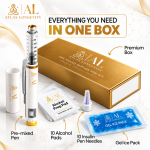
Included in the Box
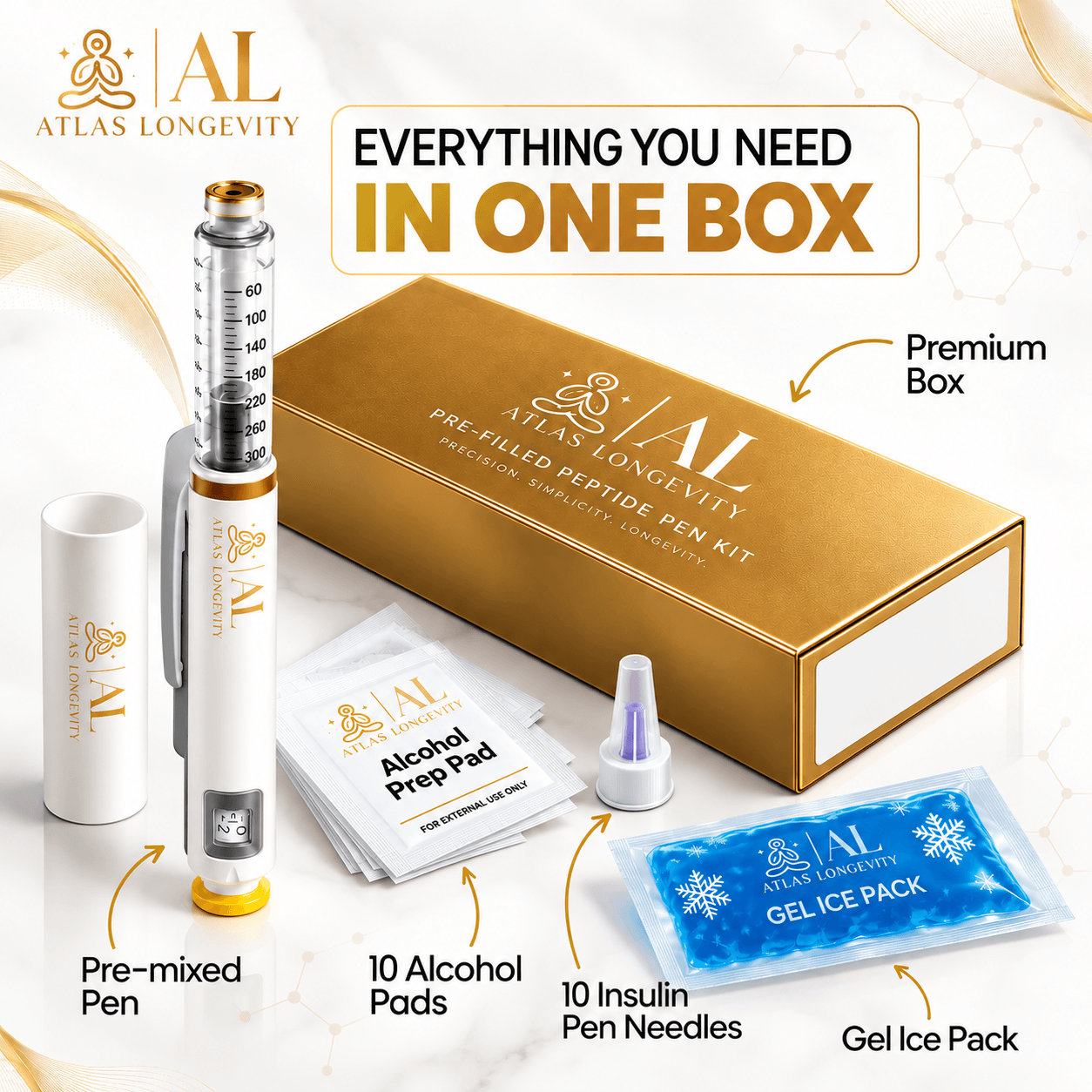
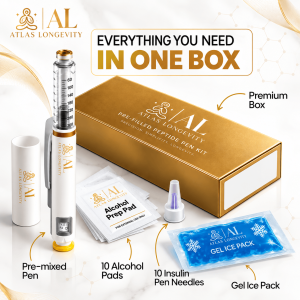
- 1× Ready-to-Use Injection Pen
- 10× Ultra-Fine Needles (33G, 4 mm)
- 10× Alcohol Prep Pads
- Protective Foam Insert to help keep the pen secure during transport
- Quick-Reference Instruction Panel inside the packaging
- Tamper-Evident Security Seal for added package protection
Each component is arranged in a clean, protective presentation designed to keep the product secure and easy to access.
Storage
Storage conditions should follow the instructions supplied specifically with the Atlas Longevity GHRP-6 formulation.
The reference source provides refrigeration and stability specifications for its own pre-mixed product, but those conditions should not automatically be transferred to the Atlas Longevity formulation without product-specific stability evidence.
Follow the storage temperature, light-protection requirements, handling instructions, and shelf-life information shown on the Atlas Longevity product label or accompanying documentation.
Frequently Asked Questions
What is GHRP-6?
GHRP-6 is a synthetic growth hormone secretagogue peptide that activates the GHS-R1a receptor.
It is researched primarily for its influence on endogenous growth hormone secretion, appetite signalling, endocrine pathways, and metabolism.
How does GHRP-6 work?
GHRP-6 activates ghrelin-sensitive GHS-R1a receptors in the hypothalamus and pituitary.
This can stimulate pulsatile release of endogenous growth hormone and influence downstream IGF-1 signalling. Pasted text
Is GHRP-6 growth hormone?
No.
GHRP-6 is not HGH.
It is a secretagogue, meaning researchers study it for its ability to stimulate the body’s own growth-hormone signalling.
Does GHRP-6 increase appetite?
Appetite signalling is one of the better-known areas of GHRP-6 research.
Activation of ghrelin receptors can influence hypothalamic pathways involved in hunger and food intake. Pasted text
Individual human responses cannot be predicted from this research alone.
What is GHRP-6 researched for?
Research areas include:
- endogenous GH release;
- IGF-1 signalling;
- appetite regulation;
- ghrelin-receptor biology;
- metabolic regulation;
- pituitary function;
- recovery-related signalling;
- connective-tissue and wound-healing models.
Has GHRP-6 been studied in humans?
Yes.
The supplied material describes exploratory human research involving growth-hormone responses alongside animal and in-vitro research. Pasted text
However, the human evidence remains limited compared with established therapeutic medicines.
How much GHRP-6 is in each Atlas Longevity pen?
Two variants are described:
5 mg GHRP-6 in 3 mL
and:
10 mg GHRP-6 in 3 mL
How many clicks are in each GHRP-6 pen?
Every Atlas Longevity pen contains:
300 total clicks / units
with:
1 click = 0.01 mL
How much GHRP-6 is in one click of the 5 mg pen?
5 mg ÷ 300 = approximately 0.0167 mg
Therefore:
1 click ≈16.7 mcg GHRP-6
How much GHRP-6 is in one click of the 10 mg pen?
10 mg ÷ 300 = approximately 0.0333 mg
Therefore:
1 click ≈33.3 mcg GHRP-6
How many clicks equal 0.1 mg?
For the 5 mg pen:
6 clicks = 0.10 mg
For the 10 mg pen:
3 clicks = 0.10 mg
These are concentration calculations rather than dosing recommendations.
How many clicks equal 0.3 mg?
For the 5 mg pen:
18 clicks = 0.30 mg
For the 10 mg pen:
9 clicks = 0.30 mg
What is the maximum selectable amount on the pen?
The maximum single dial selection is:
60 clicks = 0.60 mL
For the 5 mg pen, this equals:
1 mg GHRP-6
For the 10 mg pen, this equals:
2 mg GHRP-6
This describes the mechanical pen range rather than a recommended dose.
How long does a GHRP-6 pen last?
Every pen contains 300 total clicks.
The number of administrations available depends on the number of clicks selected each time.
For cartridge-capacity calculation only:
- 3 clicks at a time = 100 administrations
- 6 clicks at a time = 50 administrations
- 10 clicks at a time = 30 administrations
- 15 clicks at a time = 20 administrations
- 30 clicks at a time = 10 administrations
- 60 clicks at a time = 5 administrations
These examples describe pen capacity only.
Does the pen become empty when the dial returns to zero?
No.
The dial returns to zero following administration while the remaining formulation stays inside the cartridge.
The pen continues to contain the unused product until all 300 units have been used.
How is GHRP-6 different from Ipamorelin?
Both compounds are growth hormone secretagogues associated with the GHS-R1a pathway.
However, the supplied material describes GHRP-6 as having broader endocrine activity, including possible effects on appetite, ACTH, cortisol, and prolactin, whereas Ipamorelin is generally researched for greater selectivity. Pasted text
Can GHRP-6 be combined with CJC-1295?
The supplied source discusses this combination in experimental research because the compounds act through different growth-hormone signalling pathways. Pasted text
However, this does not establish validated human safety, efficacy, or dosing for the combination.
Is there an established human dosage for GHRP-6?
The supplied source describes research quantities, but it does not establish an approved or universally accepted human therapeutic dosing standard.
The click tables above should therefore be treated as pen concentration conversions, not medical instructions.
How should the Atlas Longevity GHRP-6 pen be stored?
Follow the storage instructions supplied with the actual Atlas Longevity formulation.
The source manufacturer’s refrigeration and stability information relates to its own product and should not automatically be transferred to Atlas without product-specific stability data.
Related products
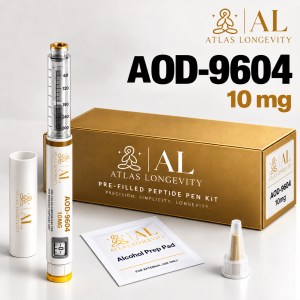
AOD-9604 10mg Pen
Price range: Rp3,200,000.00 through Rp3,800,000.00 ~$193.94–$230.30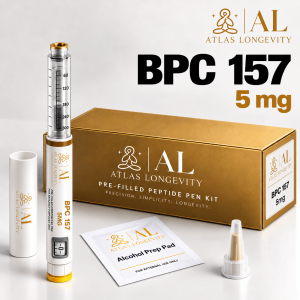
BPC-157 Pen
Price range: Rp1,200,000.00 through Rp3,500,000.00 ~$72.73–$212.12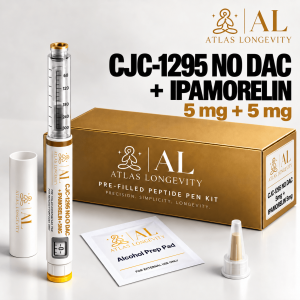
CJC-1295 No DAC 5mg + Ipamorelin 5mg Pen
Price range: Rp1,900,000.00 through Rp2,500,000.00 ~$115.15–$151.52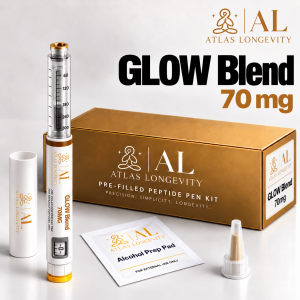
Glow Plus 70mg Pen (GHK-Cu + BPC-157 + TB-500)
Price range: Rp3,000,000.00 through Rp3,600,000.00 ~$181.82–$218.18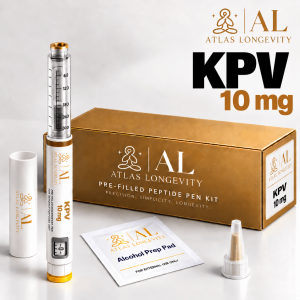
KPV 10mg Pen
Price range: Rp1,500,000.00 through Rp2,100,000.00 ~$90.91–$127.27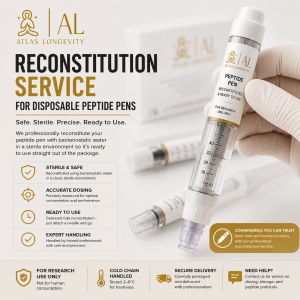
Reconstitution Service for Disposable Peptide Pens
Rp250,000.00 ~$15.15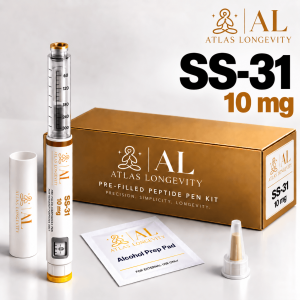
SS-31 Pen
Price range: Rp1,800,000.00 through Rp4,050,000.00 ~$109.09–$245.45
 Peptide Vials
 Peptide Nasal Sprays
 Peptide Protocols
 Bundles