

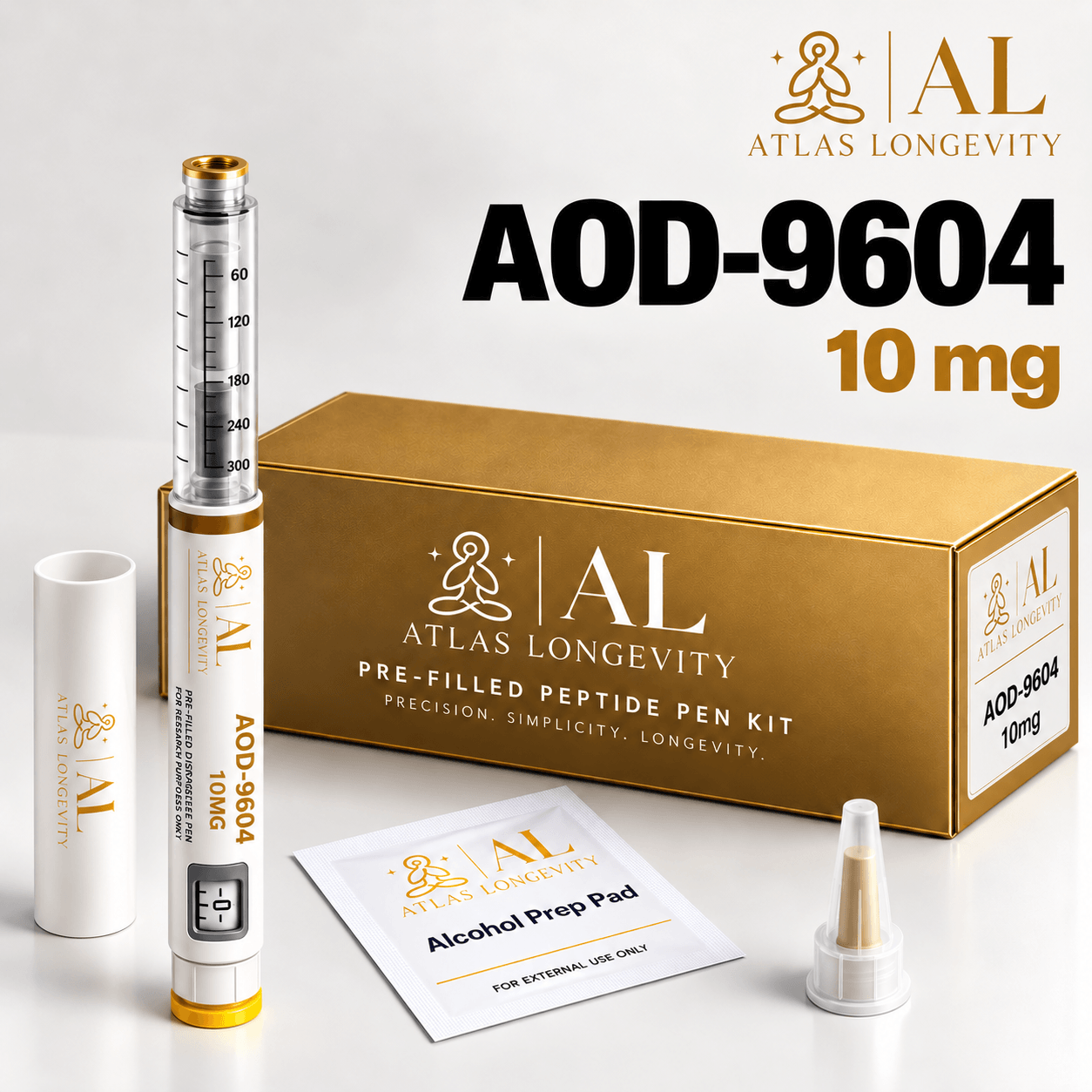
AOD-9604 10mg Pen
Price range: Rp3,200,000.00 through Rp3,800,000.00 ~$193.94–$230.30
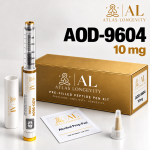
AOD-9604 10mg Pen is a convenient, ready-to-use compound commonly associated with fat metabolism and body composition support.
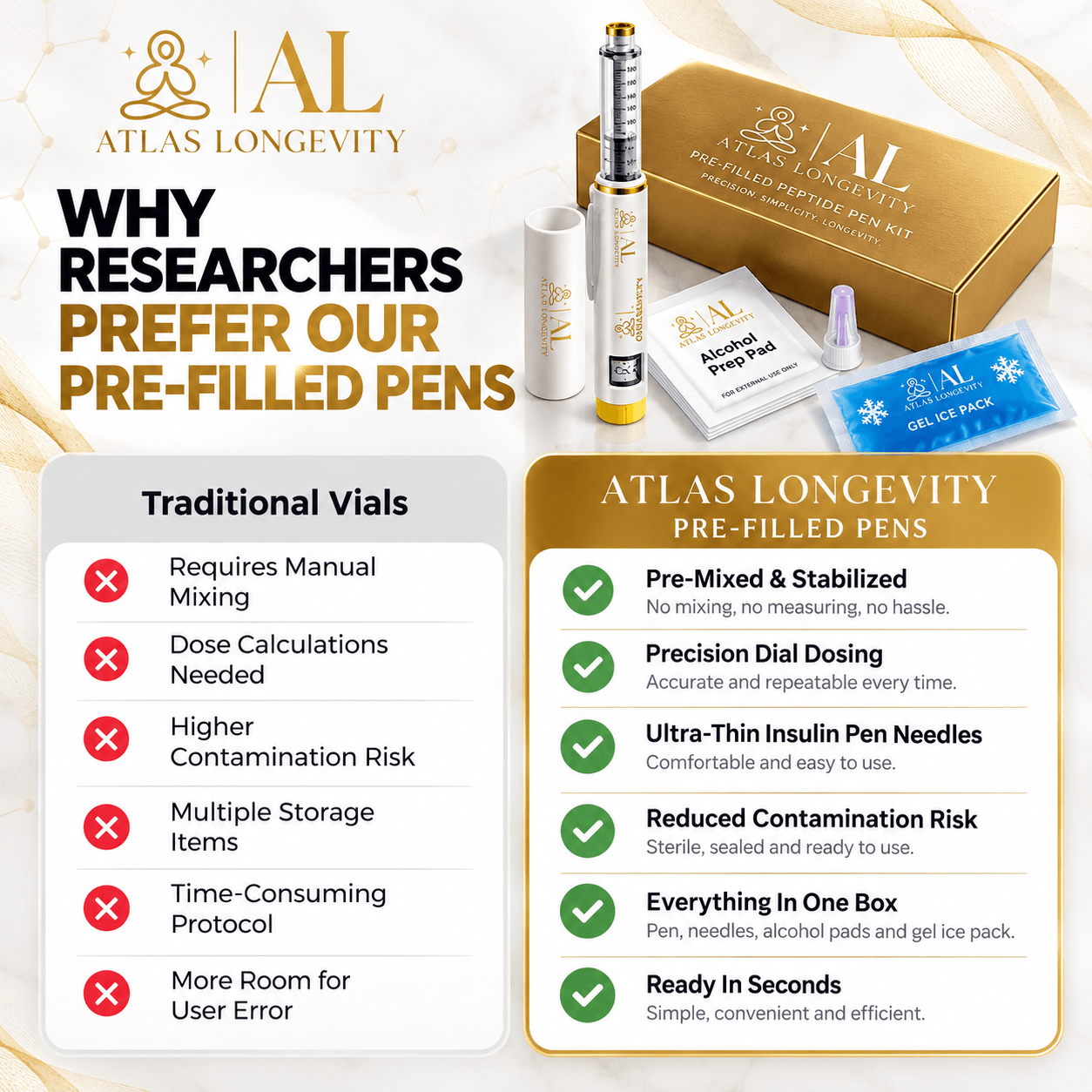
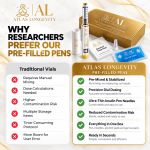
No mixing required — simple and easy to use.
✔ No mixing required
✔ Easy-to-use pen
✔ Fast Bali delivery
AOD-9604 5 mg Pen
Product Description
AOD-9604 is a synthetic peptide fragment derived from the C-terminal region of human growth hormone and developed for research into the metabolic signalling associated with fat metabolism.
Unlike full-length growth hormone, AOD-9604 was designed to investigate specific metabolic actions without reproducing the broader growth-promoting activity associated with HGH. Research has focused particularly on lipolysis, lipogenesis, adipose-tissue metabolism, metabolic regulation, and body-composition pathways. Pasted text
AOD-9604 has also attracted research interest outside metabolic biology, including experimental investigation of cartilage, connective tissue, fibroblast activity, and tissue-repair mechanisms. Pasted text
The Atlas Longevity AOD-9604 pen contains 5 mg in a 3 mL cartridge with 300 total selectable units/clicks.
Clinical / Research Status
AOD-9604 has been investigated in both human and preclinical research, including studies related to obesity, metabolic regulation and safety.
Based on the supplied reference material, the evidence base includes:
| Evidence Type | Status |
|---|---|
| Human randomized clinical trials | Yes |
| Observational research | Yes |
| Animal research | Yes |
| In-vitro research | Yes |
| Regulatory therapeutic approval | Not established |
The presence of human research does not mean AOD-9604 is an approved treatment for obesity, fat loss, joint conditions, or other medical conditions.
Experimental and preclinical findings should also not be interpreted as guaranteed human outcomes.
Evidence Type
Research discussed in the supplied material includes:
- controlled human safety and metabolic studies;
- obesity-related human clinical research;
- animal models of obesity and high-fat-diet exposure;
- adipocyte and cellular research;
- comparative research involving growth hormone;
- experimental connective-tissue and cartilage investigation. Pasted text
Evidence strength varies considerably between these areas. Metabolic mechanisms observed in cells or animals should not automatically be treated as established clinical benefits.
Mechanism of Action
AOD-9604 represents a modified growth-hormone fragment associated with the hormone’s metabolic region.
Its principal research mechanism involves the regulation of two opposing processes:
Lipolysis — the breakdown of stored triglycerides into fatty acids that can become available for cellular energy metabolism.
Lipogenesis — the creation and storage of new fat within adipose tissue.
The supplied research also associates AOD-9604 with beta-adrenergic signalling and AMP-activated protein kinase (AMPK), both of which are relevant to cellular energy regulation and lipid metabolism. Pasted text
A key area of scientific interest is whether these metabolic effects can be studied independently from the broader anabolic and endocrine actions of full-length growth hormone.
Potential Benefits / Research Areas
Fat Metabolism Research
AOD-9604 is primarily investigated for its effects on adipose-tissue metabolism.
Experimental research has examined whether the peptide can increase the mobilisation of stored lipids while simultaneously reducing pathways involved in new lipid accumulation.
This makes AOD-9604 relevant to research investigating lipolysis, fatty-acid utilisation and metabolic regulation. Pasted text
These mechanisms should not be interpreted as a guarantee of fat loss in humans.
Adipose-Tissue Regulation
Animal and early human research described in the supplied material has investigated changes in abdominal and visceral adipose tissue.
The proposed mechanism involves altered lipolytic signalling and increased utilisation of fatty acids within metabolically active tissues. Pasted text
Claims of reliable or “site-specific” human fat reduction would require stronger clinical evidence than the source provides.
Body-Composition Research
Some experimental studies have investigated whether reductions in adipose tissue can occur without corresponding reductions in lean tissue.
This has created research interest around AOD-9604 in body-composition models. Pasted text
However, preservation of muscle mass should not be presented as a guaranteed effect in humans.
Lipid and Glucose Metabolism
AOD-9604 research has also examined markers associated with:
- lipid utilisation;
- glucose handling;
- insulin-related metabolic pathways;
- circulating lipid levels;
- cellular energy balance. Pasted text
The supplied evidence does not establish AOD-9604 as a treatment for diabetes, insulin resistance, cholesterol disorders or other metabolic diseases.
Growth Hormone Fragment Research
One reason AOD-9604 remains scientifically interesting is its relationship with growth hormone biology.
It was developed to investigate whether metabolic signalling associated with the C-terminal region of HGH could be studied without reproducing the full spectrum of growth-hormone activity.
This includes particular interest in whether metabolic effects can occur without substantial changes in IGF-1 or carbohydrate regulation. Pasted text
Mitochondrial and Energy Metabolism
Greater availability of fatty acids for oxidation can influence mitochondrial energy metabolism.
For this reason, AOD-9604 has also been investigated in research examining metabolic fuel utilisation, AMPK signalling and mitochondrial activity.
These findings remain mechanistic research rather than evidence that AOD-9604 reliably increases energy or endurance in humans.
Cartilage and Connective-Tissue Research
Research interest in AOD-9604 extends beyond adipose biology.
Cellular and animal studies referenced in the supplied material have investigated potential effects on cartilage repair, collagen-related pathways, fibroblast activity and connective-tissue regeneration. Pasted text
These findings are preliminary and should not be interpreted as established treatment effects for joint injuries or degenerative conditions.
Research Data
| Study / Model | Reported Finding |
|---|---|
| Obesity mouse models | Reduced adiposity and increased markers associated with lipolysis and fat oxidation |
| Human clinical research | Weight-management and metabolic outcomes were investigated without reported changes in IGF-1 or glucose markers in the supplied summary |
| In-vitro adipocyte research | Reduced lipogenesis and increased triglyceride breakdown were reported |
| High-fat-diet rat research | Changes in thermogenesis, mitochondrial activity and AMPK signalling were reported |
| AOD-9604 vs HGH research | Metabolic effects were investigated without the same broader hormonal profile associated with full HGH |
| Human tolerability research | The supplied summary reports generally mild transient reactions and no major changes in several measured hormonal/metabolic markers |
The supplied source includes both human and preclinical research, but the findings should be interpreted according to each study type rather than combined into a single claim of proven clinical efficacy. Pasted text
Potential Stack / Combination Research
The original source discusses experimental combinations involving AOD-9604 with compounds such as MOTS-c, L-carnitine, tesamorelin and incretin-related metabolic agents. Pasted text
However, the supplied material does not provide enough combination-specific clinical evidence to establish these combinations as safe or effective human protocols.
For that reason, Atlas Longevity does not present these combinations as recommended stacks.
Atlas Longevity AOD-9604 Pen Dosage / Click Chart
Pen Specifications
| Pen Strength | Volume | Concentration | Amount Per Click |
|---|---|---|---|
| 5 mg | 3 mL | ≈1.667 mg/mL | ≈0.0167 mg |
Concentration Calculation
5 mg ÷ 3 mL = 1.6667 mg/mL
Rounded:
≈1.667 mg/mL
Amount Per Click
The Atlas Longevity pen contains exactly 300 clicks.
5 mg ÷ 300 = 0.0166667 mg per click
Therefore:
1 click ≈ 0.0167 mg
or approximately:
16.7 mcg per click
Each click also represents exactly:
0.01 mL
AOD-9604 Click Conversion Chart
| Clicks | Volume | AOD-9604 Amount |
|---|---|---|
| 1 | 0.01 mL | ≈0.0167 mg / 16.7 mcg |
| 5 | 0.05 mL | ≈0.0833 mg / 83.3 mcg |
| 10 | 0.10 mL | ≈0.1667 mg / 166.7 mcg |
| 15 | 0.15 mL | 0.250 mg / 250 mcg |
| 18 | 0.18 mL | 0.300 mg / 300 mcg |
| 20 | 0.20 mL | ≈0.333 mg / 333 mcg |
| 30 | 0.30 mL | 0.500 mg / 500 mcg |
| 40 | 0.40 mL | ≈0.667 mg / 667 mcg |
| 50 | 0.50 mL | ≈0.833 mg / 833 mcg |
| 60 | 0.60 mL | 1.000 mg / 1,000 mcg |
Useful Conversions
- 15 clicks = 0.25 mg
- 18 clicks = 0.30 mg
- 30 clicks = 0.50 mg
- 60 clicks = 1.00 mg
The Atlas pen allows a maximum selection of 60 clicks in one dial operation.
Therefore, for the 5 mg AOD-9604 pen:
Maximum selectable amount per dial = 1 mg
This is a pen conversion, not a dosing recommendation.
Protocol / Dosage Information
The supplied source describes experimental schedules involving approximately 0.25 mg to 1 mg of AOD-9604. Pasted text
Using the Atlas Longevity 5 mg / 300-click pen:
| Source-Referenced Amount | Atlas Pen Conversion |
|---|---|
| 0.25 mg | 15 clicks |
| 0.30 mg | 18 clicks |
| 0.50 mg | 30 clicks |
| 1.00 mg | 60 clicks |
These conversions simply translate the quantities described in the supplied research material into the Atlas pen format.
They should not be interpreted as an established medical dosing schedule.
The supplied material does not provide sufficient clinical evidence to establish an approved human dose, treatment duration, cycling schedule or therapeutic protocol for AOD-9604.
Possible Side Effects
Human tolerability research is referenced in the supplied material.
Reported effects described by the source include:
- temporary injection-site redness or irritation;
- transient fatigue;
- headache;
- occasional nausea or gastrointestinal discomfort. Pasted text
The supplied source also reports an absence of several effects commonly associated with full-length growth hormone within the research it references.
However, this should not be interpreted to mean that AOD-9604 is risk-free.
The supplied information does not establish a complete long-term human safety profile, and it does not provide sufficient information to define all contraindications, medication interactions, reproductive risks or risks associated with combination protocols.
Product Attributes
| Attribute | Information |
|---|---|
| Compound Name | AOD-9604 |
| CAS Number | 221231-10-3 |
| Molecular Formula | C78H123N23O23S2 |
| Amino Acid Sequence | YLRIVQCRSVEGSCGF |
| Molecular Weight | 1815.1 g/mol |
| PubChem CID | 71300630 |
| Half-Life listed by source | Approximately 4–6 hours |
| Compound Type | Synthetic research peptide / growth hormone fragment |
| Research Focus | Metabolic regulation, adipose metabolism and related experimental research |
These specifications are reported in the supplied source material.
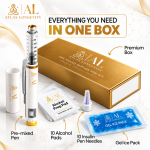
Included in the Box
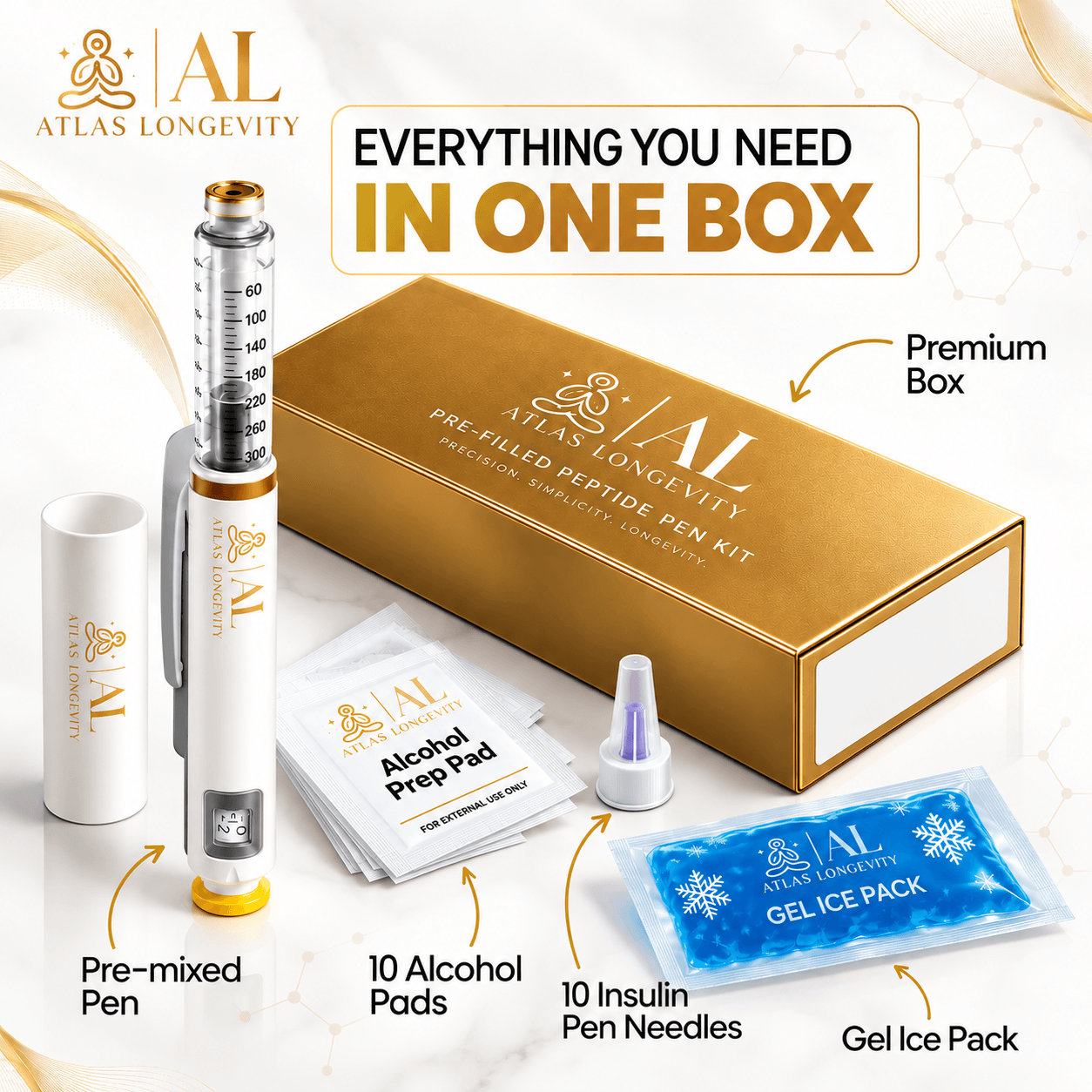
Each Atlas Longevity product is carefully packed to support secure storage, clean handling, and convenient research use. Inside the package, you’ll find the essential items needed for organized laboratory handling:
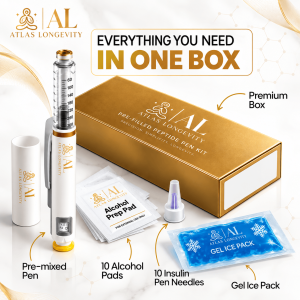
- 1× Ready-to-Use Injection Pen
- 10× Ultra-Fine Needles (33G, 4 mm)
- 10× Alcohol Prep Pads
- Protective Foam Insert to help keep the pen secure during transport
- Quick-Reference Instruction Panel inside the packaging
- Tamper-Evident Security Seal for added package protection
Each component is arranged in a clean, protective presentation designed to keep the product secure and easy to access.
Storage
Storage conditions should follow the instructions supplied with the
Atlas Longevity product and its specific formulation.
The reference source provides refrigeration and stability information
for its own pre-mixed formulation, but those specifications should not
automatically be applied to the Atlas Longevity formulation without
product-specific stability confirmation.
FAQs
What is AOD-9604?
AOD-9604 is a synthetic peptide derived from a region of human growth hormone associated with metabolic activity.
It is primarily researched for its potential influence on lipolysis, lipogenesis and adipose-tissue metabolism.
Is AOD-9604 the same as human growth hormone?
No.
AOD-9604 is a fragment associated with human growth hormone, rather than full-length HGH.
It has been researched specifically to investigate certain metabolic effects without recreating the complete hormonal activity of HGH.
How does AOD-9604 work?
AOD-9604 is researched primarily for its influence on lipolysis and lipogenesis.
Experimental evidence also links its activity with beta-adrenergic and AMPK-related metabolic pathways. Pasted text
What is AOD-9604 being researched for?
Research areas include:
- adipose-tissue metabolism;
- lipolysis;
- lipid utilisation;
- metabolic regulation;
- body composition;
- AMPK signalling;
- mitochondrial metabolism;
- cartilage and connective-tissue biology.
Evidence strength varies depending on the research area.
How much AOD-9604 is in each Atlas Longevity pen?
Each Atlas Longevity AOD-9604 pen contains:
5 mg in 3 mL.
What is the concentration of the AOD-9604 pen?
The concentration is:
5 mg ÷ 3 mL = approximately 1.667 mg/mL.
How many clicks are in the pen?
Each Atlas Longevity pen contains:
300 total clicks.
Each click corresponds to:
0.01 mL.
How much AOD-9604 is in one click?
Each click contains approximately:
0.0167 mg
or:
16.7 micrograms (mcg).
How many clicks equal 0.25 mg?
15 clicks = 0.25 mg.
How many clicks equal 0.30 mg?
18 clicks = 0.30 mg.
How many clicks equal 0.50 mg?
30 clicks = 0.50 mg.
How many clicks equal 1 mg?
60 clicks = 1 mg.
This is also the maximum amount that can be selected in a single dial operation on the Atlas pen.
These values are concentration conversions rather than dosing recommendations.
How long does an AOD-9604 pen last?
The pen contains 300 total clicks, so duration depends on the number of clicks used per administration.
For capacity calculation only:
- 15 clicks at a time = 20 administrations
- 30 clicks at a time = 10 administrations
- 60 clicks at a time = 5 administrations
These examples describe pen capacity rather than recommended use.
Does the medication disappear when the dial returns to zero?
No.
After administration, the dial returns to zero while the unused product remains in the cartridge.
The cartridge continues to contain the remaining medication until its total 300 units have been used.
Has AOD-9604 been studied in humans?
Yes. The supplied reference identifies human randomized clinical research and human tolerability research alongside animal and in-vitro studies. Pasted text
However, clinical research should not be confused with regulatory approval or proof of effectiveness for a particular medical condition.
Is AOD-9604 approved for weight loss?
The supplied material does not provide evidence of regulatory approval for AOD-9604 as a weight-loss treatment.
How should an Atlas Longevity AOD-9604 pen be stored?
Use the storage instructions provided with the actual Atlas Longevity formulation.
The competitor source’s 1–8°C and 6–8-week stability claims relate to its own product, so I have deliberately not transferred those figures to Atlas without Atlas-specific stability data. Pasted text
Research Notice
AOD-9604 is presented here as an investigational research compound.
Human, animal and cellular research should be interpreted according to the evidence level of each study. Research findings do not establish guaranteed clinical outcomes or an approved therapeutic dosing protocol.
- Supports fat metabolism
- Supports body composition
- Performance-focused compound
- Easy-to-use pen format
- No mixing required
We offer fast and discreet delivery across Bali.
Around Canggu
100,000 IDR
Delivery within 1–5 hours of order
Other Areas of Bali
200,000 IDR
Delivery within 1–5 hours of order
✔ Discreet packaging
✔ Same-day delivery available
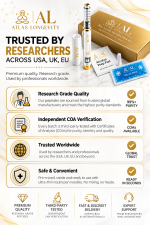
- Trusted suppliers
- Quality-controlled products
- Fast and discreet delivery
- Personalised guidance available
Related products
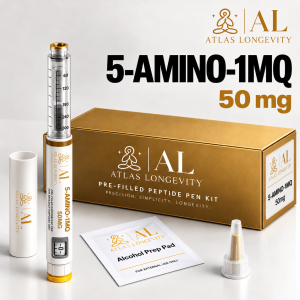
5-AMINO-1MQ
Price range: Rp3,700,000.00 through Rp6,800,000.00 ~$224.24–$412.12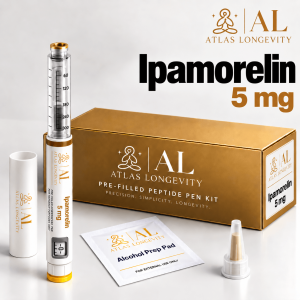
Ipamorelin Pen
Price range: Rp1,200,000.00 through Rp2,600,000.00 ~$72.73–$157.58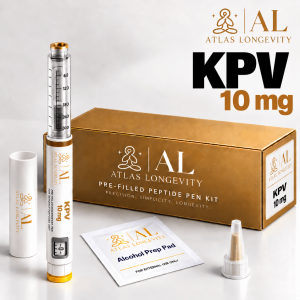
KPV 10mg Pen
Price range: Rp1,500,000.00 through Rp2,100,000.00 ~$90.91–$127.27
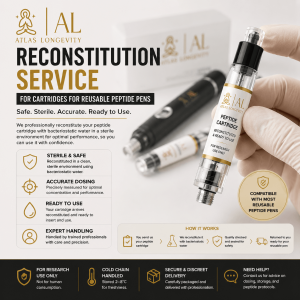
Reconstitution Service for Reusable Peptide Pen Cartridges
Rp250,000.00 ~$15.15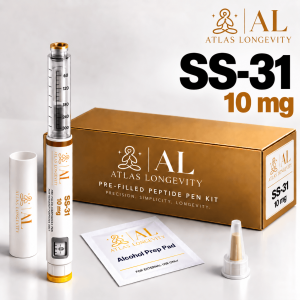
SS-31 Pen
Price range: Rp1,800,000.00 through Rp4,050,000.00 ~$109.09–$245.45
 Peptide Vials
 Peptide Nasal Sprays
 Peptide Protocols
 Bundles