

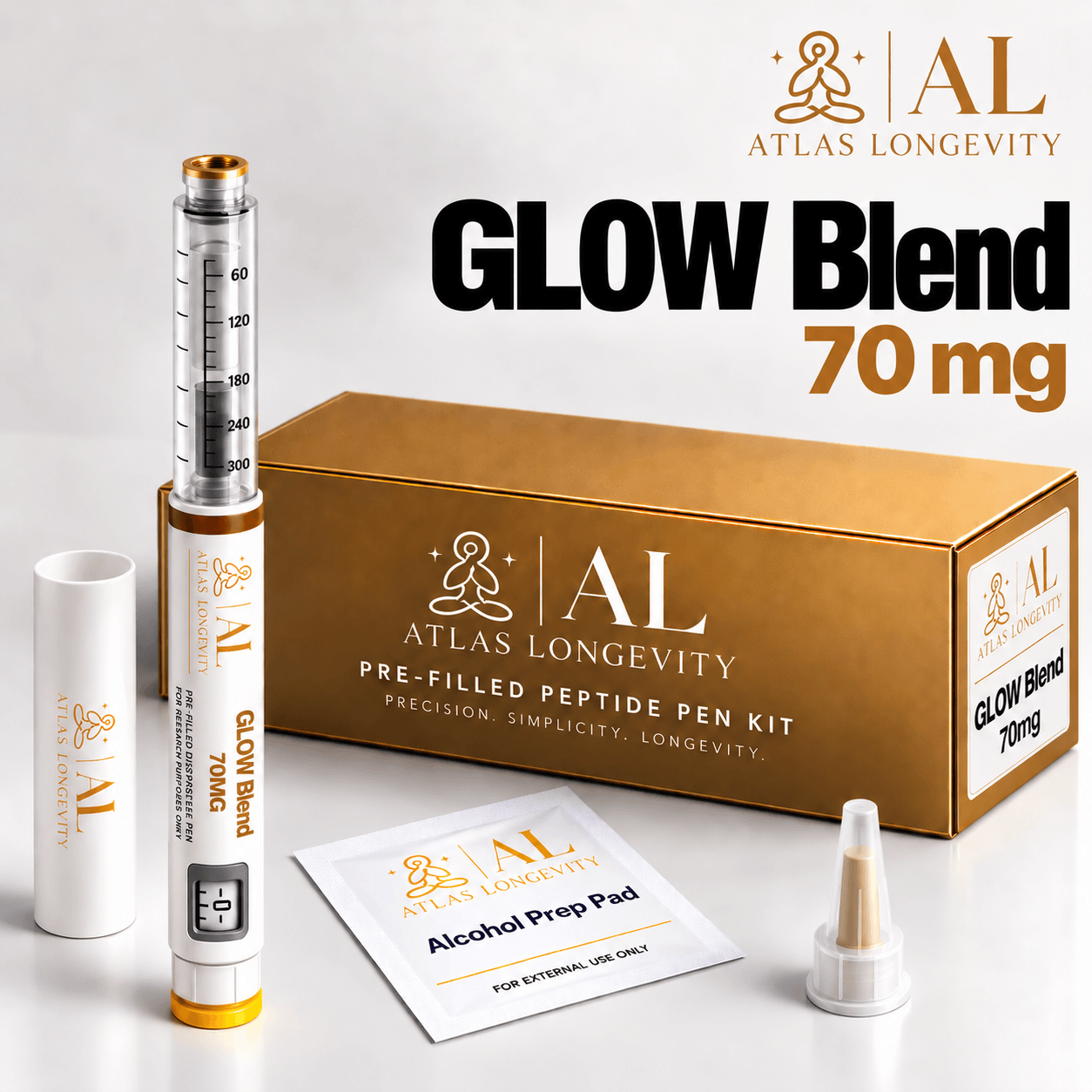
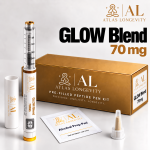
Glow Plus 70mg Pen (GHK-Cu + BPC-157 + TB-500)
Price range: Rp3,000,000.00 through Rp3,600,000.00 ~$181.82–$218.18
Glow Plus 70mg Pen is a convenient, ready-to-use blend combining GHK-Cu, BPC-157, and TB-500, commonly associated with skin quality, recovery, and anti-aging support.
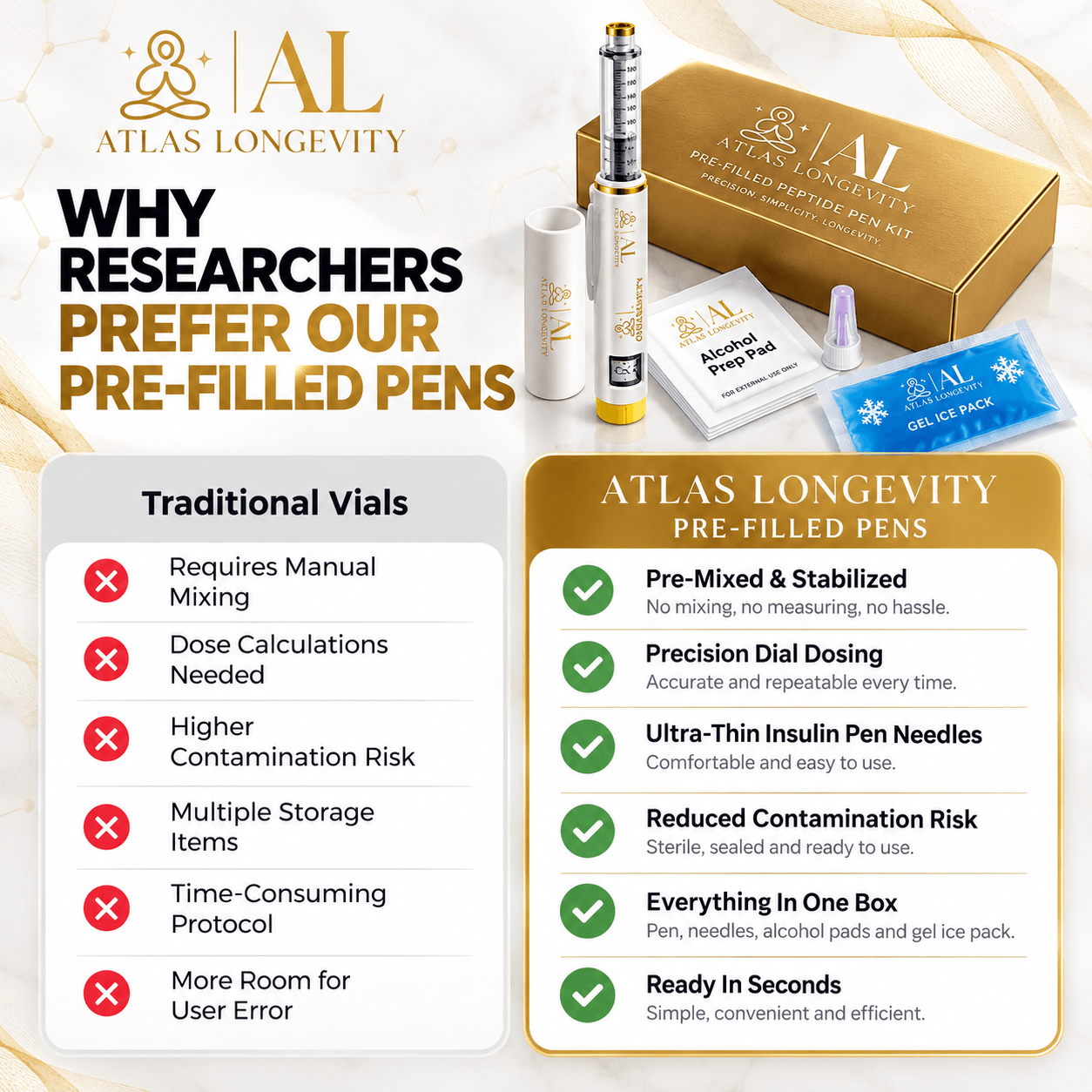
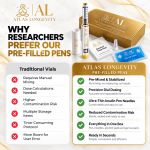
No mixing required — simple and easy to use.
✔ No mixing required
✔ Easy-to-use pen
✔ Skin & recovery support
✔ Fast Bali delivery
Glow Blend 70 mg Pen
Product Description
Glow Blend is a multi-peptide research formulation combining BPC-157, TB-500, and GHK-Cu within a single regenerative research blend.
The three components are studied across different but potentially complementary biological pathways involving tissue repair, angiogenesis, cellular migration, collagen synthesis, extracellular-matrix regulation, inflammatory signalling, and antioxidant defence. Pasted text
Rather than relying on a single mechanism, Glow Blend is designed as a multi-pathway research formulation:
- BPC-157 is associated primarily with angiogenesis, fibroblast activity, nitric-oxide signalling, and experimental connective-tissue repair.
- TB-500-related research focuses on actin-associated cellular migration, wound repair, and tissue remodelling.
- GHK-Cu is studied extensively for collagen production, extracellular-matrix biology, antioxidant activity, and dermal regeneration.
The Atlas Longevity Glow Blend pen contains 70 mg total blend in a 3 mL pre-mixed cartridge with 300 total units/clicks.
The exact amount of BPC-157, TB-500, and GHK-Cu within that 70 mg total was not supplied in the reference material, so individual component concentrations should not be invented.
Glow Blend remains an investigational research formulation and should not be presented as an approved treatment for injury, skin ageing, joint conditions, wound healing, or other medical conditions.
Clinical / Research Status
The exact Glow Blend formulation has a substantially weaker evidence base than the individual compounds contained within it.
The supplied material identifies the overall blend as a research formulation and does not provide evidence of regulatory therapeutic approval. Pasted text
| Evidence Type | Status Based on Supplied Material |
|---|---|
| Human randomized trials of exact blend | Not established |
| Observational evidence | Limited / referenced |
| Animal research | Yes, primarily involving individual components |
| In-vitro research | Yes |
| Regulatory therapeutic approval | Not established |
An important distinction is that evidence involving BPC-157, TB-500, or GHK-Cu individually does not automatically prove that the exact three-component Glow Blend has the same clinical effects.
Evidence Type
The supplied research material includes:
- tendon and connective-tissue models involving BPC-157;
- muscle and cellular-migration research involving TB-500-related pathways;
- human fibroblast and dermal research involving GHK-Cu;
- in-vitro angiogenesis and wound-closure models;
- rodent wound-healing research;
- oxidative-stress assays;
- experimental ageing-skin models. Pasted text
Most of the evidence concerns the individual components or related biological pathways, rather than controlled human trials of the exact combined formulation.
Mechanism of Action
Glow Blend is designed around three complementary research pathways.
BPC-157-Related Pathways
BPC-157 is studied for its potential influence on:
- VEGF signalling;
- angiogenesis;
- FAK-paxillin pathways;
- fibroblast migration;
- nitric-oxide regulation;
- tissue-repair signalling.
TB-500-Related Pathways
TB-500-related research focuses on thymosin beta-4-associated mechanisms involving:
- actin binding;
- cell migration;
- cytoskeletal organisation;
- tissue re-epithelialisation;
- regenerative signalling;
- inflammatory modulation.
GHK-Cu-Related Pathways
GHK-Cu is studied for:
- collagen synthesis;
- extracellular-matrix gene expression;
- copper-dependent antioxidant activity;
- fibroblast function;
- angiogenesis;
- tissue remodelling.
The supplied reference describes the blend as combining vascular, cytoskeletal, and extracellular-matrix mechanisms within a single regenerative research model. Pasted text
However, mechanistic complementarity should not be interpreted as proof that the combination is clinically synergistic in humans.
Potential Benefits / Research Areas
Multi-Pathway Tissue-Regeneration Research
Glow Blend is primarily designed for research investigating several repair pathways simultaneously.
BPC-157, TB-500, and GHK-Cu are associated with different aspects of tissue biology, including cellular migration, angiogenesis, fibroblast activity, collagen organisation, and extracellular-matrix remodelling. Pasted text
The proposed advantage is experimental breadth rather than a proven clinical superiority over individual compounds.
Wound-Healing Research
The component peptides have each been investigated in models relevant to wound repair.
Research areas include:
- fibroblast migration;
- epithelial repair;
- collagen formation;
- angiogenesis;
- cellular migration;
- extracellular-matrix organisation.
The supplied material describes faster wound closure and improved structural repair in experimental models, but these findings should not be presented as established human outcomes. Pasted text
Collagen and Dermal Research
GHK-Cu contributes much of the blend’s research relevance to skin and extracellular-matrix biology.
Experimental research includes collagen, elastin, glycosaminoglycans, fibroblast activity, dermal structure, and tissue remodelling.
BPC-157 and TB-500-related pathways may provide additional experimental interest through cellular migration and vascular signalling. Pasted text
Claims such as visibly younger skin or wrinkle reversal should not be treated as guaranteed outcomes of an injectable blend.
Angiogenesis and Microvascular Research
All three components have been discussed in relation to pathways affecting vascular repair or cellular migration.
Experimental research examines mechanisms including:
- VEGF signalling;
- endothelial activity;
- new capillary formation;
- microcirculation;
- vascular tissue remodelling. Pasted text
These findings remain primarily mechanistic and preclinical.
Inflammation and Oxidative-Stress Research
The blend is also relevant to research involving the cellular environment surrounding tissue damage.
The supplied material describes changes involving:
- TNF-α;
- IL-6;
- antioxidant-enzyme activity;
- superoxide dismutase;
- oxidative-stress markers. Pasted text
This should not be interpreted as proof that Glow Blend treats inflammatory disease.
Muscle, Tendon and Ligament Research
BPC-157 and TB-500-related research has focused heavily on experimental musculoskeletal repair.
Research areas include:
- fibroblast activity;
- muscle-cell migration;
- connective-tissue repair;
- tendon remodelling;
- angiogenesis;
- collagen-matrix organisation. Pasted text
GHK-Cu adds a separate extracellular-matrix and collagen-related mechanism to the research concept.
Human injury-recovery efficacy for the exact blend has not been established.
Skin and Extracellular-Matrix Biology
Glow Blend has also been positioned for dermal research because GHK-Cu has a substantial research history involving skin fibroblasts and extracellular-matrix proteins.
The supplied source discusses experimental effects involving skin structure, elasticity, collagen, and dermal repair. Pasted text
Evidence from topical or cellular GHK-Cu research should not automatically be extrapolated to injectable Glow Blend use.
Neural and Vascular Repair Research
BPC-157 and thymosin-related research includes experimental neurological and vascular injury models.
The source therefore discusses Glow Blend in relation to neurovascular repair, although these findings are predominantly based on individual component research rather than clinical studies of the blend itself. Pasted text
Joint and Connective-Tissue Research
The blend is also of research interest in models examining:
- collagen organisation;
- cartilage-associated pathways;
- connective-tissue integrity;
- fibrosis;
- tissue flexibility.
The supplied material discusses these areas, but it does not establish Glow Blend as an approved treatment for arthritis, cartilage injury, or joint pain. Pasted text
Cellular Ageing Research
GHK-Cu-related gene-expression and antioxidant research has led to broader interest in cellular ageing and repair.
Within Glow Blend, these pathways are combined conceptually with the regenerative mechanisms associated with BPC-157 and TB-500. Pasted text
Terms such as “anti-ageing” or “rejuvenation” should therefore be understood as research categories rather than established therapeutic outcomes.
Research Data
| Study / Model | Reported Finding |
|---|---|
| BPC-157 tendon injury models | Increased fibroblast migration and repair-related activity |
| TB-500-related muscle repair research | Increased cellular migration and actin-associated repair signalling |
| GHK-Cu human fibroblast cultures | Increased collagen synthesis and extracellular-matrix gene expression |
| Combined in-vitro peptide models | Increased angiogenic signalling and changes in wound closure |
| Rodent wound-healing models | Increased epithelialisation and capillary density |
| Oxidative-stress assays | Reduced lipid-peroxidation markers and increased antioxidant-enzyme activity |
| Experimental ageing-skin models | Changes in dermal thickness, wrinkle-related measures and antioxidant markers |
The table combines evidence involving individual components with limited combination research. It should therefore not be read as evidence that every finding has been demonstrated using the exact Atlas Glow Blend formulation. Pasted text
Potential Stack / Combination Research
Glow Blend already combines three compounds within one formulation:
BPC-157 + TB-500 + GHK-Cu
The supplied source additionally mentions experimental research concepts involving NAD+ or SS-31 alongside the blend. Pasted text
However, adequate combination-specific human evidence is not supplied.
Atlas Longevity therefore does not present additional combinations as validated or recommended protocols.
Atlas Longevity Glow Blend Pen Dosage / Click Chart
The Atlas Longevity Glow Blend pen contains:
70 mg total blend
3 mL cartridge volume
300 total clicks
1 click = 0.01 mL
Maximum selectable amount = 60 clicks per dial operation
Important Composition Note
The supplied reference identifies the blend as containing:
- BPC-157
- TB-500
- GHK-Cu
but does not state how the total 70 mg is divided between those three components.
For that reason, the calculations below show total Glow Blend amount only.
Individual BPC-157, TB-500, or GHK-Cu amounts per click cannot be calculated accurately without the formulation ratio.
Pen Specification
| Pen Strength | Volume | Total Concentration | Total Amount Per Click |
|---|---|---|---|
| 70 mg | 3 mL | ≈23.33 mg/mL | ≈0.233 mg |
Concentration Calculation
70 mg ÷ 3 mL = 23.333 mg/mL
Rounded:
≈23.33 mg/mL
Amount Per Click
70 mg ÷ 300 clicks = 0.23333 mg per click
Therefore:
1 click ≈0.233 mg total Glow Blend
or:
≈233 mcg total blend
Glow Blend Click Conversion Chart
| Clicks | Volume | Total Glow Blend Amount |
|---|---|---|
| 1 | 0.01 mL | ≈0.233 mg |
| 5 | 0.05 mL | ≈1.167 mg |
| 10 | 0.10 mL | ≈2.333 mg |
| 15 | 0.15 mL | 3.500 mg |
| 20 | 0.20 mL | ≈4.667 mg |
| 30 | 0.30 mL | 7.000 mg |
| 40 | 0.40 mL | ≈9.333 mg |
| 45 | 0.45 mL | 10.500 mg |
| 50 | 0.50 mL | ≈11.667 mg |
| 60 | 0.60 mL | 14.000 mg |
Useful Conversions
- 15 clicks = 3.5 mg total blend
- 30 clicks = 7 mg total blend
- 45 clicks = 10.5 mg total blend
- 60 clicks = 14 mg total blend
The maximum selectable amount in one dial operation is:
60 clicks = 0.60 mL = 14 mg total Glow Blend
These calculations refer to the combined formulation, not the individual peptide amounts.
Protocol / Dosage Information
The supplied source describes experimental Glow Blend quantities of:
- 3.5 mg
- 7 mg
within proposed research schedules. Pasted text
The original reference calculations were based on a 2 mL formulation and therefore do not apply to the Atlas Longevity 3 mL pen.
Using the Atlas 70 mg / 3 mL / 300-click formulation:
| Source-Referenced Total Amount | Atlas Pen Conversion |
|---|---|
| 3.5 mg | 15 clicks |
| 7 mg | 30 clicks |
These conversions describe total Glow Blend only.
Because the source does not provide the proportion of BPC-157, TB-500, and GHK-Cu within the 70 mg blend, the amount of each individual component at 15 or 30 clicks cannot be calculated from the supplied information.
The source-referenced amounts do not establish an approved human dosage, treatment frequency, treatment duration, or clinical protocol.
Possible Side Effects
The supplied source gives a relatively detailed adverse-effect list for Glow Blend, but several of its frequency and safety claims are not supported by study details in the material provided.
For example, the source states a specific percentage for injection-site reactions but does not provide sufficient supporting trial information to validate that incidence rate. For that reason, Atlas Longevity should not reproduce that percentage as an established risk estimate. Pasted text
Effects described in the supplied material include:
- localized redness;
- swelling;
- itching or discomfort;
- temporary skin discoloration associated with the copper-containing component;
- nausea or gastrointestinal changes;
- fatigue;
- headache;
- joint stiffness;
- changes in sleep patterns;
- metallic taste or temporary pigmentation changes;
- hypersensitivity-type reactions.
These should not be interpreted as a complete or clinically established adverse-effect profile.
Because this is a multi-component formulation, important uncertainties remain regarding:
- long-term systemic safety;
- component interactions;
- allergic or hypersensitivity responses;
- copper-related effects;
- medication interactions;
- contraindications;
- reproductive risks;
- repeated systemic exposure.
The safety profile of each individual component cannot simply be added together to prove the safety of the combined product.
Product Attributes
| Attribute | Information |
|---|---|
| Product Name | Glow Blend |
| Components | BPC-157 + TB-500 + GHK-Cu |
| Total Blend Strength | 70 mg |
| Individual Component Strengths | Not supplied |
| CAS Number | Not applicable as a single blend identifier |
| Molecular Formula | Composite formulation |
| Amino Acid Sequence | Multiple components — no single blend sequence |
| PubChem CID | No single blend identifier supplied |
| Half-Life | Component-dependent; no single validated blend half-life established |
| Compound Type | Multi-peptide research formulation |
| Research Focus | Tissue repair, regeneration, skin biology, inflammation and connective-tissue research |
The source lists the product as a composite formulation rather than one chemically defined molecule. Pasted text
A single molecular weight should therefore not be represented by the 70 mg product quantity; 70 mg describes the total amount in the pen, not the molecular weight of the blend.
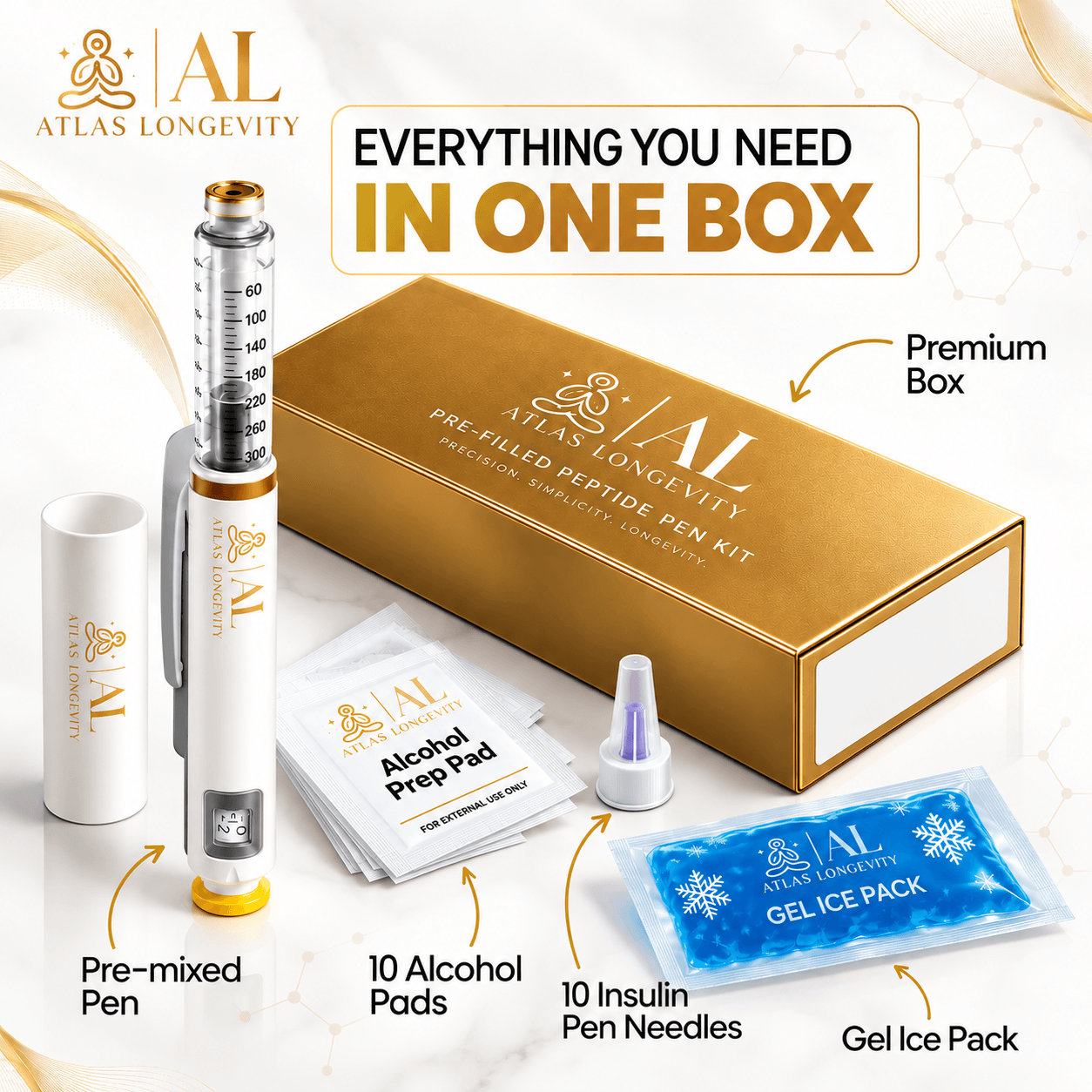
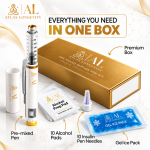
Included in the Box
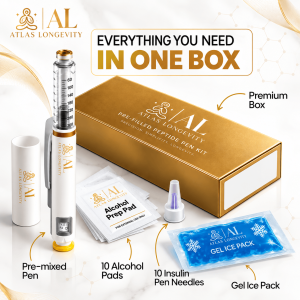
Each Atlas Longevity product is carefully packed to support secure storage, clean handling, and convenient research use. Inside the package, you’ll find the essential items needed for organized laboratory handling:
- 1× Ready-to-Use Injection Pen
- 10× Ultra-Fine Needles (33G, 4 mm)
- 10× Alcohol Prep Pads
- Protective Foam Insert to help keep the pen secure during transport
- Quick-Reference Instruction Panel inside the packaging
- Tamper-Evident Security Seal for added package protection
Each component is arranged in a clean, protective presentation designed to keep the product secure and easy to access.
Storage
Storage conditions should follow the instructions supplied specifically with the Atlas Longevity Glow Blend formulation.
The reference source provides refrigeration and stability specifications for its own pre-mixed product, but those conditions should not automatically be transferred to Atlas Longevity without formulation-specific stability evidence.
This is particularly important for a multi-component formulation because stability requirements may depend on the concentrations, excipients, pH, and interaction of the individual peptides within the finished product.
Follow the temperature requirements, handling guidance, light-protection instructions, and shelf-life information shown on the Atlas Longevity product label or accompanying documentation.
Frequently Asked Questions
What is Glow Blend?
Glow Blend is a multi-peptide research formulation containing BPC-157, TB-500, and GHK-Cu.
The combination is designed for research examining tissue repair, angiogenesis, collagen biology, cellular migration, inflammation, and extracellular-matrix remodelling. Pasted text
What peptides are in Glow Blend?
The supplied formulation contains:
- BPC-157
- TB-500
- GHK-Cu
The supplied source does not state the individual milligram quantity of each component within the 70 mg total blend.
How does Glow Blend work?
The three components are investigated through different pathways.
BPC-157 is associated with vascular and fibroblast signalling, TB-500-related research involves actin and cellular migration, while GHK-Cu is strongly associated with collagen, extracellular-matrix and antioxidant pathways. Pasted text
The exact clinical significance of combining these pathways has not been established.
What is Glow Blend researched for?
Research areas include:
- tissue repair;
- wound healing;
- tendon and ligament biology;
- muscle recovery;
- angiogenesis;
- collagen synthesis;
- skin and extracellular-matrix biology;
- oxidative stress;
- inflammation;
- fibrosis and scar-related pathways.
Much of the evidence comes from studies of the individual components.
Has Glow Blend been studied in humans?
The supplied material does not establish randomized human clinical trials of the exact three-component Glow Blend formulation. Pasted text
Some individual ingredients have human or observational evidence, but this should not automatically be treated as evidence for the complete blend.
How much Glow Blend is in each Atlas Longevity pen?
Each Atlas Longevity Glow Blend pen contains:
70 mg total blend in 3 mL.
How much of each individual peptide is in the pen?
That information is not available from the supplied source.
The source states that the blend contains BPC-157, TB-500, and GHK-Cu but does not provide their individual amounts.
Those values should be confirmed from the Atlas formulation specification before being added to the product page.
What is the total concentration of the Glow Blend pen?
The total blend concentration is:
70 mg ÷ 3 mL = approximately 23.33 mg/mL.
How many clicks are in an Atlas Longevity Glow Blend pen?
Each pen contains:
300 total clicks / units
with:
1 click = 0.01 mL
How much Glow Blend is in one click?
Each click contains approximately:
0.233 mg total Glow Blend
or:
233 mcg total blend
The amount of each individual component per click cannot be calculated until the formulation ratio is confirmed.
How many clicks equal 3.5 mg?
15 clicks = 3.5 mg total Glow Blend.
How many clicks equal 7 mg?
30 clicks = 7 mg total Glow Blend.
These values are mathematical concentration conversions rather than dosing recommendations.
What is the maximum selectable amount on the Glow Blend pen?
The maximum single dial selection is:
60 clicks
which corresponds to:
0.60 mL
and:
14 mg total Glow Blend
This describes the pen’s mechanical range rather than a recommended amount.
How long does a Glow Blend pen last?
The complete pen contains:
300 clicks and 70 mg total blend.
The number of administrations depends on the number of clicks selected each time.
For cartridge-capacity calculation only:
- 15 clicks at a time = 20 administrations
- 30 clicks at a time = 10 administrations
- 60 clicks at a time = 5 administrations
These calculations describe pen capacity only.
Does the pen become empty when the dial returns to zero?
No.
After administration, the dial returns to zero while the unused formulation remains inside the cartridge.
The remaining product stays inside the pen until its 300 total units have been used.
Is Glow Blend proven to accelerate healing?
The individual components have been investigated extensively in experimental repair models, but the supplied material does not establish that the exact Glow Blend formulation reliably accelerates healing in humans.
Component research should not be presented as proof of clinical efficacy for the combined product.
Is Glow Blend proven to improve skin appearance?
GHK-Cu has human and experimental research involving skin and extracellular-matrix biology, while BPC-157 and TB-500-related research includes regenerative pathways.
However, this does not establish that injectable Glow Blend reliably improves wrinkles, skin tone, or other aesthetic outcomes in humans.
Can Glow Blend be combined with other compounds?
The supplied reference discusses additional experimental concepts involving NAD+ and SS-31. Pasted text
However, validated human safety, compatibility, efficacy, and dosing are not established for these combinations.
How should the Atlas Longevity Glow Blend pen be stored?
Follow the storage instructions supplied with the actual Atlas Longevity formulation.
The reference manufacturer’s refrigeration and stability specifications relate to its own product and should not automatically be copied to Atlas without product-specific stability evidence.
Related products
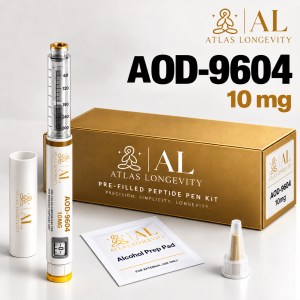
AOD-9604 10mg Pen
Price range: Rp3,200,000.00 through Rp3,800,000.00 ~$193.94–$230.30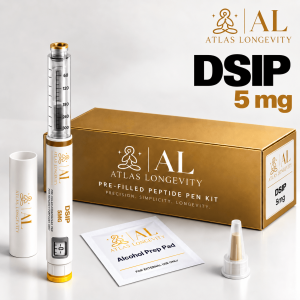
DSIP Pen
Price range: Rp1,300,000.00 through Rp3,100,000.00 ~$78.79–$187.88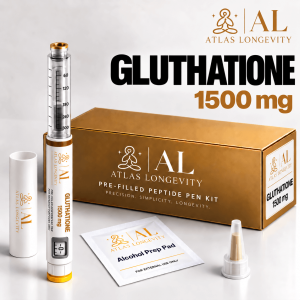
Glutathione 1500mg Pen
Price range: Rp2,500,000.00 through Rp3,100,000.00 ~$151.52–$187.88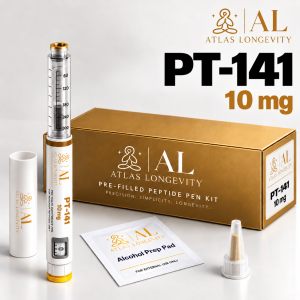
PT-141 Pen
Price range: Rp1,600,000.00 through Rp2,200,000.00 ~$96.97–$133.33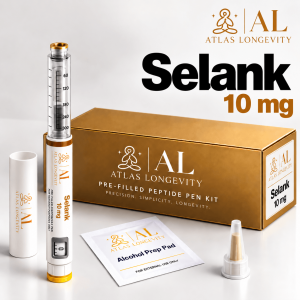
Selank 10mg Pen
Price range: Rp1,600,000.00 through Rp2,200,000.00 ~$96.97–$133.33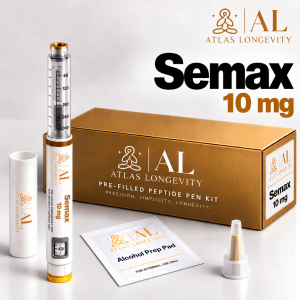
Semax 10mg Pen
Price range: Rp1,600,000.00 through Rp2,200,000.00 ~$96.97–$133.33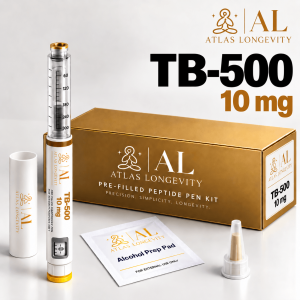
TB-500 Pen
Price range: Rp1,300,000.00 through Rp2,600,000.00 ~$78.79–$157.58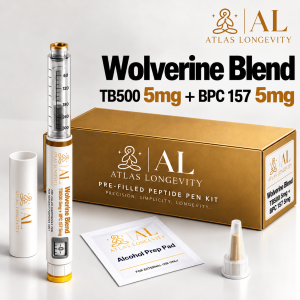
 Peptide Vials
 Peptide Nasal Sprays
 Peptide Protocols
 Bundles