

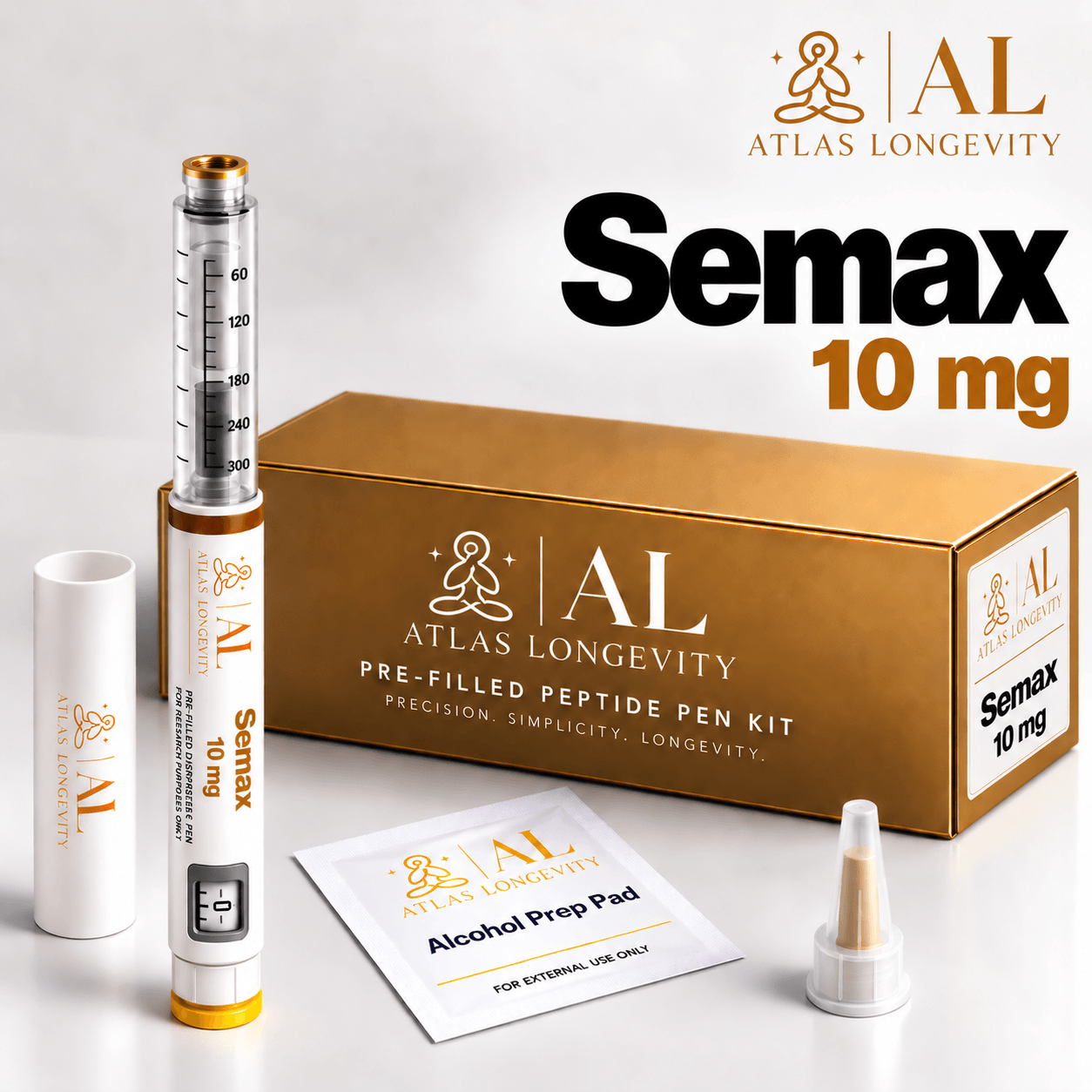
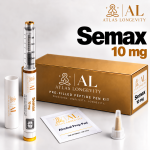

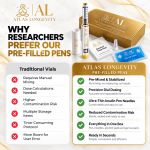
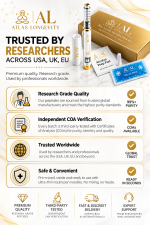
Semax 10mg Pen
Price range: Rp1,600,000.00 through Rp2,200,000.00 ~$96.97–$133.33
Semax 10mg Pen is a convenient, ready-to-use peptide commonly associated with focus, mental clarity, and cognitive performance.
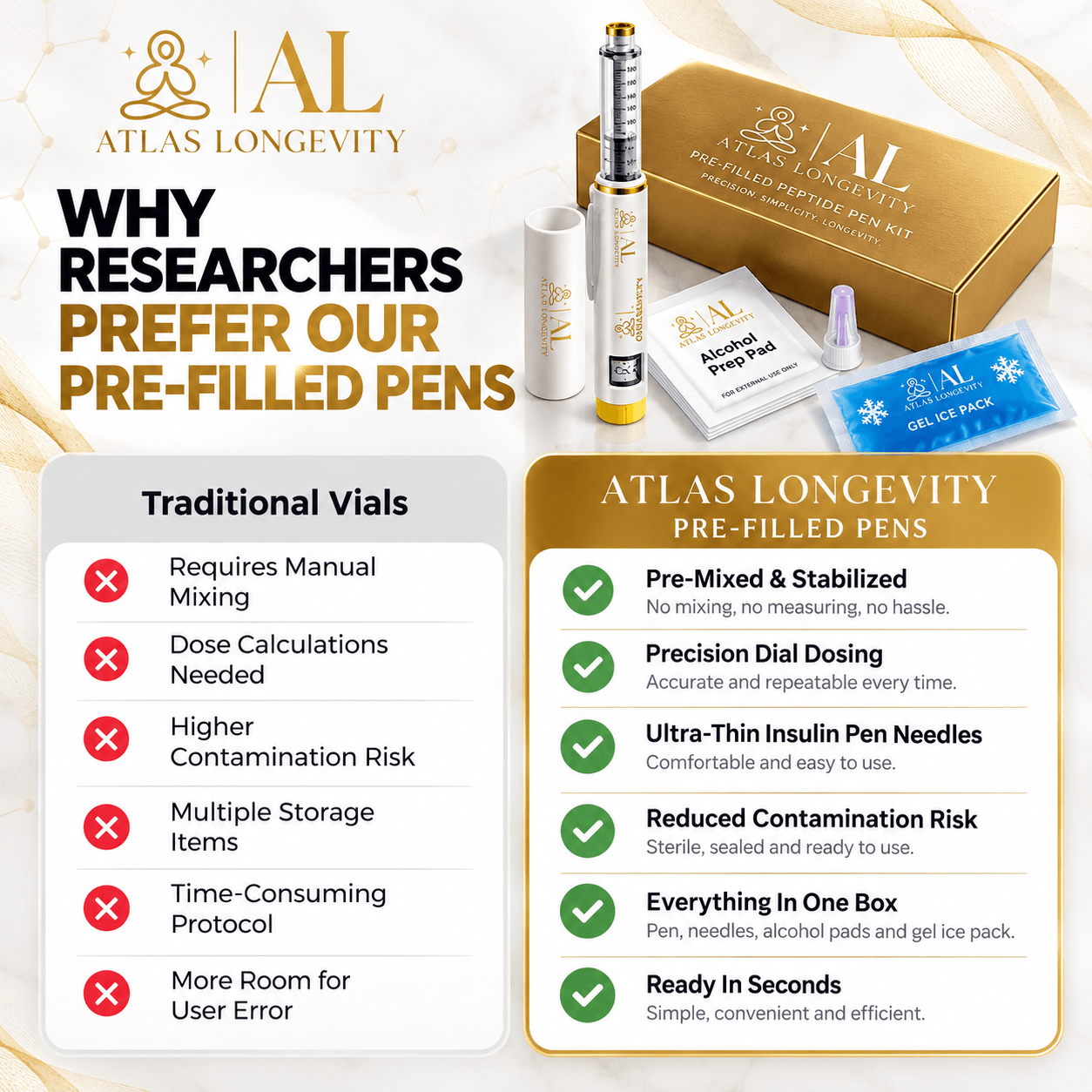
No mixing required — simple and easy to use.
✔ No mixing required
✔ Easy-to-use pen
✔ Focus & clarity support
✔ Fast Bali delivery
Semax 30 mg Pen
Product Description
Semax is a synthetic neuroactive heptapeptide derived from adrenocorticotropic hormone (ACTH)-fragment research and studied primarily for its potential effects on neuroplasticity, cognitive signalling, neuroprotection, stress-response biology, and monoaminergic neurotransmission.
Unlike full ACTH, Semax is described in the supplied research material as producing neurological signalling effects without significantly stimulating adrenal corticosteroid production. Experimental research has examined its influence on brain-derived neurotrophic factor (BDNF), dopamine, serotonin, synaptic plasticity, neuronal survival, and stress-related gene expression. Pasted text
The source characterizes Semax as having limited human clinical investigation alongside animal and in-vitro research, including studies involving cognition and neurological recovery. Pasted text
The Atlas Longevity Semax pen contains 30 mg in a 3 mL cartridge with 300 total units/clicks.
Semax remains an investigational neuropeptide and should not be presented as an approved treatment for stroke, cognitive impairment, anxiety, depression, neurological injury, or other medical conditions.
Clinical / Research Status
The supplied material describes Semax as having been studied in cognitive and neuroprotective research settings, including regional clinical applications, while much of the supporting evidence remains animal or mechanistic. Pasted text
| Evidence Type | Status Based on Supplied Material |
|---|---|
| Human clinical research | Limited / regional |
| Human observational research | Yes |
| Animal research | Yes |
| In-vitro research | Yes |
| Broad regulatory therapeutic approval | Not established by supplied material |
The source indicates some human clinical work, but the reference list supplied later is predominantly animal, in-vitro, or observational. For that reason, Atlas content should avoid overstating the strength of controlled human evidence.
Evidence Type
The supplied research includes:
- neurological clinical studies;
- ischemic stroke research;
- rat cerebral-ischemia models;
- hippocampal neurotrophic-factor studies;
- cognitive-performance research;
- chronic-stress animal models;
- neuronal cell cultures;
- optic-nerve research. Pasted text
The evidence base therefore combines clinical observations with substantial preclinical research.
Mechanism of Action
Semax is studied primarily for its potential effects on neurotrophic signalling and monoaminergic neurotransmission.
The supplied material describes several proposed mechanisms:
- increased BDNF-related signalling;
- modulation of neuronal survival pathways;
- changes in synaptic plasticity;
- effects on dopamine signalling;
- effects on serotonin pathways;
- changes in stress-related gene expression;
- neuroimmune and inflammatory modulation. Pasted text
BDNF and Neuroplasticity
BDNF is a neurotrophic factor involved in neuronal survival, synaptic adaptation, and plasticity.
Experimental Semax research has reported changes in BDNF expression, providing one of the central mechanistic rationales for cognitive and neuroprotective investigation.
Monoaminergic Signalling
Semax has also been investigated for effects on dopamine and serotonin systems, particularly under stress or neurological challenge.
ACTH-Related Structure Without Full ACTH Activity
Although Semax originates from ACTH-fragment research, the source describes it as lacking the corticosteroid-stimulating activity associated with full ACTH.
This distinction allows researchers to investigate neurological pathways without relying on full endocrine ACTH activity. Pasted text
Potential Benefits / Research Areas
Neurotrophic-Factor Research
One of the major research areas for Semax involves BDNF and related neurotrophic pathways.
The supplied material reports increased BDNF expression in experimental models and links this with:
- neuronal survival;
- dendritic signalling;
- synaptic plasticity;
- learning-related pathways. Pasted text
These findings should not be presented as guaranteed cognitive improvement in humans.
Synaptic Plasticity and Memory Research
Semax has been investigated in models involving:
- memory consolidation;
- executive function;
- attention;
- learning-related signalling;
- synaptic adaptation.
The source discusses CREB-associated pathways and changes in synaptic density in experimental research. Pasted text
Dopamine and Serotonin Research
The supplied material describes Semax as influencing dopamine and serotonin turnover.
These monoamine systems participate in attention, motivation, mood, reward, and stress-response biology. Pasted text
This does not establish Semax as a treatment for depression, ADHD, or other psychiatric disorders.
Ischemia and Neuroprotection Research
Semax has been investigated in experimental models of cerebral ischemia.
The source reports findings involving:
- neuronal survival;
- infarct-related measurements;
- oxidative-stress markers;
- glutamate-related excitotoxicity;
- neurological recovery. Pasted text
Most mechanistic evidence remains preclinical, and Semax should not be presented as an established stroke therapy based on the supplied information.
Gene-Expression Research
Gene-expression studies referenced by the source describe changes in:
- inflammatory mediators;
- stress-response proteins;
- neuronal signalling pathways;
- neurotrophic factors. Pasted text
This makes Semax relevant to experimental neuroimmune and neuroplasticity research.
Cognitive Resilience Under Stress
Semax has also been investigated in acute and chronic stress models.
The supplied material describes changes in cognitive performance and behavioural outcomes under stress exposure. Pasted text
This should be described as research into cognitive resilience rather than guaranteed enhancement.
Neuroendocrine Selectivity Research
The source highlights the fact that Semax does not appear to produce the same corticosteroid stimulation as full ACTH.
This has made it useful in research attempting to separate ACTH-fragment neurological signalling from adrenal endocrine stimulation. Pasted text
Research Data
| Study / Model | Reported Finding |
|---|---|
| Ischemic stroke clinical research | Improved neurological-recovery measures and reduced progression markers reported by source |
| Rat middle cerebral artery occlusion | Reduced infarct-related measurements and increased neuronal-survival markers |
| Rat hippocampal tissue | Increased BDNF and NGF-related expression |
| Healthy human cognitive research | Changes in attention, memory consolidation and performance under fatigue |
| Chronic-stress rodent models | Reduced anxiety-related behaviours and changes in HPA-axis activity |
| In-vitro neuronal culture | Changes in dopamine/serotonin signalling and oxidative-stress resistance |
| Optic-nerve models | Increased retinal ganglion-cell survival and visual-response markers |
These findings span clinical and preclinical research and should not all be interpreted as established human therapeutic outcomes. Pasted text
Potential Stack / Combination Research
The supplied source discusses experimental combinations involving:
- Semax + Selank;
- Semax + Cerebrolysin;
- Semax + NAD+;
- Semax + Dihexa. Pasted text
The proposed research rationale involves combining neurotrophic, stress-response, neurotransmitter, or cellular-energy pathways.
However, the supplied information does not establish validated human safety, compatibility, efficacy, or dosing for these combinations.
They should therefore remain experimental research concepts rather than recommended stacks.
Atlas Longevity Semax Pen Dosage / Click Chart
The Atlas Longevity Semax pen contains:
30 mg Semax
3 mL cartridge volume
300 total clicks
1 click = 0.01 mL
Maximum selectable dial amount = 60 clicks
Pen Specification
| Pen Strength | Volume | Concentration | Amount Per Click |
|---|---|---|---|
| 30 mg | 3 mL | 10 mg/mL | 0.10 mg / 100 mcg |
Concentration Calculation
30 mg ÷ 3 mL = 10 mg/mL
Amount Per Click
30 mg ÷ 300 clicks = 0.10 mg per click
Therefore:
1 click = 0.10 mg
or:
100 mcg Semax
Semax Click Conversion Chart
| Clicks | Volume | Semax Amount |
|---|---|---|
| 1 | 0.01 mL | 0.10 mg / 100 mcg |
| 2 | 0.02 mL | 0.20 mg |
| 3 | 0.03 mL | 0.30 mg |
| 4 | 0.04 mL | 0.40 mg |
| 5 | 0.05 mL | 0.50 mg |
| 6 | 0.06 mL | 0.60 mg |
| 9 | 0.09 mL | 0.90 mg |
| 10 | 0.10 mL | 1.00 mg |
| 12 | 0.12 mL | 1.20 mg |
| 15 | 0.15 mL | 1.50 mg |
| 20 | 0.20 mL | 2.00 mg |
| 30 | 0.30 mL | 3.00 mg |
| 40 | 0.40 mL | 4.00 mg |
| 50 | 0.50 mL | 5.00 mg |
| 60 | 0.60 mL | 6.00 mg |
Useful Conversions
- 1 click = 0.10 mg
- 3 clicks = 0.30 mg
- 6 clicks = 0.60 mg
- 10 clicks = 1 mg
- 12 clicks = 1.20 mg
- 30 clicks = 3 mg
- 60 clicks = 6 mg
The maximum selectable amount in one dial operation is:
60 clicks = 0.60 mL = 6 mg Semax
This is a mathematical concentration conversion and not a dosing recommendation.
Protocol / Dosage Information
The supplied source describes experimental research quantities ranging approximately from 0.10 mg to 1.20 mg. Pasted text
Because the source product also uses 30 mg in 3 mL, its mathematical concentration happens to match the Atlas pen concentration.
However, all values were still independently recalculated using the Atlas standard:
30 mg ÷ 300 clicks = 0.10 mg per click
| Source-Referenced Amount | Atlas Pen Mathematical Equivalent |
|---|---|
| 0.10 mg | 1 click |
| 0.20 mg | 2 clicks |
| 0.30 mg | 3 clicks |
| 0.60 mg | 6 clicks |
| 0.90 mg | 9 clicks |
| 1.20 mg | 12 clicks |
The supplied source also provides frequency, timing, duration, divided-dose, and cycling examples. Those should not be reproduced as self-administration instructions for the Atlas product.
These values simply translate research quantities into the Atlas concentration.
Possible Side Effects
The supplied material describes Semax as generally well tolerated in the research it references, but the available human evidence is limited.
Reported observations include:
- headache;
- light-headedness;
- temporary changes in alertness;
- temporary changes in sleep patterns;
- mild fatigue;
- restlessness;
- localized redness at injection sites. Pasted text
The source also lists nasal irritation or burning, but that effect relates specifically to intranasal administration and should not automatically be transferred to the Atlas pen.
Long-Term Safety
The source states that significant hormonal, cardiovascular, or systemic adverse effects were not identified in the research it references.
However, it also acknowledges that long-term safety remains under investigation. Pasted text
Important uncertainties include:
- prolonged systemic exposure;
- interactions with psychiatric medications;
- interactions with other neuroactive compounds;
- neurological conditions;
- cardiovascular effects not captured by limited studies;
- pregnancy and reproductive exposure;
- combination protocols.
Absence of adverse events in limited studies should not be interpreted as proof of complete safety.
Product Attributes
| Attribute | Information |
|---|---|
| Compound Name | Semax |
| CAS Number | 80714-61-0 |
| Molecular Formula | C37H51N9O10S |
| Amino Acid Sequence | MEHFPGP |
| Peptide Length | 7 amino acids |
| Molecular Weight | 813.9 g/mol |
| PubChem CID | 9811102 |
| Half-Life listed by source | Approximately 20–30 minutes for intranasal administration |
| Synonyms | ACTH-fragment PGP analogue, Met-Glu-His-Phe-Pro-Gly-Pro, Semax acetate |
| Compound Type | Synthetic ACTH-derived regulatory heptapeptide |
| Research Focus | Cognition, neuroprotection, stress biology and neuroplasticity |
These specifications are reported in the supplied reference material. Pasted text
Nomenclature Note
The supplied material uses more than one ACTH-fragment description for Semax.
At the beginning it describes Semax as derived from ACTH (4–10), while the synonym section later identifies it as ACTH (4–7) PGP. Pasted text Pasted text
Because the supplied amino-acid sequence is MEHFPGP, Atlas should confirm the exact nomenclature, salt form, and sequence against the actual product COA before publishing final technical specifications.
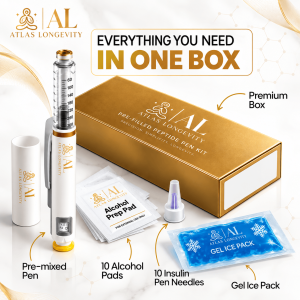
Included in the Box
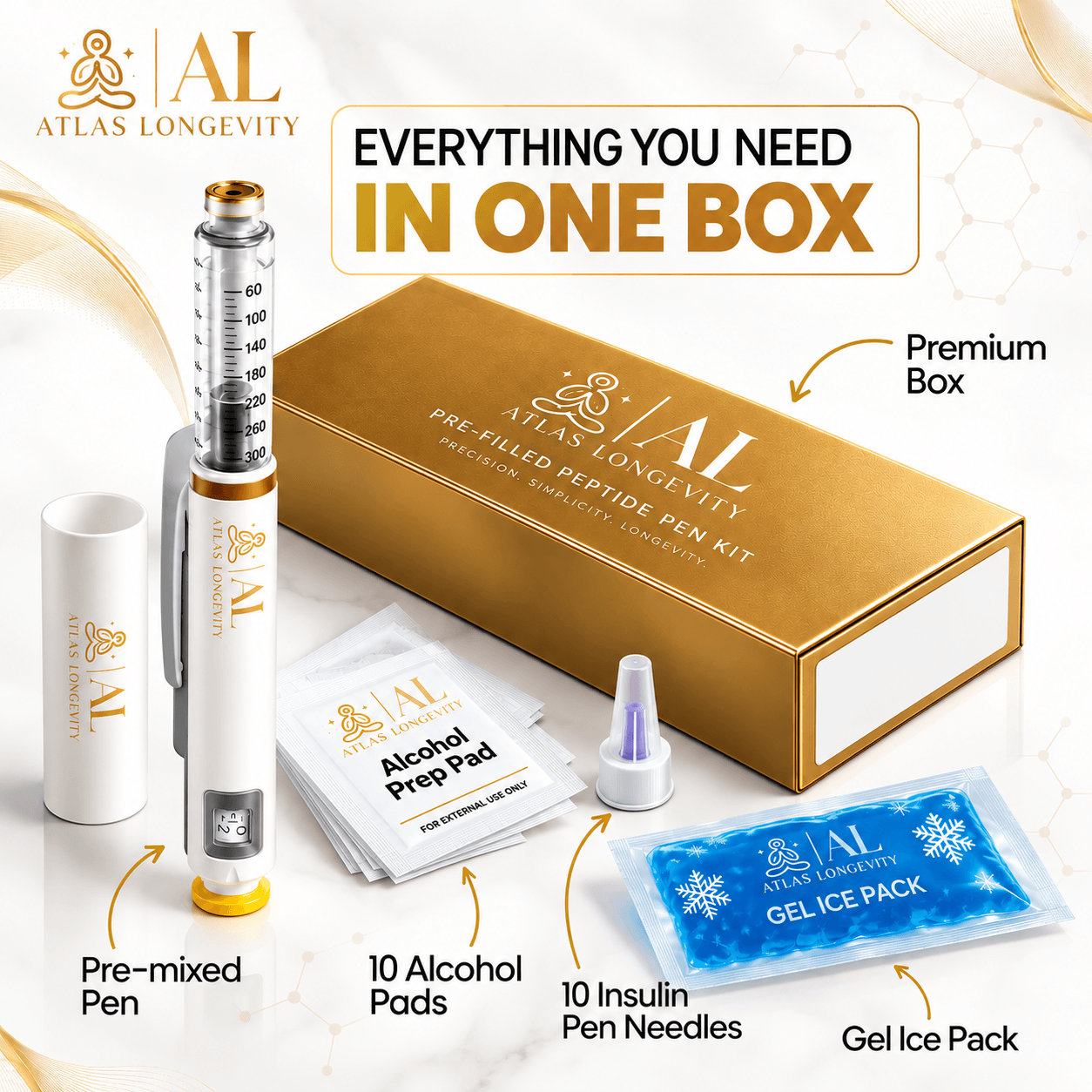
Each Atlas Longevity product is carefully packed to support secure storage, clean handling, and convenient research use. Inside the package, you’ll find the essential items needed for organized laboratory handling:
- 1× Ready-to-Use Injection Pen
- 10× Ultra-Fine Needles (33G, 4 mm)
- 10× Alcohol Prep Pads
- Protective Foam Insert to help keep the pen secure during transport
- Quick-Reference Instruction Panel inside the packaging
- Tamper-Evident Security Seal for added package protection
Each component is arranged in a clean, protective presentation designed to keep the product secure and easy to access.
Storage
Storage conditions should follow the instructions supplied specifically with the Atlas Longevity Semax formulation.
The reference product provides refrigeration and stability specifications for its own finished formulation. Those conditions should not automatically be transferred to Atlas Longevity without formulation-specific stability evidence.
Follow the temperature requirements, light-protection guidance, handling instructions, and shelf-life information shown on the Atlas Longevity product label or accompanying documentation.
Frequently Asked Questions
What is Semax?
Semax is a synthetic regulatory heptapeptide derived from ACTH-fragment research.
It is primarily studied in relation to BDNF, neuroplasticity, cognition, neurotransmitter signalling, stress-response biology, and experimental neuroprotection. Pasted text
Is Semax ACTH?
No.
Semax is derived from ACTH-fragment research but is not full-length ACTH.
The supplied material describes Semax as having neurological activity without significant stimulation of adrenal corticosteroid production. Pasted text
How does Semax work?
Semax is studied for its potential influence on:
- BDNF;
- neurotrophic signalling;
- synaptic plasticity;
- dopamine;
- serotonin;
- neuronal-survival pathways;
- stress-related gene expression. Pasted text
What is BDNF?
BDNF — brain-derived neurotrophic factor — is a protein involved in neuronal survival, synaptic plasticity, learning-related signalling, and adaptation of neural networks.
Changes in BDNF expression are one of the major areas of Semax research.
What is Semax researched for?
Research areas include:
- neuroplasticity;
- cognition;
- attention;
- memory;
- stress resilience;
- cerebral ischemia;
- neuronal survival;
- dopamine and serotonin signalling;
- neuroimmune regulation.
Evidence strength differs substantially across these areas.
Has Semax been studied in humans?
Yes.
The supplied material describes regional clinical and observational research alongside animal and in-vitro studies. Pasted text
However, the supporting reference list supplied with the product is dominated by animal, in-vitro, and observational evidence. Pasted text
Is Semax approved for cognitive enhancement?
The supplied material does not establish broad regulatory approval of Semax as a cognitive-enhancement treatment.
It should therefore remain positioned as an investigational research peptide.
Is Semax a stimulant?
Semax is not described by the supplied material as a conventional stimulant.
Its proposed mechanisms involve neurotrophic and neurotransmitter-regulatory pathways rather than classic stimulant pharmacology.
Does Semax increase cortisol?
The source states that Semax does not significantly stimulate corticosteroid production like full ACTH. Pasted text
This should not be interpreted as proof that every formulation or exposure has no endocrine effects.
Is Semax researched for stroke recovery?
Yes.
The supplied material references clinical and preclinical research involving cerebral ischemia, neuronal survival, and neurological recovery. Pasted text
These studies do not establish the Atlas Semax pen as an approved stroke treatment.
Does Semax improve memory?
Some experimental research described by the source reports changes in memory, attention, and cognitive-performance measures.
The evidence is not sufficient to guarantee cognitive improvement in humans.
How much Semax is in each Atlas Longevity pen?
Each Atlas Longevity Semax pen contains:
30 mg Semax in 3 mL.
What is the concentration of the Semax pen?
The concentration is:
30 mg ÷ 3 mL = 10 mg/mL
How many clicks are in the Semax pen?
Each pen contains:
300 total clicks / units
with:
1 click = 0.01 mL
How much Semax is in one click?
Each click contains:
0.10 mg
or:
100 mcg Semax
How many clicks equal 0.3 mg?
3 clicks = 0.30 mg.
How many clicks equal 0.6 mg?
6 clicks = 0.60 mg.
How many clicks equal 0.9 mg?
9 clicks = 0.90 mg.
How many clicks equal 1.2 mg?
12 clicks = 1.20 mg.
How many clicks equal 3 mg?
30 clicks = 3 mg.
These values are mathematical concentration conversions rather than dosing recommendations.
What is the maximum selectable amount on the Semax pen?
The maximum single dial selection is:
60 clicks
which equals:
0.60 mL
and:
6 mg Semax
This describes pen mechanics rather than a recommended amount.
How long does a Semax pen last?
The complete pen contains:
300 clicks and 30 mg Semax.
The number of administrations depends on the number of clicks selected each time.
For cartridge-capacity calculations only:
- 3 clicks at a time = 100 administrations
- 6 clicks at a time = 50 administrations
- 10 clicks at a time = 30 administrations
- 12 clicks at a time = 25 administrations
- 30 clicks at a time = 10 administrations
- 60 clicks at a time = 5 administrations
These examples describe cartridge capacity rather than a treatment protocol.
Does the medication disappear when the dial returns to zero?
No.
After administration, the dial returns to zero while the unused formulation remains inside the cartridge.
The remaining Semax stays in the pen until all 300 units have been used.
What is the half-life of Semax?
The supplied source lists approximately 20–30 minutes, but specifically associates this figure with intranasal administration. Pasted text
That value should not automatically be treated as the established half-life of the Atlas pen formulation.
Can Semax be combined with Selank?
The supplied source discusses Semax + Selank as an experimental research concept involving complementary neurotrophic and stress-response pathways. Pasted text
Validated human combination safety, efficacy, compatibility, and dosing are not established by the supplied evidence.
Can Semax be combined with NAD+?
The source also describes Semax + NAD+ as an experimental concept involving neuronal energy and neuroplasticity research.
This remains a research concept rather than an established clinical combination.
Is there an established human dosage for the Atlas Semax pen?
The source describes experimental quantities, but it does not establish a universally accepted or approved dosing standard for the Atlas formulation.
The Atlas click chart therefore represents concentration mathematics only.
How should the Atlas Longevity Semax pen be stored?
Follow the storage instructions supplied specifically with the actual Atlas Longevity Semax formulation.
The reference manufacturer’s refrigeration and stability claims apply to its own finished product and should not automatically be transferred to Atlas without formulation-specific stability evidence.
Related products
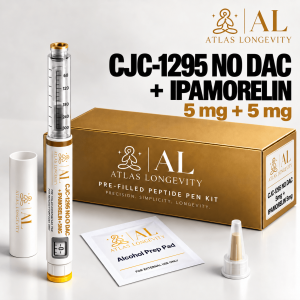
CJC-1295 No DAC 5mg + Ipamorelin 5mg Pen
Price range: Rp1,900,000.00 through Rp2,500,000.00 ~$115.15–$151.52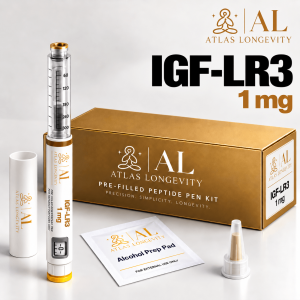
IGF-LR3 1mg Pen
Price range: Rp2,700,000.00 through Rp3,300,000.00 ~$163.64–$200.00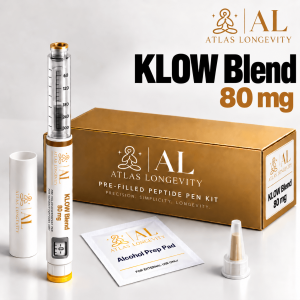
KLOW 80mg Pen (GHK-Cu + KPV + BPC-157 + TB-500)
Price range: Rp3,200,000.00 through Rp3,800,000.00 ~$193.94–$230.30
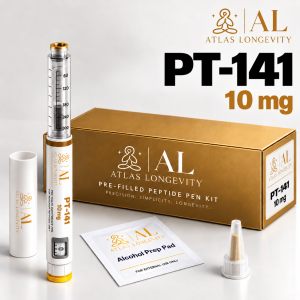
PT-141 Pen
Price range: Rp1,600,000.00 through Rp2,200,000.00 ~$96.97–$133.33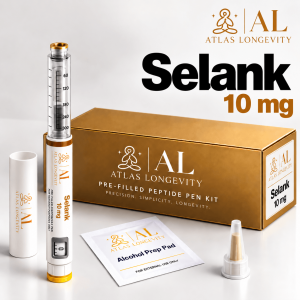
Selank 10mg Pen
Price range: Rp1,600,000.00 through Rp2,200,000.00 ~$96.97–$133.33
 Peptide Vials
 Peptide Nasal Sprays
 Peptide Protocols
 Bundles