

IGF-LR3 1mg Pen
Price range: Rp2,700,000.00 through Rp3,300,000.00 ~$163.64–$200.00
IGF-LR3 1mg Pen is a convenient, ready-to-use peptide commonly associated with muscle growth, recovery, and performance support.
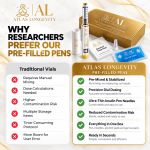
No mixing required — simple and easy to use.
✔ No mixing required
✔ Easy-to-use pen
✔ Muscle & recovery support
✔ Fast Bali delivery
IGF-1 LR3 1 mg Pen
Product Description
IGF-1 LR3 (Long R3 Insulin-Like Growth Factor-1) is a modified analogue of IGF-1 developed for research into IGF-1 receptor signalling, cellular growth, muscle biology, metabolic regulation, and tissue-repair pathways.
Compared with native IGF-1, IGF-1 LR3 has structural modifications designed to reduce its interaction with certain IGF-binding proteins and extend its biological activity. This makes it useful in experimental models where researchers require more prolonged IGF-1 receptor engagement. Pasted text
Unlike growth hormone secretagogues that act upstream through the hypothalamic-pituitary axis, IGF-1 LR3 acts more directly at IGF-1 receptors on peripheral tissues, activating intracellular pathways associated with protein synthesis, cellular survival, glucose handling, and structural adaptation.
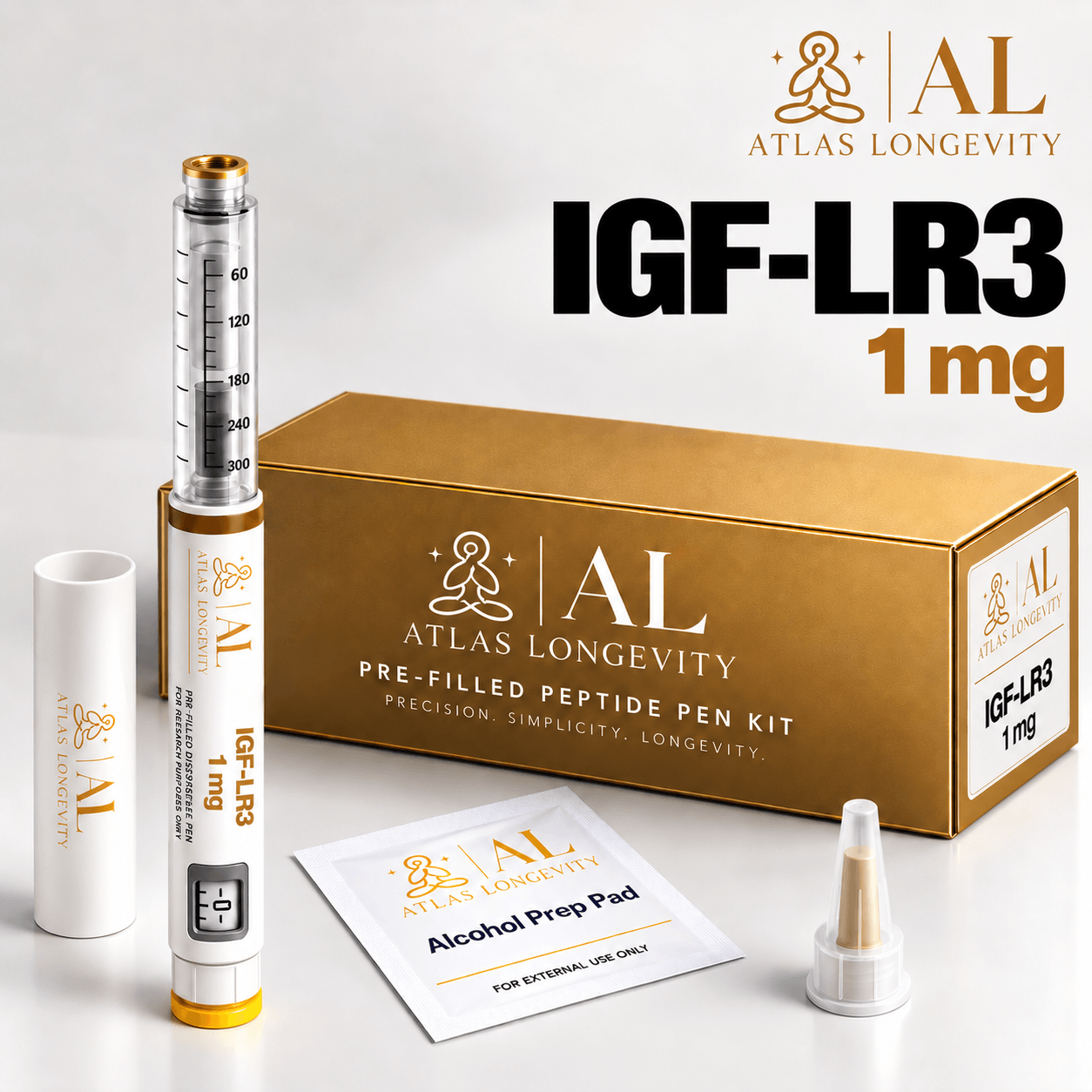
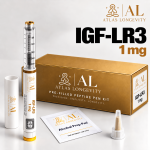
The Atlas Longevity IGF-1 LR3 pen contains 1 mg in a 3 mL pre-mixed cartridge with 300 total units/clicks.
IGF-1 LR3 remains an investigational compound. It should not be presented as an approved treatment for muscle growth, recovery, metabolic conditions, anti-ageing, or other medical purposes.
Clinical / Research Status
IGF-1 biology has been investigated extensively, but evidence for the Long R3 analogue itself is considerably more limited than evidence concerning native IGF-1.
The supplied material characterizes IGF-1 LR3 research as primarily preclinical and exploratory, with limited human data. Pasted text
| Evidence Type | Status Based on Supplied Material |
|---|---|
| Human controlled research specific to IGF-1 LR3 | Limited / exploratory |
| Human observational research | Limited |
| Animal research | Yes |
| In-vitro research | Yes |
| Regulatory therapeutic approval | Not established |
Research into native IGF-1 or the broader IGF signalling system should not automatically be treated as clinical evidence for IGF-1 LR3.
Evidence Type
The supplied material includes research involving:
- skeletal-muscle animal models;
- myoblast cell cultures;
- IGF-1 receptor signalling;
- pharmacokinetic comparison with native IGF-1;
- satellite-cell and cellular-repair models;
- glucose-metabolism studies;
- intracellular anabolic signalling assays. Pasted text
Most of the specific evidence presented for IGF-1 LR3 is therefore animal or in-vitro evidence, rather than large controlled human clinical trials.
Mechanism of Action
IGF-1 LR3 acts primarily through the IGF-1 receptor (IGF-1R), a receptor tyrosine kinase expressed across many tissues.
When IGF-1R is activated, it can trigger several intracellular signalling networks, particularly:
- PI3K
- Akt
- mTOR
- MAPK-related pathways
These pathways regulate cellular growth, protein synthesis, survival, nutrient utilisation, and tissue adaptation. Pasted text
Extended Activity
A defining feature of IGF-1 LR3 is reduced affinity for several IGF-binding proteins compared with native IGF-1.
The supplied reference describes this as contributing to greater availability of unbound peptide and more prolonged receptor activity in experimental systems.
This extended activity distinguishes IGF-1 LR3 from shorter-acting native IGF-1.
Potential Benefits / Research Areas
IGF-1 Receptor Signalling
IGF-1 LR3 is researched primarily as a direct activator of IGF-1R.
This receptor is involved in:
- cellular growth;
- protein synthesis;
- metabolic regulation;
- tissue development;
- cell-survival signalling.
Because IGF-1 LR3 acts at the receptor level, its research profile differs from peptides that first stimulate growth hormone release through the pituitary. Pasted text
Protein-Synthesis Research
Activation of IGF-1R can stimulate the PI3K/Akt/mTOR pathway, one of the major intracellular systems involved in protein synthesis and cellular growth.
For this reason, IGF-1 LR3 is studied in models examining skeletal-muscle adaptation and anabolic signalling. Pasted text
These mechanisms should not be interpreted as guaranteed muscle gain in humans.
Muscle-Cell and Satellite-Cell Research
IGF signalling contributes to the biology of satellite cells, which are precursor cells involved in skeletal-muscle repair and adaptation.
Experimental models have investigated whether IGF-1-related signalling can influence:
- satellite-cell activation;
- myoblast proliferation;
- cellular differentiation;
- muscle-fibre development. Pasted text
Human performance outcomes for IGF-1 LR3 are not established by these laboratory findings.
Cellular Survival Research
Akt signalling downstream of IGF-1R can interact with cellular survival pathways and reduce certain apoptotic signals under experimental conditions.
This has created interest in IGF-1 LR3 for broader tissue-repair and cellular-resilience research. Pasted text
Because promoting cellular survival and proliferation can also carry biological risks, this mechanism should not automatically be framed as universally beneficial.
Glucose and Metabolic Signalling
IGF-1 shares structural and signalling similarities with insulin.
IGF-1 receptor activation can therefore influence:
- peripheral glucose uptake;
- nutrient utilisation;
- energy partitioning;
- insulin-related metabolic pathways. Pasted text
This mechanism is particularly important from a safety perspective because excessive IGF-like activity can affect blood-glucose regulation.
Downstream Endocrine Research
Unlike GHRH analogues or growth hormone secretagogues, IGF-1 LR3 does not rely on stimulating pituitary GH release first.
It acts further downstream within the growth-signalling system by directly activating peripheral IGF-1 receptors. Pasted text
This distinction makes it relevant to studies specifically examining receptor-level anabolic signalling rather than upstream endocrine stimulation.
Research Data
| Study / Model | Reported Finding |
|---|---|
| Rodent skeletal-muscle model | Increased myofibre hypertrophy and protein-synthesis signalling |
| In-vitro myoblast culture | Increased proliferation and differentiation with enhanced Akt/mTOR signalling |
| Pharmacokinetic comparison | Longer biological activity and reduced IGF-binding protein affinity compared with native IGF-1 |
| Cellular-repair models | Increased satellite-cell activation and regeneration-related markers |
| Glucose-metabolism studies | Increased peripheral glucose uptake and altered insulin-related signalling |
| Anabolic signalling assays | Prolonged IGF-1 receptor phosphorylation and downstream PI3K activity |
These findings are primarily preclinical and mechanistic and should not be represented as established human clinical outcomes. Pasted text
Potential Stack / Combination Research
The supplied reference discusses experimental combinations involving IGF-1 LR3 with:
- CJC-1295;
- Ipamorelin;
- BPC-157;
- TB-500. Pasted text
The theoretical research rationale involves combining direct IGF-1 receptor signalling with upstream growth hormone signalling or tissue-repair pathways.
However, the supplied information does not establish validated human safety, efficacy, compatibility, or dosing for these combinations.
Because IGF-1 LR3 can influence glucose metabolism and cellular proliferation, combination research should not be presented as automatically safe or beneficial.
Atlas Longevity IGF-1 LR3 Pen Dosage / Click Chart
The Atlas Longevity IGF-1 LR3 pen contains:
1 mg IGF-1 LR3
3 mL cartridge volume
300 total clicks
1 click = 0.01 mL
Maximum selectable dial amount = 60 clicks
Pen Specification
| Pen Strength | Volume | Concentration | Amount Per Click |
|---|---|---|---|
| 1 mg | 3 mL | ≈0.333 mg/mL | ≈0.00333 mg / 3.33 mcg |
Concentration Calculation
1 mg ÷ 3 mL = 0.3333 mg/mL
Equivalent to:
≈333.3 mcg/mL
Amount Per Click
1 mg ÷ 300 clicks = 0.003333 mg per click
Therefore:
1 click ≈0.00333 mg
or:
≈3.33 mcg
IGF-1 LR3 Click Conversion Chart
| Clicks | Volume | IGF-1 LR3 Amount |
|---|---|---|
| 1 | 0.01 mL | ≈0.00333 mg / 3.33 mcg |
| 5 | 0.05 mL | ≈0.0167 mg / 16.7 mcg |
| 6 | 0.06 mL | 0.020 mg / 20 mcg |
| 10 | 0.10 mL | ≈0.0333 mg / 33.3 mcg |
| 12 | 0.12 mL | 0.040 mg / 40 mcg |
| 15 | 0.15 mL | 0.050 mg / 50 mcg |
| 20 | 0.20 mL | ≈0.0667 mg / 66.7 mcg |
| 30 | 0.30 mL | 0.100 mg / 100 mcg |
| 40 | 0.40 mL | ≈0.133 mg / 133 mcg |
| 50 | 0.50 mL | ≈0.167 mg / 167 mcg |
| 60 | 0.60 mL | 0.200 mg / 200 mcg |
Useful Conversions
- 6 clicks = 0.02 mg / 20 mcg
- 12 clicks = 0.04 mg / 40 mcg
- 15 clicks = 0.05 mg / 50 mcg
- 30 clicks = 0.10 mg / 100 mcg
- 60 clicks = 0.20 mg / 200 mcg
The maximum amount that can be selected in one dial operation is:
60 clicks = 0.60 mL = 0.20 mg / 200 mcg IGF-1 LR3
This is a concentration calculation, not a dosing recommendation.
Protocol / Dosage Information
The supplied source discusses experimental quantities ranging from approximately 0.02 mg to 0.10 mg. Pasted text
Its original calculations were based on a 1 mL formulation, so those click values do not apply to the Atlas Longevity 3 mL / 300-click pen.
Using the Atlas formulation:
| Source-Referenced Amount | Atlas Pen Conversion |
|---|---|
| 0.02 mg / 20 mcg | 6 clicks |
| 0.03 mg / 30 mcg | 9 clicks |
| 0.04 mg / 40 mcg | 12 clicks |
| 0.05 mg / 50 mcg | 15 clicks |
| 0.10 mg / 100 mcg | 30 clicks |
These calculations translate quantities described in the supplied reference into the Atlas pen concentration only.
They do not establish a recommended human dose, treatment frequency, timing, treatment duration, injection location, or cycling schedule.
The supplied evidence does not establish a universally accepted therapeutic human dosing protocol for IGF-1 LR3.
Possible Side Effects
IGF-1 LR3 requires particularly cautious safety framing because IGF signalling affects glucose regulation, cellular growth, and proliferative pathways.
The supplied material reports possible effects including:
- hypoglycaemia / low blood glucose related to insulin-like metabolic activity;
- injection-site swelling, redness, or discomfort;
- headache;
- lightheadedness;
- joint discomfort;
- muscle cramps;
- organ-growth effects observed with prolonged high exposure in animal models. Pasted text
Glucose-Related Risk
Because IGF signalling can increase peripheral glucose uptake, low blood glucose is a biologically plausible and important concern.
Symptoms associated with hypoglycaemia can become serious and should not be minimized as a routine or harmless research effect.
Cellular-Proliferation Considerations
IGF-1 receptor activation promotes cell survival and growth signalling.
That mechanism is valuable experimentally but also creates legitimate scientific concern regarding inappropriate cellular proliferation.
The source itself notes that long-term effects involving cellular proliferation remain under investigation. Pasted text
The supplied evidence does not establish complete information regarding:
- long-term systemic safety;
- tumour-related risk;
- cardiovascular effects;
- organ growth;
- glucose dysregulation;
- contraindications;
- medication interactions;
- reproductive effects;
- combination protocols.
Product Attributes
| Attribute | Information |
|---|---|
| Compound Name | IGF-1 LR3 |
| Full Name | Long R3 Insulin-Like Growth Factor-1 |
| CAS Number | 946870-92-4 |
| Molecular Formula | C400H625N111O115S9 |
| Amino Acid Sequence | MFPAMPLSSLFVNGPRTLCGAELVDALQFVCGDRGFYFNKPTGYGSSSRRAPQTGIVDECCFRSCDLRRLEMYCAPLKPAKSA |
| Molecular Weight | Approximately 9117.6 g/mol |
| Half-Life listed by source | Approximately 20–30 hours |
| Synonyms | Long R3 IGF-1, LR3 IGF-1, Insulin-Like Growth Factor-1 Long R3 |
| Compound Type | Synthetic IGF-1 analogue |
| Research Focus | IGF-1 signalling, cellular growth, muscle biology, metabolism and tissue repair |
These specifications are reported in the supplied source.
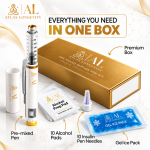
Included in the Box
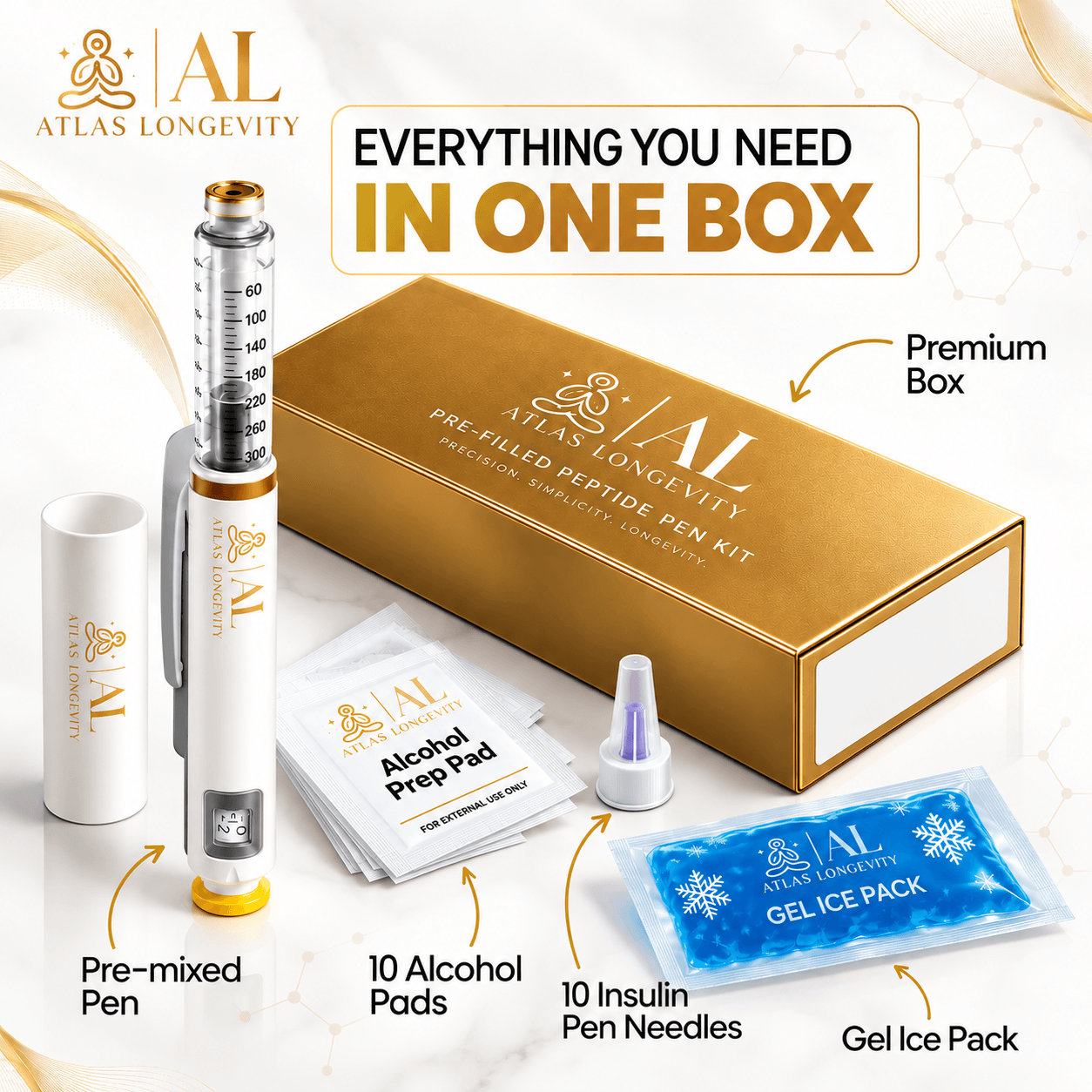
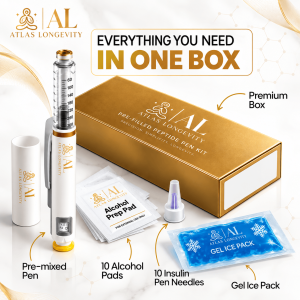
Each Atlas Longevity product is carefully packed to support secure storage, clean handling, and convenient research use. Inside the package, you’ll find the essential items needed for organized laboratory handling:
- 1× Ready-to-Use Injection Pen
- 10× Ultra-Fine Needles (33G, 4 mm)
- 10× Alcohol Prep Pads
- Protective Foam Insert to help keep the pen secure during transport
- Quick-Reference Instruction Panel inside the packaging
- Tamper-Evident Security Seal for added package protection
Each component is arranged in a clean, protective presentation designed to keep the product secure and easy to access.
Storage
Storage conditions should follow the instructions supplied specifically with the Atlas Longevity IGF-1 LR3 formulation.
The reference product provides refrigeration and stability specifications for its own pre-mixed formulation. Those claims should not automatically be transferred to Atlas Longevity without formulation-specific stability data.
This is particularly important for peptide formulations because stability may depend on concentration, excipients, pH, light exposure, temperature, and handling conditions.
Follow the temperature requirements, light-protection guidance, handling instructions, and shelf-life information printed on the Atlas Longevity product label or accompanying documentation.
Frequently Asked Questions
What is IGF-1 LR3?
IGF-1 LR3 is a modified analogue of insulin-like growth factor-1 designed for longer biological activity and reduced interaction with certain IGF-binding proteins compared with native IGF-1.
It is primarily investigated in research involving IGF-1 receptor signalling, cellular growth, skeletal-muscle biology, and metabolism. Pasted text
What does LR3 mean?
“LR3” refers to structural modifications that distinguish the compound from native IGF-1.
The supplied source describes these modifications as extending activity and reducing affinity for IGF-binding proteins.
How does IGF-1 LR3 work?
IGF-1 LR3 binds to the IGF-1 receptor.
Receptor activation can stimulate intracellular pathways including:
- PI3K;
- Akt;
- mTOR;
- MAPK-related signalling.
These pathways participate in cellular growth, protein synthesis, metabolism, and survival. Pasted text
Is IGF-1 LR3 the same as growth hormone?
No.
Growth hormone and IGF-1 participate in related endocrine pathways, but they are different molecules.
IGF-1 LR3 acts directly at IGF-1 receptors rather than first stimulating pituitary growth hormone secretion.
What is IGF-1 LR3 researched for?
Research areas include:
- IGF-1 receptor signalling;
- muscle-cell biology;
- protein synthesis;
- satellite-cell activity;
- cellular growth;
- tissue-repair pathways;
- glucose metabolism;
- anabolic signalling.
Most evidence specifically involving IGF-1 LR3 is preclinical.
Has IGF-1 LR3 been studied in humans?
The supplied material characterizes human evidence as limited and exploratory. Pasted text
Research involving native IGF-1 should not automatically be interpreted as evidence for the LR3 analogue.
How much IGF-1 LR3 is in each Atlas Longevity pen?
Each Atlas Longevity IGF-1 LR3 pen contains:
1 mg total IGF-1 LR3 in 3 mL.
Equivalent to:
1,000 mcg total IGF-1 LR3
What is the concentration of the IGF-1 LR3 pen?
The concentration is:
1 mg ÷ 3 mL = approximately 0.333 mg/mL
or:
approximately 333 mcg/mL
How many clicks are in the pen?
Each Atlas Longevity pen contains:
300 total clicks / units
with:
1 click = 0.01 mL
How much IGF-1 LR3 is in one click?
Each click contains approximately:
0.00333 mg
or:
3.33 mcg IGF-1 LR3
How many clicks equal 20 mcg?
6 clicks = 20 mcg.
How many clicks equal 40 mcg?
12 clicks = 40 mcg.
How many clicks equal 50 mcg?
15 clicks = 50 mcg.
How many clicks equal 100 mcg?
30 clicks = 100 mcg.
These are mathematical concentration conversions and not dosing recommendations.
What is the maximum selectable amount on the pen?
The Atlas pen allows a maximum single dial selection of:
60 clicks
which equals:
0.60 mL
and approximately:
0.20 mg / 200 mcg IGF-1 LR3
This describes the mechanical pen range, not a recommended amount.
How long does an IGF-1 LR3 pen last?
The full cartridge contains:
300 clicks / 1,000 mcg total IGF-1 LR3
The number of administrations depends on the number of clicks selected each time.
For cartridge-capacity calculations only:
- 6 clicks at a time = 50 administrations
- 10 clicks at a time = 30 administrations
- 15 clicks at a time = 20 administrations
- 30 clicks at a time = 10 administrations
- 60 clicks at a time = 5 administrations
These examples describe pen capacity only.
Does the medication disappear when the dial returns to zero?
No.
After administration, the dial returns to zero while the unused product remains inside the cartridge.
The remaining IGF-1 LR3 stays in the pen until all 300 units have been used.
Can IGF-1 LR3 affect blood glucose?
Yes, glucose regulation is an important area of IGF-1 biology.
The supplied material specifically identifies hypoglycaemia as a potential effect because IGF-related signalling can increase peripheral glucose uptake. Pasted text
This risk should not be minimized.
Is IGF-1 LR3 approved for muscle growth?
The supplied evidence does not establish regulatory approval of IGF-1 LR3 as a treatment for muscle growth or performance enhancement.
Experimental anabolic signalling should not be interpreted as approved therapeutic use.
Can IGF-1 LR3 be combined with CJC-1295 or Ipamorelin?
The source discusses these combinations as experimental research concepts because they affect different points within the GH/IGF-1 axis. Pasted text
However, the supplied evidence does not establish validated human safety, compatibility, efficacy, or dosing for such combinations.
How should the Atlas Longevity IGF-1 LR3 pen be stored?
Follow the storage instructions supplied with the actual Atlas Longevity formulation.
The competitor formulation’s refrigeration and stability claims relate to its own finished product and should not automatically be transferred to Atlas without product-specific stability evidence.
Related products
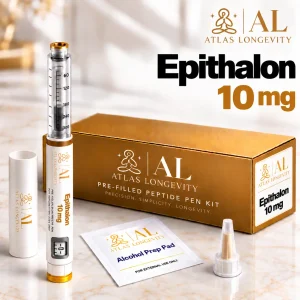
Epithalon Peptide Pen
Price range: Rp1,800,000.00 through Rp4,050,000.00 ~$109.09–$245.45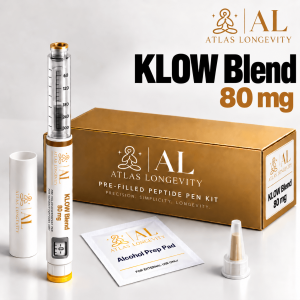
KLOW 80mg Pen (GHK-Cu + KPV + BPC-157 + TB-500)
Price range: Rp3,200,000.00 through Rp3,800,000.00 ~$193.94–$230.30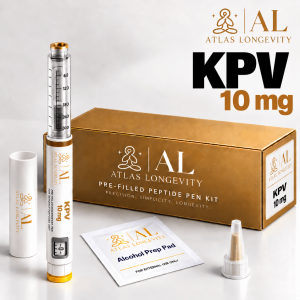
KPV 10mg Pen
Price range: Rp1,500,000.00 through Rp2,100,000.00 ~$90.91–$127.27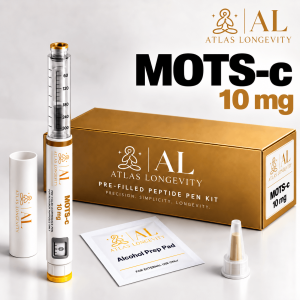
MOTS-C Pen
Price range: Rp1,700,000.00 through Rp3,800,000.00 ~$103.03–$230.30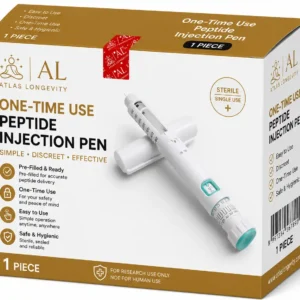
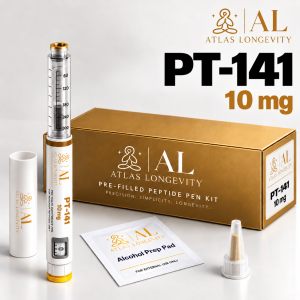
PT-141 Pen
Price range: Rp1,500,000.00 through Rp2,100,000.00 ~$90.91–$127.27
 Peptide Vials
 Peptide Nasal Sprays
 Peptide Protocols
 Bundles