

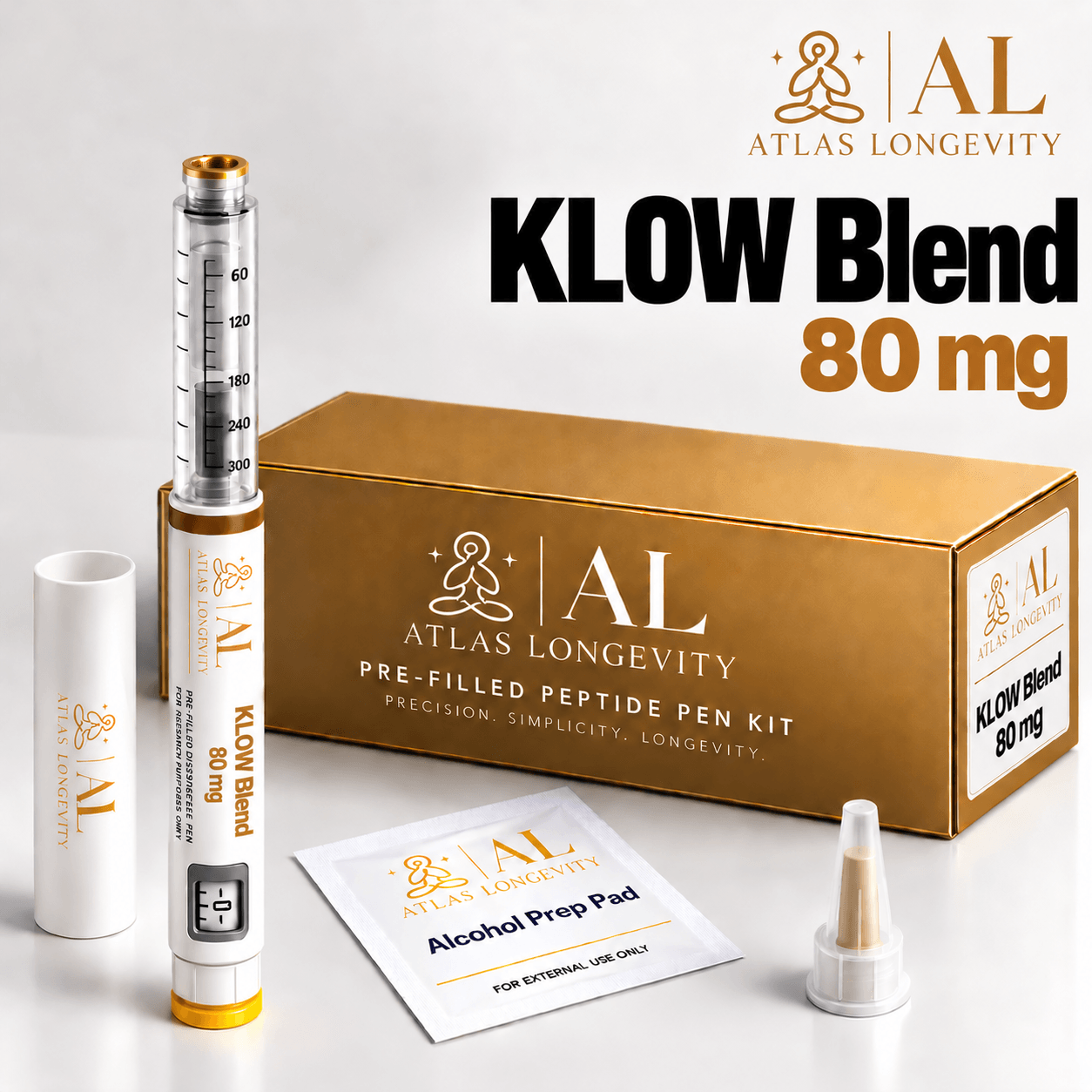
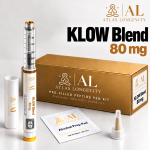
KLOW 80mg Pen (GHK-Cu + KPV + BPC-157 + TB-500)
Price range: Rp3,200,000.00 through Rp3,800,000.00 ~$193.94–$230.30
KLOW 80mg Pen is a convenient, ready-to-use blend combining GHK-Cu, KPV, BPC-157, and TB-500, commonly associated with skin quality, recovery, and inflammation support.
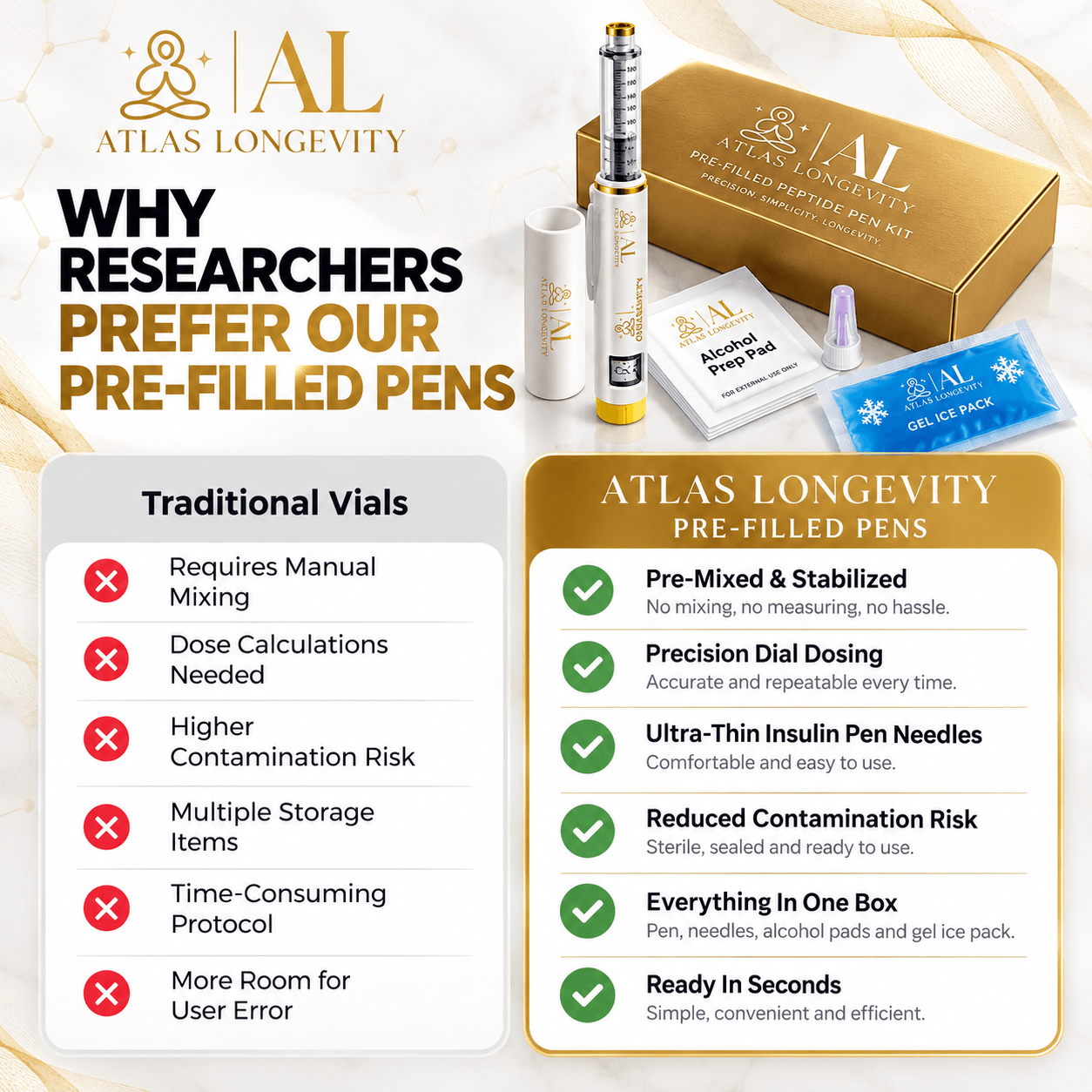
No mixing required — simple and easy to use.
✔ No mixing required
✔ Easy-to-use pen
✔ Skin + recovery support
✔ Fast Bali delivery
Klow Blend 80 mg Pen
Product Description
Klow Blend is a multi-peptide research formulation combining BPC-157, TB-500, GHK-Cu, and KPV within a single regenerative research blend.
The formulation expands on multi-pathway peptide research by combining compounds associated with angiogenesis, fibroblast activity, extracellular-matrix regulation, collagen synthesis, cellular migration, inflammatory signalling, oxidative-stress pathways, and tissue remodelling. Pasted text
Within the supplied research framework:
- BPC-157 is associated with VEGF, nitric-oxide signalling, fibroblast activity, and experimental tissue repair.
- TB-500-related research focuses on actin-associated cellular migration and endothelial or tissue-remodelling pathways.
- GHK-Cu is studied for collagen, elastin, extracellular-matrix regulation, and antioxidant-related activity.
- KPV is described in the source in relation to inflammatory, vascular-permeability, oxidative-stress, and cellular-support pathways.
The Atlas Longevity Klow Blend pen contains 80 mg total blend in a 3 mL pre-mixed cartridge with 300 total units/clicks.
The supplied material does not state how the 80 mg total is divided between BPC-157, TB-500, GHK-Cu, and KPV. Individual component concentrations must therefore not be invented.
Klow Blend remains an investigational multi-peptide formulation and should not be presented as an approved treatment for injury, inflammation, skin ageing, joint disorders, neurological conditions, or other medical conditions.
Clinical / Research Status
The exact four-component Klow Blend formulation has a substantially more limited evidence base than the individual compounds from which it is constructed.
The supplied material identifies the formulation as intended for experimental research and does not establish therapeutic approval. Pasted text
| Evidence Type | Status Based on Supplied Material |
|---|---|
| Human randomized trials of exact Klow Blend | Not established |
| Human observational evidence | Limited / indirect |
| Animal research | Yes, primarily component-based |
| In-vitro research | Yes |
| Regulatory therapeutic approval | Not established |
Evidence involving BPC-157, TB-500, GHK-Cu, or KPV individually should not automatically be treated as proof of safety or effectiveness for the exact four-component formulation.
Evidence Type
The supplied material references research involving:
- BPC-157 muscle and connective-tissue models;
- TB-500-related tendon and cellular-migration research;
- GHK-Cu fibroblast and skin-regeneration studies;
- KPV endothelial and inflammatory models;
- combined peptide models;
- rodent dermal wound research;
- experimental ageing-skin assays. Pasted text
Most of the evidence therefore relates to individual ingredients or preclinical models, rather than controlled clinical investigation of the final Klow Blend.
Mechanism of Action
Klow Blend is designed around four complementary research pathways.
BPC-157-Related Pathways
The supplied material describes BPC-157 in relation to:
- VEGF signalling;
- nitric-oxide regulation;
- angiogenesis;
- fibroblast activity;
- extracellular-matrix deposition.
TB-500-Related Pathways
TB-500-related research is described in connection with:
- actin modulation;
- cellular migration;
- endothelial repair;
- tissue re-epithelialisation;
- cytoskeletal organisation.
GHK-Cu-Related Pathways
GHK-Cu is associated with:
- collagen synthesis;
- elastin;
- glycosaminoglycans;
- extracellular-matrix turnover;
- TGF-β / SMAD-related signalling;
- antioxidant pathways.
KPV-Related Pathways
Within the supplied source, KPV is described in relation to:
- cytokine regulation;
- vascular permeability;
- inflammatory signalling;
- oxidative-stress control;
- tissue-environment regulation.
The source presents these four mechanisms as a multi-pathway regenerative framework. Pasted text
Mechanistic complementarity does not by itself establish clinically meaningful synergy in humans.
Potential Benefits / Research Areas
Multi-Pathway Regeneration Research
Klow Blend combines four compounds associated with different aspects of tissue biology.
The proposed research concept involves simultaneous investigation of:
- tissue repair;
- angiogenesis;
- collagen synthesis;
- cellular migration;
- inflammation;
- oxidative stress;
- extracellular-matrix remodelling. Pasted text
The supplied material describes this as a more comprehensive research formulation, but comparative superiority over other formulations has not been clinically established.
Muscle, Tendon and Ligament Research
BPC-157 and TB-500-related pathways form much of the blend’s musculoskeletal research rationale.
Experimental areas include:
- fibroblast activity;
- tissue migration;
- angiogenesis;
- tendon biology;
- muscle-repair signalling;
- connective-tissue organisation.
GHK-Cu contributes collagen-related pathways, while the source describes KPV as providing additional inflammatory and oxidative-stress modulation. Pasted text
Human injury-recovery efficacy for the complete formulation remains unestablished.
Collagen and Structural-Tissue Research
GHK-Cu is particularly relevant to collagen and extracellular-matrix biology.
The source discusses potential interaction between:
- collagen formation;
- elastin production;
- actin organisation;
- fibroblast activity;
- tissue resilience. Pasted text
These remain research mechanisms rather than guaranteed clinical outcomes.
Wound-Healing and Skin-Regeneration Research
The supplied material positions Klow Blend within research involving:
- epithelial repair;
- angiogenesis;
- fibroblast proliferation;
- collagen formation;
- dermal density;
- oxidative-stress regulation. Pasted text
Findings from individual peptide studies should not be represented as proof that the complete injectable blend improves wound healing or skin appearance in humans.
Microcirculation and Vascular Research
The four components are discussed in relation to different aspects of vascular and tissue-perfusion biology.
Experimental pathways described in the source include:
- VEGF;
- endothelial migration;
- capillary integrity;
- angiogenesis;
- nitric-oxide-related signalling. Pasted text
These mechanisms are predominantly preclinical.
Inflammatory and Oxidative-Stress Research
KPV, BPC-157, and GHK-Cu are described in the supplied material as influencing inflammatory or oxidative pathways.
Research areas include:
- TNF-α;
- IL-6;
- CRP-related inflammatory markers;
- antioxidant activity;
- cellular oxidative stress. Pasted text
The supplied evidence does not establish Klow Blend as a treatment for inflammatory disease.
Joint and Connective-Tissue Research
The blend is also positioned for experimental research involving:
- cartilage-associated pathways;
- connective-tissue integrity;
- collagen organisation;
- fibrosis;
- tissue flexibility. Pasted text
Claims of improved joint health, mobility, or cartilage repair should remain appropriately qualified.
Cellular Energy and Mitochondrial Research
The supplied source attributes mitochondrial-support and energy-related effects to KPV within the blend. Pasted text
These claims should be presented cautiously because the supplied material does not provide controlled human evidence demonstrating that the complete Klow Blend improves mitochondrial energy production.
Fibrosis and Scar-Related Research
Several components are discussed in relation to extracellular-matrix remodelling and fibrotic signalling.
The supplied source describes pathways involving:
- TGF-β;
- collagen organisation;
- cellular migration;
- oxidative damage;
- scar-related tissue remodelling. Pasted text
This remains an experimental research area.
Skin and Dermal Research
The source describes Klow Blend in relation to skin texture, hydration, elasticity, vascular support, and extracellular-matrix biology. Pasted text
Much of this rationale derives from GHK-Cu and component-level evidence rather than clinical testing of the entire formulation.
Neuroregeneration Research
The supplied material also discusses neuroprotective and neural-repair concepts based primarily on component-specific research. Pasted text
The exact Klow Blend has not been established as a treatment for neurological disease, cognitive decline, or nervous-system injury.
Ageing and Longevity Research
Klow Blend is positioned in the supplied material for research into:
- oxidative stress;
- inflammation;
- extracellular-matrix changes;
- tissue regeneration;
- cellular ageing;
- energy-related pathways. Pasted text
Terms such as “anti-ageing,” “rejuvenation,” or “longevity” should be treated as research categories rather than proven human outcomes.
Research Data
| Study / Model | Reported Finding |
|---|---|
| BPC-157 muscle-injury models | Increased repair activity, capillary density and changes in inflammatory markers |
| TB-500-related tendon models | Increased cellular migration, actin reorganisation and angiogenic activity |
| GHK-Cu human fibroblast models | Increased collagen I/III and elastin-related expression |
| KPV endothelial models | Changes in vascular permeability, oxidative stress and nitric-oxide-related signalling |
| Combined peptide models | Changes in extracellular-matrix remodelling and angiogenic-factor expression |
| Rodent dermal wound models | Increased epithelialisation with changes in fibrosis and antioxidant markers |
| Experimental ageing-skin assays | Changes in hydration, elasticity and oxidative biomarkers |
These findings do not demonstrate that every outcome has been established using the exact Atlas Longevity Klow Blend formulation. Pasted text
Potential Stack / Combination Research
Klow Blend already contains four research compounds:
BPC-157 + TB-500 + GHK-Cu + KPV
The supplied source additionally discusses experimental concepts involving:
- NAD+;
- SS-31. Pasted text
The proposed rationale involves redox biology and mitochondrial pathways.
However, the supplied material does not establish validated human safety, compatibility, efficacy, or dosing for these combinations.
Atlas Longevity therefore does not present additional combinations as recommended stacks.
Atlas Longevity Klow Blend Pen Dosage / Click Chart
The Atlas Longevity Klow Blend pen contains:
80 mg total blend
3 mL cartridge volume
300 total clicks
1 click = 0.01 mL
Maximum selectable dial amount = 60 clicks
Important Composition Note
The supplied source identifies four ingredients:
- BPC-157
- TB-500
- GHK-Cu
- KPV
but it does not state the individual milligram amount of each compound within the 80 mg total formulation.
For this reason, the calculations below show total Klow Blend amount only.
Individual peptide amounts per click cannot be calculated accurately without the actual Atlas formulation ratio.
Pen Specification
| Pen Strength | Volume | Total Concentration | Total Amount Per Click |
|---|---|---|---|
| 80 mg | 3 mL | ≈26.67 mg/mL | ≈0.2667 mg / 266.7 mcg |
Concentration Calculation
80 mg ÷ 3 mL = 26.6667 mg/mL
Rounded:
≈26.67 mg/mL
Amount Per Click
80 mg ÷ 300 clicks = 0.26667 mg per click
Therefore:
1 click ≈0.2667 mg total Klow Blend
or:
≈266.7 mcg total blend
Klow Blend Click Conversion Chart
| Clicks | Volume | Total Klow Blend Amount |
|---|---|---|
| 1 | 0.01 mL | ≈0.267 mg |
| 5 | 0.05 mL | ≈1.333 mg |
| 10 | 0.10 mL | ≈2.667 mg |
| 15 | 0.15 mL | 4.000 mg |
| 20 | 0.20 mL | ≈5.333 mg |
| 30 | 0.30 mL | 8.000 mg |
| 40 | 0.40 mL | ≈10.667 mg |
| 45 | 0.45 mL | 12.000 mg |
| 50 | 0.50 mL | ≈13.333 mg |
| 60 | 0.60 mL | 16.000 mg |
Useful Conversions
- 15 clicks = 4 mg total blend
- 30 clicks = 8 mg total blend
- 45 clicks = 12 mg total blend
- 60 clicks = 16 mg total blend
The maximum selectable amount in one dial operation is:
60 clicks = 0.60 mL = 16 mg total Klow Blend
These figures represent total blend concentration only and do not identify the amount of each individual peptide.
Protocol / Dosage Information
The supplied source describes experimental total quantities of:
- 4 mg
- 8 mg
within its proposed research protocols. Pasted text
The source’s original click calculations were based on a different 2 mL formulation and therefore do not apply to the Atlas Longevity pen.
Using the Atlas 80 mg / 3 mL / 300-click formulation:
| Source-Referenced Total Amount | Atlas Pen Conversion |
|---|---|
| 4 mg | 15 clicks |
| 8 mg | 30 clicks |
These values describe the total Klow Blend formulation.
Because the ingredient ratio is not supplied, it is not possible to state accurately how much BPC-157, TB-500, GHK-Cu, or KPV is present at 15 or 30 clicks.
The supplied source does not establish an approved human dosage, treatment schedule, cycle length, frequency, or clinical protocol for Klow Blend.
Possible Side Effects
The supplied material describes several effects that may occur in experimental research involving the blend.
Reported or proposed effects include:
- localized redness;
- swelling;
- nausea or gastrointestinal discomfort;
- temporary fatigue;
- rash or hypersensitivity-type responses;
- temporary joint discomfort;
- pigmentation changes. Pasted text
The reference describes many of these effects as transient, but the exact blend does not have a sufficiently established human safety database to guarantee that adverse effects will be mild or temporary.
Important areas of uncertainty include:
- long-term systemic exposure;
- interaction between all four components;
- copper-related effects from GHK-Cu;
- hypersensitivity;
- gastrointestinal effects;
- medication interactions;
- contraindications;
- reproductive effects;
- repeated exposure;
- combination protocols.
Safety data for individual peptides should not simply be combined to claim that the final four-component formulation is safe.
Product Attributes
| Attribute | Information |
|---|---|
| Product Name | Klow Blend |
| Components | BPC-157 + TB-500 + GHK-Cu + KPV |
| Total Blend Strength | 80 mg |
| Individual Component Strengths | Not supplied |
| CAS Number | Not applicable as one blend identifier |
| Molecular Formula | Composite formulation |
| Amino Acid Sequence | Multiple compounds — no single blend sequence |
| PubChem CID | No single blend identifier |
| Half-Life | Component-dependent; no validated single blend half-life established |
| Compound Type | Multi-peptide research formulation |
| Research Focus | Regeneration, connective tissue, skin biology, inflammation and recovery |
The source identifies Klow Blend as a composite formulation rather than one chemically defined molecule.
Included in the Box
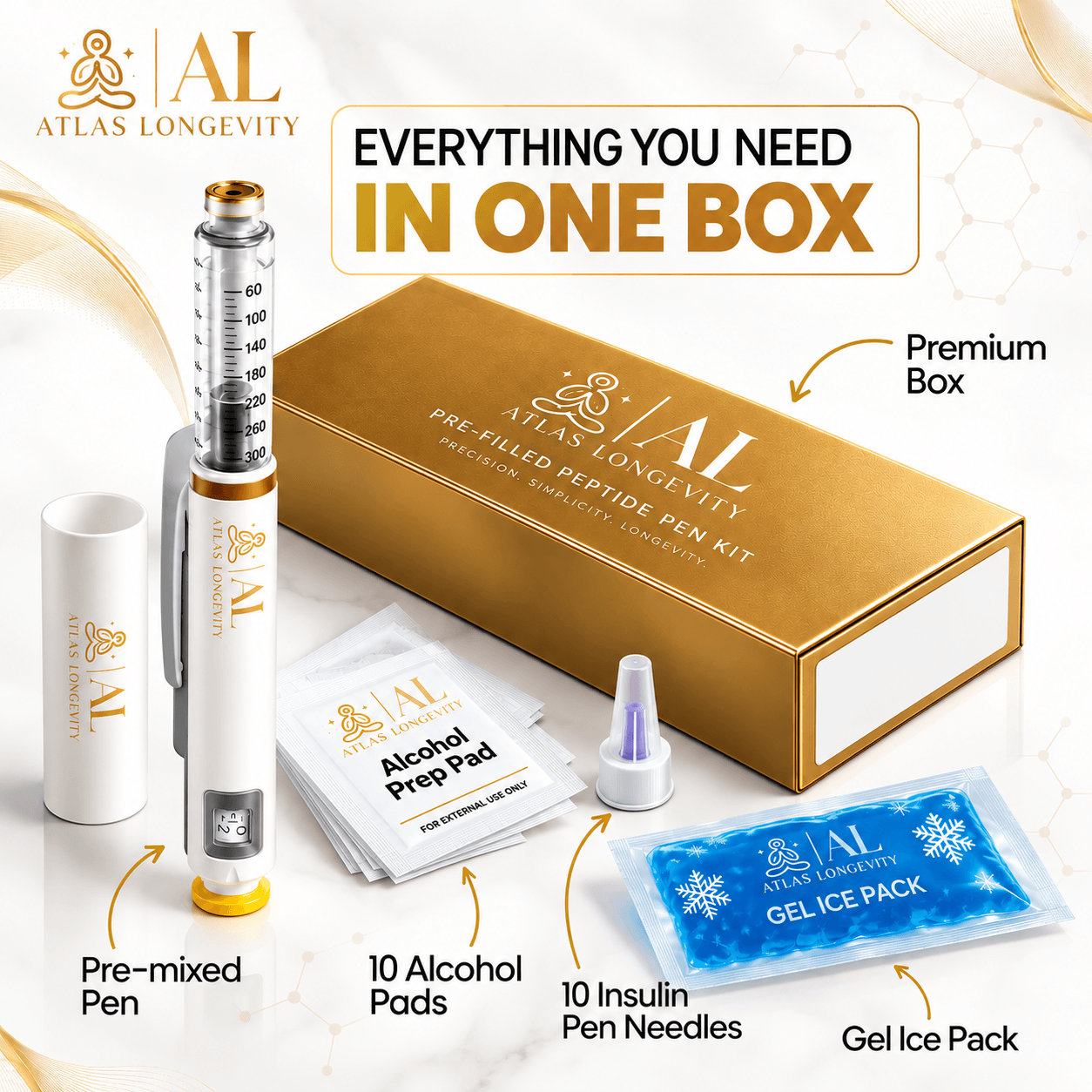
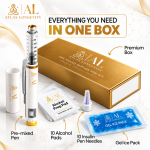
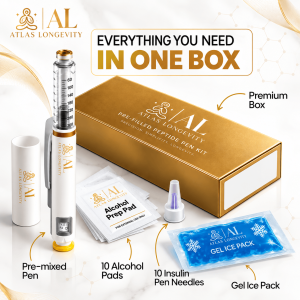
Each Atlas Longevity product is carefully packed to support secure storage, clean handling, and convenient research use. Inside the package, you’ll find the essential items needed for organized laboratory handling:
- 1× Ready-to-Use Injection Pen
- 10× Ultra-Fine Needles (33G, 4 mm)
- 10× Alcohol Prep Pads
- Protective Foam Insert to help keep the pen secure during transport
- Quick-Reference Instruction Panel inside the packaging
- Tamper-Evident Security Seal for added package protection
Each component is arranged in a clean, protective presentation designed to keep the product secure and easy to access.
Storage
Storage conditions should follow the instructions supplied specifically with the Atlas Longevity Klow Blend formulation.
The reference product provides refrigeration and stability specifications for its own pre-mixed product. Those claims should not automatically be transferred to Atlas Longevity without formulation-specific stability evidence.
This is especially important for a four-component formulation because stability may depend on individual peptide concentrations, excipients, pH, temperature, light exposure, and interactions within the finished formulation.
Follow the temperature requirements, handling guidance, light-protection instructions, and shelf-life information provided on the Atlas Longevity product label or accompanying documentation.
The source’s statement of 80 mg as “molecular weight” should not be carried into Atlas content because 80 mg represents the quantity of blend in the pen, not the molecular weight of a defined molecule.
Frequently Asked Questions
What is Klow Blend?
Klow Blend is a multi-peptide research formulation containing:
BPC-157 + TB-500 + GHK-Cu + KPV
It is designed for research into regenerative, extracellular-matrix, vascular, inflammatory, oxidative-stress, and tissue-remodelling pathways. Pasted text
What is the difference between Klow Blend and Glow Blend?
Based on the supplied material, Glow Blend contains:
BPC-157 + TB-500 + GHK-Cu
while Klow Blend adds:
KPV
to create a four-component formulation.
The source discusses KPV primarily in relation to inflammatory, oxidative-stress, and vascular-regulation pathways.
How does Klow Blend work?
The formulation combines different experimental mechanisms:
BPC-157 — angiogenesis and fibroblast-associated signalling.
TB-500-related pathways — actin regulation and cellular migration.
GHK-Cu — collagen, extracellular-matrix and antioxidant pathways.
KPV — inflammatory, vascular-permeability and oxidative-stress-related research.
The source describes these as complementary mechanisms. Pasted text
What is Klow Blend researched for?
Research areas described in the supplied material include:
- tissue repair;
- wound healing;
- muscle and tendon biology;
- collagen synthesis;
- angiogenesis;
- extracellular-matrix remodelling;
- skin biology;
- oxidative stress;
- inflammation;
- fibrosis;
- regenerative research.
Evidence for the exact four-component formulation remains limited.
Has Klow Blend been studied in humans?
The supplied material does not establish randomized human clinical trials of the exact Klow Blend formulation. Pasted text
Some components have human or observational research, but evidence for individual ingredients should not automatically be attributed to the complete blend.
How much Klow Blend is in the Atlas Longevity pen?
Each Atlas Longevity Klow Blend pen contains:
80 mg total blend in 3 mL.
How much BPC-157, TB-500, GHK-Cu, and KPV is in each pen?
The supplied source does not specify the individual quantities.
It only establishes a total blend amount of 80 mg.
The exact component ratio should therefore be confirmed from the Atlas formulation before individual amounts are published.
What is the concentration of the Klow Blend pen?
The total concentration is:
80 mg ÷ 3 mL = approximately 26.67 mg/mL.
How many clicks are in the Klow Blend pen?
Each Atlas Longevity pen contains:
300 total clicks / units
with:
1 click = 0.01 mL
How much Klow Blend is in one click?
Each click contains approximately:
0.2667 mg
or:
266.7 mcg total Klow Blend
The amount of each individual component per click cannot be calculated without the formulation ratio.
How many clicks equal 4 mg total blend?
15 clicks = 4 mg total Klow Blend.
How many clicks equal 8 mg total blend?
30 clicks = 8 mg total Klow Blend.
These are concentration calculations rather than dosing recommendations.
What is the maximum selectable amount on the Klow Blend pen?
The maximum single dial selection is:
60 clicks
which equals:
0.60 mL
and:
16 mg total Klow Blend
This describes the mechanical pen range rather than a recommended amount.
How long does a Klow Blend pen last?
The complete pen contains:
300 clicks and 80 mg total blend.
The number of administrations depends on the number of clicks selected each time.
For cartridge-capacity calculations only:
- 15 clicks at a time = 20 administrations
- 30 clicks at a time = 10 administrations
- 60 clicks at a time = 5 administrations
These examples describe pen capacity rather than a therapeutic protocol.
Does the product disappear when the dial returns to zero?
No.
After administration, the dial returns to zero while the unused formulation remains inside the cartridge.
The remaining Klow Blend stays in the pen until its 300 total units have been used.
Is Klow Blend proven to accelerate healing?
The individual components have been investigated in experimental tissue-repair models.
However, the supplied information does not establish that the exact Klow Blend formulation reliably accelerates healing in humans.
Is Klow Blend proven to improve skin appearance?
GHK-Cu and other components have experimental research relevant to skin and extracellular-matrix biology.
However, evidence from individual components or topical formulations should not automatically be interpreted as proof that injectable Klow Blend improves skin tone, wrinkles, elasticity, or hydration in humans.
Does KPV provide mitochondrial support?
The supplied source describes KPV in connection with mitochondrial and energy-related support within the blend. Pasted text
However, the supplied material does not provide controlled human evidence demonstrating that Klow Blend improves mitochondrial energy production.
This should therefore remain a research hypothesis rather than a definitive product benefit.
Can Klow Blend be combined with NAD+ or SS-31?
The supplied source discusses these as extended experimental research concepts. Pasted text
Validated human safety, compatibility, efficacy, and dosing are not established for these combinations.
How should the Atlas Longevity Klow Blend pen be stored?
Follow the storage instructions supplied with the actual Atlas Longevity formulation.
The competitor product’s refrigeration and stability claims relate to its own finished formulation and should not automatically be applied to Atlas without product-specific stability evidence.
Related products
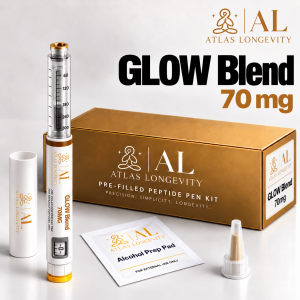
Glow Plus 70mg Pen (GHK-Cu + BPC-157 + TB-500)
Price range: Rp3,000,000.00 through Rp3,600,000.00 ~$181.82–$218.18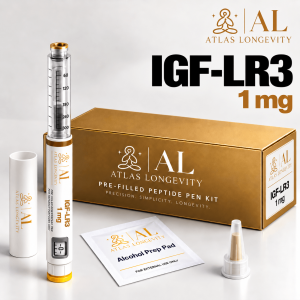
IGF-LR3 1mg Pen
Price range: Rp2,700,000.00 through Rp3,300,000.00 ~$163.64–$200.00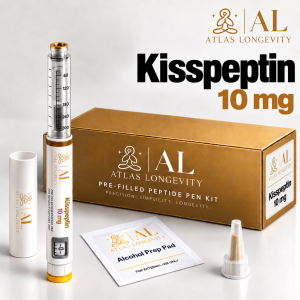
Kisspeptin 10mg Pen
Price range: Rp1,450,000.00 through Rp2,050,000.00 ~$87.88–$124.24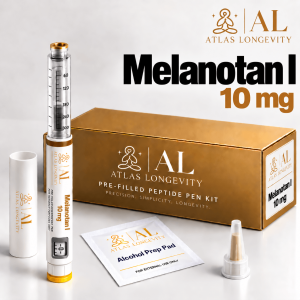
Melanotan I 10mg Pen
Price range: Rp2,500,000.00 through Rp3,100,000.00 ~$151.52–$187.88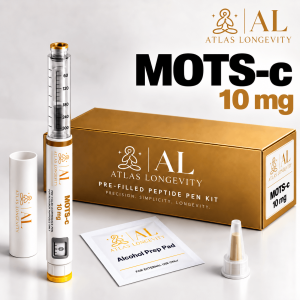
MOTS-C Pen
Price range: Rp1,700,000.00 through Rp3,800,000.00 ~$103.03–$230.30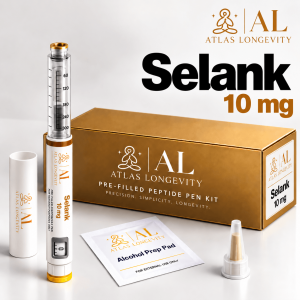
Selank 10mg Pen
Price range: Rp1,600,000.00 through Rp2,200,000.00 ~$96.97–$133.33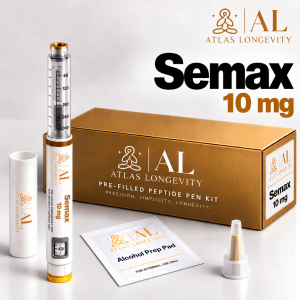
Semax 10mg Pen
Price range: Rp1,600,000.00 through Rp2,200,000.00 ~$96.97–$133.33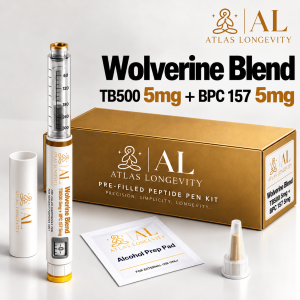
 Peptide Vials
 Peptide Nasal Sprays
 Peptide Protocols
 Bundles