

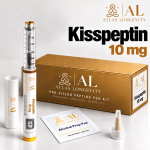
Kisspeptin 10mg Pen
Price range: Rp1,450,000.00 through Rp2,050,000.00 ~$87.88–$124.24
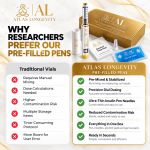
Kisspeptin 10mg Pen is a convenient, ready-to-use peptide commonly associated with hormone signalling and performance support.
No mixing required — simple and easy to use.
✔ No mixing required
✔ Easy-to-use pen
✔ Discreet support
✔ Fast Bali delivery
Kisspeptin 10 mg Pen
Product Description
Kisspeptin, commonly studied as Kisspeptin-10 (KP-10), is a neuropeptide involved in regulation of the hypothalamic-pituitary-gonadal (HPG) axis, one of the body’s central reproductive endocrine systems.
Kisspeptin acts upstream in this pathway by stimulating hypothalamic neurons responsible for releasing gonadotropin-releasing hormone (GnRH). GnRH subsequently signals the pituitary gland to release luteinizing hormone (LH) and follicle-stimulating hormone (FSH), which regulate downstream reproductive hormone activity.
Human and animal research has examined kisspeptin in relation to reproductive endocrinology, gonadotropin secretion, testosterone signalling, ovulatory physiology, fertility pathways, and neurobiological processes associated with sexual behaviour. Pasted text
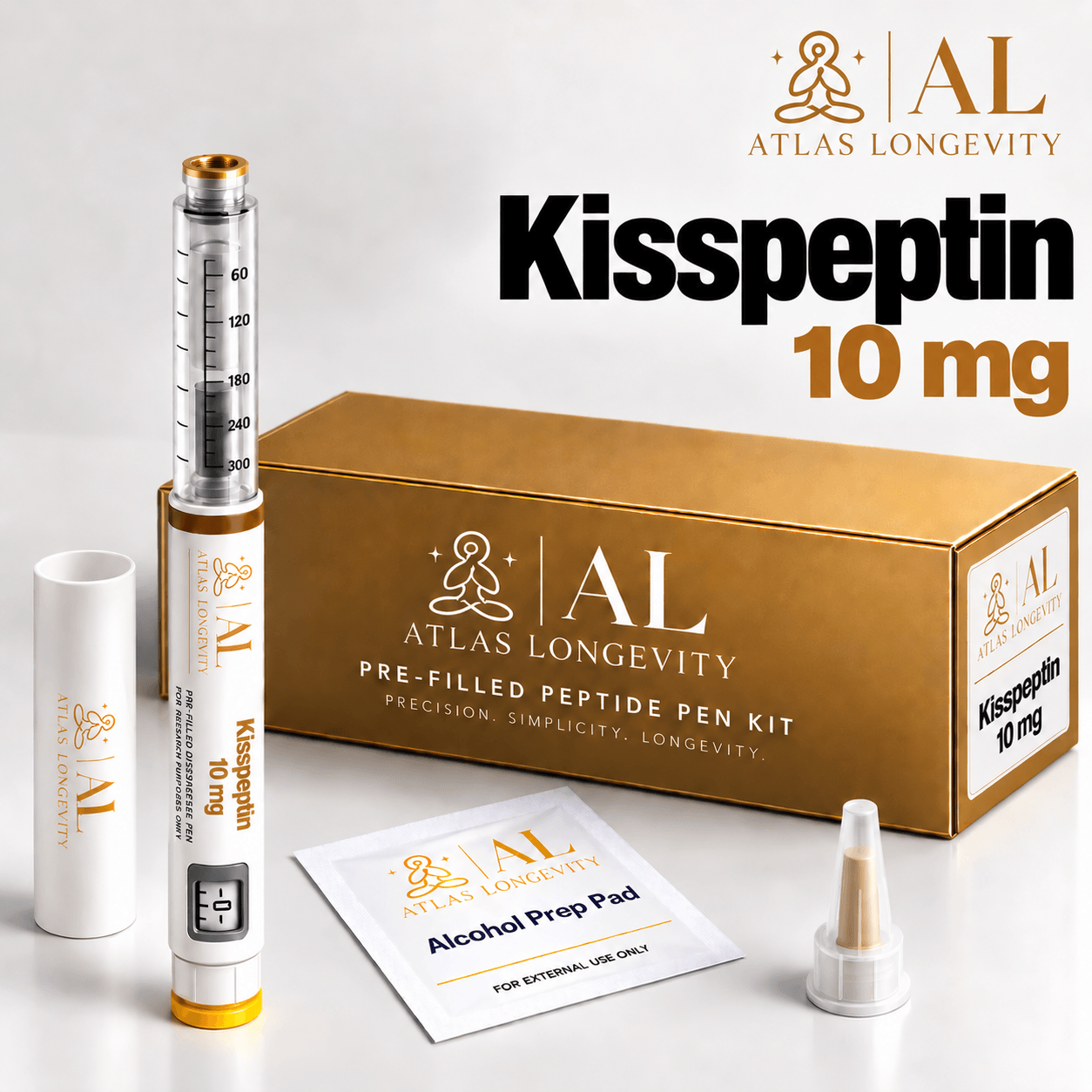
The Atlas Longevity Kisspeptin pen contains 10 mg in a 3 mL pre-mixed cartridge with 300 total units/clicks.
Kisspeptin remains an investigational research compound and should not be presented as an approved treatment for infertility, hypogonadism, low testosterone, libido disorders, or other medical conditions.
Clinical / Research Status
Kisspeptin has a stronger human research base than many experimental peptides.
The supplied material identifies:
| Evidence Type | Status Based on Supplied Material |
|---|---|
| Human randomized clinical research | Yes |
| Human observational research | Yes |
| Animal research | Yes |
| In-vitro research | Yes |
| Regulatory therapeutic approval | Not established |
The reference describes controlled human studies examining HPG-axis activation, gonadotropin release, reproductive endocrinology, and related neuroendocrine responses. Pasted text
However, clinical investigation does not automatically mean that Kisspeptin-10 is approved for routine therapeutic use.
Evidence Type
The supplied research includes:
- healthy male volunteer studies;
- reproductive-endocrinology studies;
- research involving hypogonadotropic hypogonadism;
- studies involving hypothalamic amenorrhea;
- IVF-related investigations;
- functional MRI research;
- animal hypothalamic models;
- puberty and reproductive-development models. Pasted text
Evidence quality differs depending on population, formulation, administration method, and research endpoint.
Mechanism of Action
Kisspeptin acts primarily through the KISS1 receptor (KISS1R / GPR54).
Activation of KISS1R on hypothalamic GnRH neurons can stimulate the release of GnRH.
This initiates a hormonal cascade:
Kisspeptin → GnRH → LH / FSH → downstream reproductive hormone signalling
LH and FSH then act on the gonads and influence reproductive processes including testosterone production, estrogen signalling, follicular development, and ovulatory physiology. Pasted text
Because kisspeptin works near the top of this endocrine hierarchy, it is particularly useful in research focused on upstream neuroendocrine regulation rather than direct hormone replacement.
Potential Benefits / Research Areas
HPG-Axis Activation Research
Kisspeptin is one of the key regulatory signals controlling the reproductive endocrine axis.
Its ability to activate GnRH neurons makes it useful for studying how hypothalamic signals influence pituitary and gonadal hormone production.
This upstream mechanism distinguishes kisspeptin from compounds that directly supply testosterone, estrogen, or other downstream hormones. Pasted text
LH and Testosterone Research
Human studies described in the supplied material have investigated whether kisspeptin can increase LH secretion in male research participants.
Because LH stimulates Leydig cells in the testes, increased LH can subsequently influence endogenous testosterone production. Pasted text
This does not establish Kisspeptin as an approved testosterone-replacement therapy.
Female Reproductive and Ovulatory Research
Kisspeptin plays an important role in the neuroendocrine signalling involved in the LH surge associated with ovulation.
Clinical research has therefore examined kisspeptin in fertility and reproductive-medicine settings, including studies involving oocyte maturation and hypothalamic reproductive dysfunction. Pasted text
Results from these controlled research settings should not be interpreted as general fertility-treatment guidance.
Libido and Neurobiological Research
Kisspeptin research extends beyond hormone concentrations.
Human functional imaging studies described in the source have examined its influence on brain regions involved in emotional, motivational, and sexual processing. Pasted text
This makes kisspeptin relevant to research examining the interaction between reproductive hormones and central nervous system signalling.
It does not establish kisspeptin as an approved libido-enhancing treatment.
Endocrine Feedback Research
Because kisspeptin stimulates the body’s own upstream reproductive signalling, researchers can study the HPG axis while preserving much of the normal endocrine cascade.
This makes it useful for investigating:
- GnRH responses;
- LH and FSH secretion;
- gonadal hormone signalling;
- hypothalamic-pituitary feedback;
- pulsatile endocrine activity. Pasted text
Hypogonadism Research
Kisspeptin has also been examined in populations with abnormalities affecting reproductive hormone signalling.
The supplied material describes studies reporting gonadotropin responses in certain forms of hypogonadotropic endocrine dysfunction. Pasted text
This remains specialist research and should not be represented as a broadly established treatment for low testosterone or hypogonadism.
Research Data
| Study / Model | Reported Finding |
|---|---|
| Healthy male volunteers | Increased LH and FSH secretion with subsequent testosterone changes |
| Hypogonadotropic hypogonadism research | Restoration or enhancement of pulsatile reproductive-hormone signalling in selected research populations |
| Women with hypothalamic amenorrhea | Increased LH pulse frequency and changes in reproductive hormone cycling |
| Rodent hypothalamic models | Activation of GnRH neurons through KISS1R |
| IVF-related human trials | Kisspeptin investigated as a trigger for oocyte maturation |
| Human functional MRI research | Changes in activity within brain regions associated with sexual and emotional processing |
| Preclinical puberty models | Earlier activation of reproductive maturation pathways |
These findings include controlled human and preclinical evidence, but results should be interpreted according to the exact kisspeptin form, study population, and administration method investigated. Pasted text
Potential Stack / Combination Research
The supplied material discusses experimental research concepts involving Kisspeptin with:
- Gonadorelin;
- PT-141;
- Tesamorelin;
- BPC-157. Pasted text
The proposed rationale involves reproductive endocrine signalling, GnRH pathways, libido-related neurobiology, growth-hormone pathways, or tissue-repair research.
However, the supplied information does not establish clinically validated safety, efficacy, compatibility, or dosing for these combinations.
Atlas Longevity therefore does not present them as recommended stacks.
Atlas Longevity Kisspeptin Pen Dosage / Click Chart
The Atlas Longevity Kisspeptin pen contains:
10 mg Kisspeptin
3 mL cartridge volume
300 total clicks
1 click = 0.01 mL
Maximum selectable dial amount = 60 clicks
Pen Specification
| Pen Strength | Volume | Concentration | Amount Per Click |
|---|---|---|---|
| 10 mg | 3 mL | ≈3.333 mg/mL | ≈0.0333 mg / 33.3 mcg |
Concentration Calculation
10 mg ÷ 3 mL = 3.3333 mg/mL
Rounded:
≈3.333 mg/mL
Amount Per Click
10 mg ÷ 300 clicks = 0.033333 mg per click
Therefore:
1 click ≈0.0333 mg
or:
≈33.3 mcg Kisspeptin
Kisspeptin Click Conversion Chart
| Clicks | Volume | Kisspeptin Amount |
|---|---|---|
| 1 | 0.01 mL | ≈0.0333 mg / 33.3 mcg |
| 3 | 0.03 mL | 0.100 mg / 100 mcg |
| 5 | 0.05 mL | ≈0.1667 mg / 166.7 mcg |
| 9 | 0.09 mL | 0.300 mg / 300 mcg |
| 10 | 0.10 mL | ≈0.333 mg / 333 mcg |
| 15 | 0.15 mL | 0.500 mg / 500 mcg |
| 20 | 0.20 mL | ≈0.667 mg / 667 mcg |
| 30 | 0.30 mL | 1.000 mg |
| 40 | 0.40 mL | ≈1.333 mg |
| 50 | 0.50 mL | ≈1.667 mg |
| 60 | 0.60 mL | 2.000 mg |
Useful Conversions
- 3 clicks = 0.10 mg / 100 mcg
- 9 clicks = 0.30 mg / 300 mcg
- 15 clicks = 0.50 mg / 500 mcg
- 30 clicks = 1 mg
- 60 clicks = 2 mg
The maximum selectable amount in one dial operation is:
60 clicks = 0.60 mL = 2 mg Kisspeptin
This is a mathematical concentration conversion and not a dosing recommendation.
Protocol / Dosage Information
The supplied source describes experimental quantities of approximately 0.05 mg to 0.50 mg in several research models. Pasted text
Its original click values were calculated using a different 2 mL formulation and therefore do not apply to the Atlas Longevity 3 mL / 300-click pen.
Using the Atlas formulation:
| Source-Referenced Amount | Atlas Pen Conversion |
|---|---|
| 0.05 mg / 50 mcg | ≈1.5 clicks* |
| 0.10 mg / 100 mcg | 3 clicks |
| 0.20 mg / 200 mcg | 6 clicks |
| 0.30 mg / 300 mcg | 9 clicks |
| 0.40 mg / 400 mcg | 12 clicks |
| 0.50 mg / 500 mcg | 15 clicks |
*A calculated result of 1.5 clicks cannot be selected exactly using whole pen units.
The source also describes pulsatile experimental administration, but this should not be converted into a recommended self-administration schedule.
These calculations simply translate quantities mentioned in the supplied research material into the Atlas pen concentration.
They do not establish an approved human dose, frequency, duration, cycle, fertility protocol, testosterone protocol, or therapeutic regimen.
Possible Side Effects
The supplied material describes Kisspeptin as generally tolerated in clinical and preclinical research, but this does not establish complete long-term safety.
Effects reported in research settings include:
- mild headache;
- light-headedness;
- localized injection-site irritation;
- nausea;
- facial flushing;
- temporary changes in LH or FSH;
- short-term changes in mood or libido associated with hormonal signalling. Pasted text
Because Kisspeptin directly influences the reproductive endocrine axis, particular uncertainty remains around:
- repeated long-term exposure;
- reproductive hormone disruption;
- fertility-related effects outside controlled research;
- ovarian responses;
- interactions with hormone therapies;
- pregnancy-related exposure;
- endocrine disorders;
- combination protocols.
Statements that serious effects were not observed in limited research should not be interpreted as proof that such effects cannot occur.
Product Attributes
| Attribute | Information |
|---|---|
| Compound Name | Kisspeptin |
| Form listed by source | Kisspeptin-10 / KP-10 |
| CAS Number | 374675-21-5 |
| Molecular Formula | C63H83N17O14 |
| Amino Acid Sequence | YNWNSFGLRF-NH2 |
| Molecular Weight | 1302.45 g/mol |
| PubChem CID | 25240297 |
| Half-Life listed by source | Approximately 28 minutes |
| Synonyms | Kisspeptin-10, KP-10, Metastin (45-54), KiSS-1 (112-121) |
| Compound Type | Synthetic research neuropeptide / KISS1R agonist |
| Primary Target | KISS1R / GPR54 |
| Research Focus | Reproductive endocrinology, GnRH, HPG-axis regulation and fertility research |
These specifications are reported in the supplied reference material.
Because several kisspeptin isoforms exist, the Atlas product specification should confirm that the finished product is specifically Kisspeptin-10 / KP-10 before publishing the sequence, CAS number, and molecular weight.
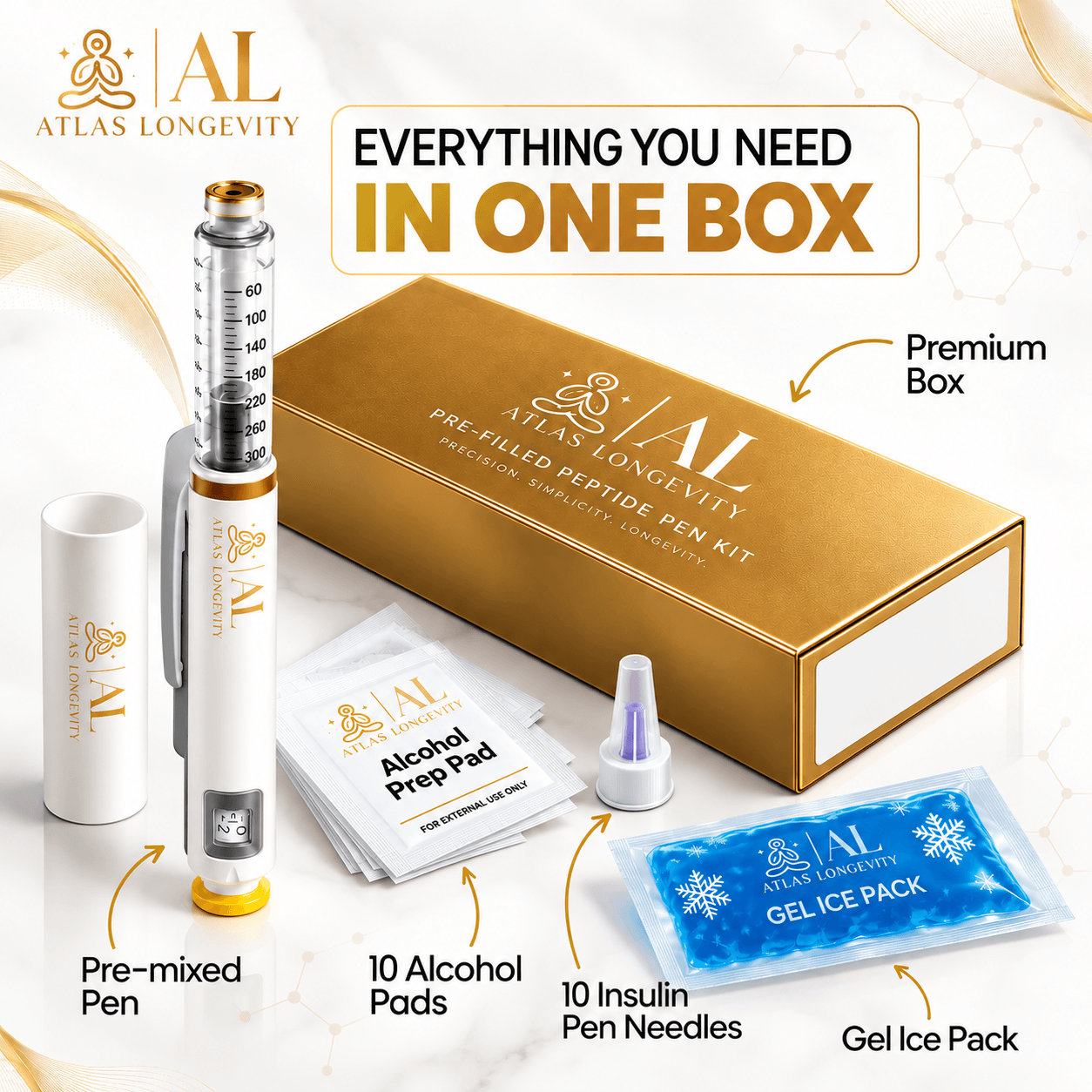
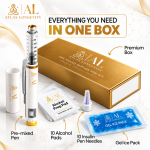
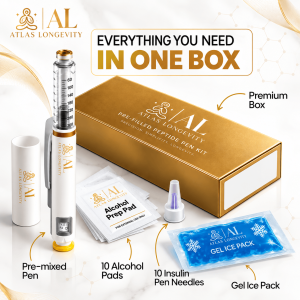
Included in the Box
Each Atlas Longevity product is carefully packed to support secure storage, clean handling, and convenient research use. Inside the package, you’ll find the essential items needed for organized laboratory handling:
- 1× Ready-to-Use Injection Pen
- 10× Ultra-Fine Needles (33G, 4 mm)
- 10× Alcohol Prep Pads
- Protective Foam Insert to help keep the pen secure during transport
- Quick-Reference Instruction Panel inside the packaging
- Tamper-Evident Security Seal for added package protection
Each component is arranged in a clean, protective presentation designed to keep the product secure and easy to access.
Storage
Storage conditions should follow the instructions supplied specifically with the Atlas Longevity Kisspeptin formulation.
The reference product provides refrigeration and stability specifications for its own pre-mixed formulation. Those claims should not automatically be transferred to Atlas Longevity without formulation-specific stability evidence.
Follow the temperature requirements, light-protection guidance, handling instructions, and shelf-life information shown on the Atlas Longevity product label or accompanying documentation.
Frequently Asked Questions
What is Kisspeptin?
Kisspeptin is a neuropeptide that plays an important role in controlling reproductive hormone signalling.
It activates GnRH neurons within the hypothalamus, which can subsequently stimulate pituitary release of LH and FSH. Pasted text
What is Kisspeptin-10?
Kisspeptin-10, commonly abbreviated KP-10, is a shorter biologically active form of kisspeptin.
The supplied product specifications identify the researched compound as KP-10 with the amino-acid sequence:
YNWNSFGLRF-NH2
How does Kisspeptin work?
Kisspeptin activates KISS1R / GPR54 receptors associated with hypothalamic GnRH neurons.
This can initiate the reproductive hormone cascade:
Kisspeptin → GnRH → LH / FSH → gonadal hormone signalling. Pasted text
What is the HPG axis?
The HPG axis is the hypothalamic-pituitary-gonadal axis.
It is the endocrine communication system connecting:
- the hypothalamus;
- pituitary gland;
- ovaries or testes.
Kisspeptin functions near the top of this signalling system.
What is Kisspeptin researched for?
Research areas include:
- GnRH signalling;
- LH and FSH secretion;
- testosterone-related pathways;
- ovulation;
- reproductive endocrinology;
- fertility;
- hypogonadism;
- hypothalamic amenorrhea;
- libido-related neural signalling.
Kisspeptin has human research support in several of these areas, but this does not mean it is approved for routine therapeutic use.
Has Kisspeptin been studied in humans?
Yes.
The supplied evidence includes controlled human studies and observational research involving reproductive hormone responses, fertility-related endpoints, and neuroendocrine function. Pasted text
Does Kisspeptin increase testosterone?
Human research described in the supplied material reports increased LH and subsequent changes in testosterone following kisspeptin exposure in certain male research populations. Pasted text
This does not establish Kisspeptin as an approved testosterone treatment or guarantee the same response in every individual.
Is Kisspeptin used in female fertility research?
Yes.
Kisspeptin has been investigated in research involving ovulatory signalling, hypothalamic reproductive dysfunction, and oocyte maturation in fertility-treatment settings. Pasted text
These specialist research findings should not be treated as general self-treatment guidance.
Does Kisspeptin affect libido?
Human neuroimaging research has examined Kisspeptin’s effects on brain regions associated with sexual and emotional processing. Pasted text
However, this does not establish Kisspeptin as an approved treatment for low libido.
How much Kisspeptin is in each Atlas Longevity pen?
Each Atlas Longevity Kisspeptin pen contains:
10 mg in 3 mL.
What is the concentration of the Kisspeptin pen?
The concentration is:
10 mg ÷ 3 mL = approximately 3.333 mg/mL
How many clicks are in an Atlas Longevity Kisspeptin pen?
Each pen contains:
300 total clicks / units
with:
1 click = 0.01 mL
How much Kisspeptin is in one click?
Each click contains approximately:
0.0333 mg
or:
33.3 mcg Kisspeptin
How many clicks equal 100 mcg?
3 clicks = 100 mcg / 0.10 mg.
How many clicks equal 200 mcg?
6 clicks = 200 mcg / 0.20 mg.
How many clicks equal 300 mcg?
9 clicks = 300 mcg / 0.30 mg.
How many clicks equal 500 mcg?
15 clicks = 500 mcg / 0.50 mg.
These figures are concentration calculations rather than dosing recommendations.
What is the maximum selectable amount on the Kisspeptin pen?
The maximum single dial selection is:
60 clicks
which equals:
0.60 mL
and:
2 mg Kisspeptin
This describes the mechanical range of the pen rather than a recommended amount.
How long does a Kisspeptin pen last?
The complete pen contains:
300 clicks and 10 mg Kisspeptin.
The number of administrations depends on the number of clicks selected each time.
For cartridge-capacity calculation only:
- 3 clicks at a time = 100 administrations
- 6 clicks at a time = 50 administrations
- 10 clicks at a time = 30 administrations
- 15 clicks at a time = 20 administrations
- 30 clicks at a time = 10 administrations
- 60 clicks at a time = 5 administrations
These examples describe cartridge capacity rather than a therapeutic protocol.
Does the pen become empty when the dial returns to zero?
No.
The dial returns to zero after administration while the unused formulation remains inside the cartridge.
The remaining Kisspeptin stays in the pen until all 300 units have been used.
Is there an established human Kisspeptin dosage?
Kisspeptin has been investigated clinically using different compounds, formulations, administration methods, populations, and research protocols.
The supplied source does not establish a universal approved dose for the Atlas Longevity Kisspeptin pen.
The click chart therefore represents concentration mathematics only, not medical dosing guidance.
Can Kisspeptin be combined with Gonadorelin or PT-141?
The supplied source discusses these as experimental research combinations. Pasted text
However, it does not establish validated human safety, compatibility, efficacy, or dosing for those combinations.
How should the Atlas Longevity Kisspeptin pen be stored?
Follow the storage instructions supplied with the actual Atlas Longevity formulation.
The reference manufacturer’s refrigeration and stability claims relate to its own finished product and should not automatically be applied to Atlas without product-specific stability evidence.
Related products
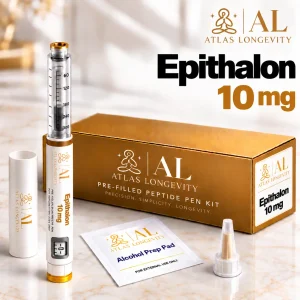
Epithalon Peptide Pen
Price range: Rp1,800,000.00 through Rp4,050,000.00 ~$109.09–$245.45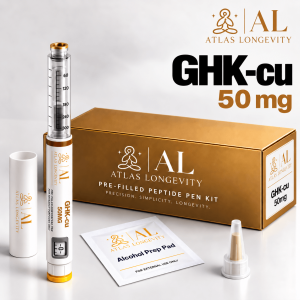
GHK-Cu Peptide Pen
Price range: Rp1,400,000.00 through Rp3,000,000.00 ~$84.85–$181.82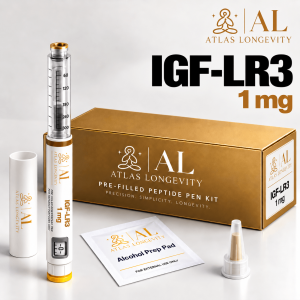
IGF-LR3 1mg Pen
Price range: Rp2,700,000.00 through Rp3,300,000.00 ~$163.64–$200.00
KLOW 80mg Pen (GHK-Cu + KPV + BPC-157 + TB-500)
Price range: Rp3,200,000.00 through Rp3,800,000.00 ~$193.94–$230.30
KPV 10mg Pen
Price range: Rp1,500,000.00 through Rp2,100,000.00 ~$90.91–$127.27
Melanotan I 10mg Pen
Price range: Rp2,500,000.00 through Rp3,100,000.00 ~$151.52–$187.88
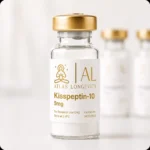 Peptide Vials
 Peptide Nasal Sprays
 Peptide Protocols
 Bundles