



Glutathione 1500mg Pen
Price range: Rp2,500,000.00 through Rp3,100,000.00 ~$151.52–$187.88
Glutathione 1500mg Pen is a convenient, ready-to-use antioxidant solution commonly associated with skin glow and overall wellness support.
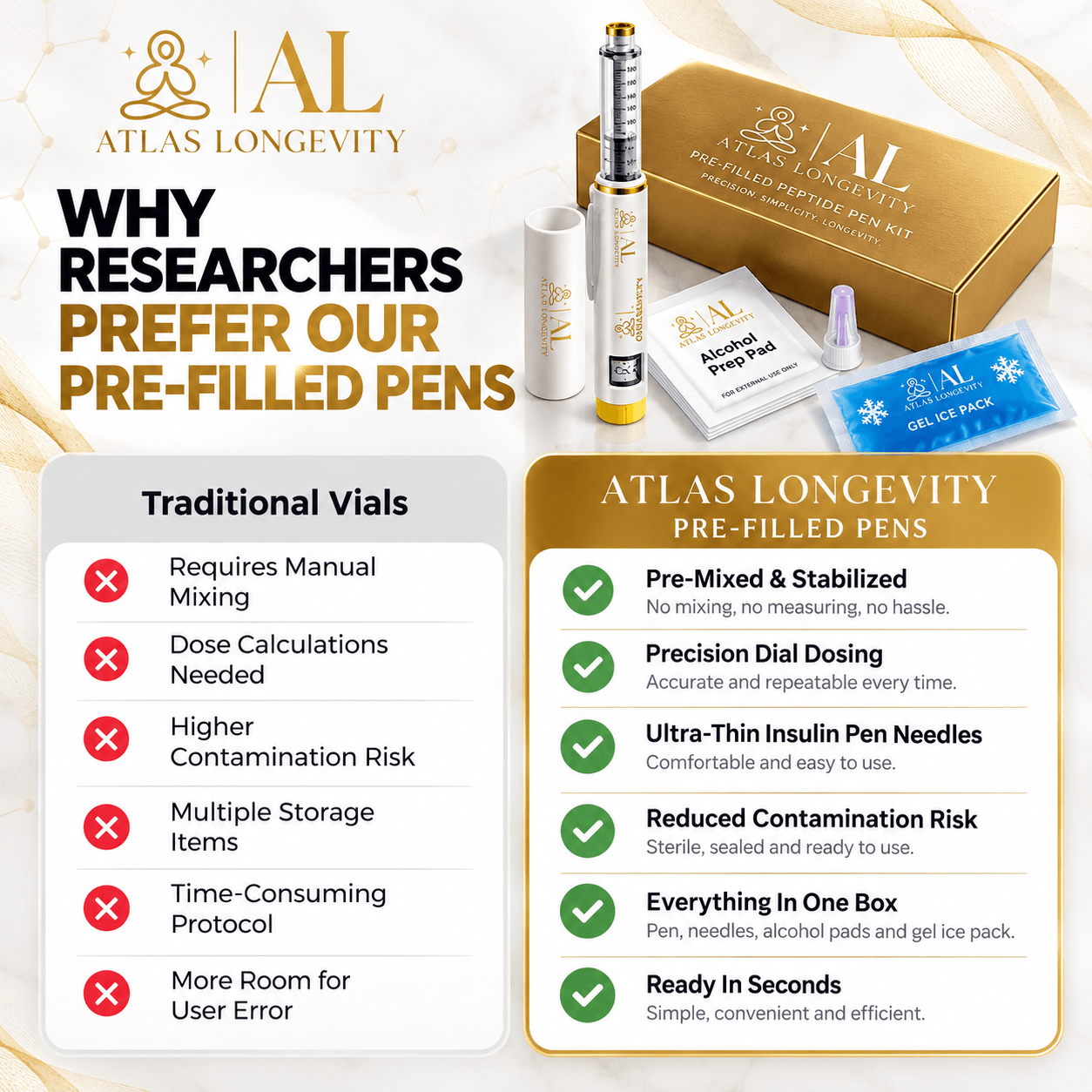
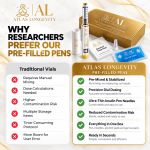
No mixing required — simple and easy to use.
✔ No mixing required
✔ Easy-to-use pen
✔ Skin glow & wellness support
✔ Fast Bali delivery
Glutathione 1500 mg Pen
Product Description
Glutathione (GSH) is a naturally occurring tripeptide composed of glutamate, cysteine, and glycine and is one of the body’s key intracellular antioxidant systems.
It plays a central role in redox regulation, detoxification pathways, oxidative-stress defence, mitochondrial protection, and cellular homeostasis. Research has also examined glutathione in relation to liver metabolism, immune function, cellular ageing, and skin-pigmentation biology. Pasted text
The reduced form of glutathione, commonly abbreviated GSH, can donate electrons to neutralize reactive oxygen species and participates in enzyme systems responsible for maintaining intracellular redox balance.
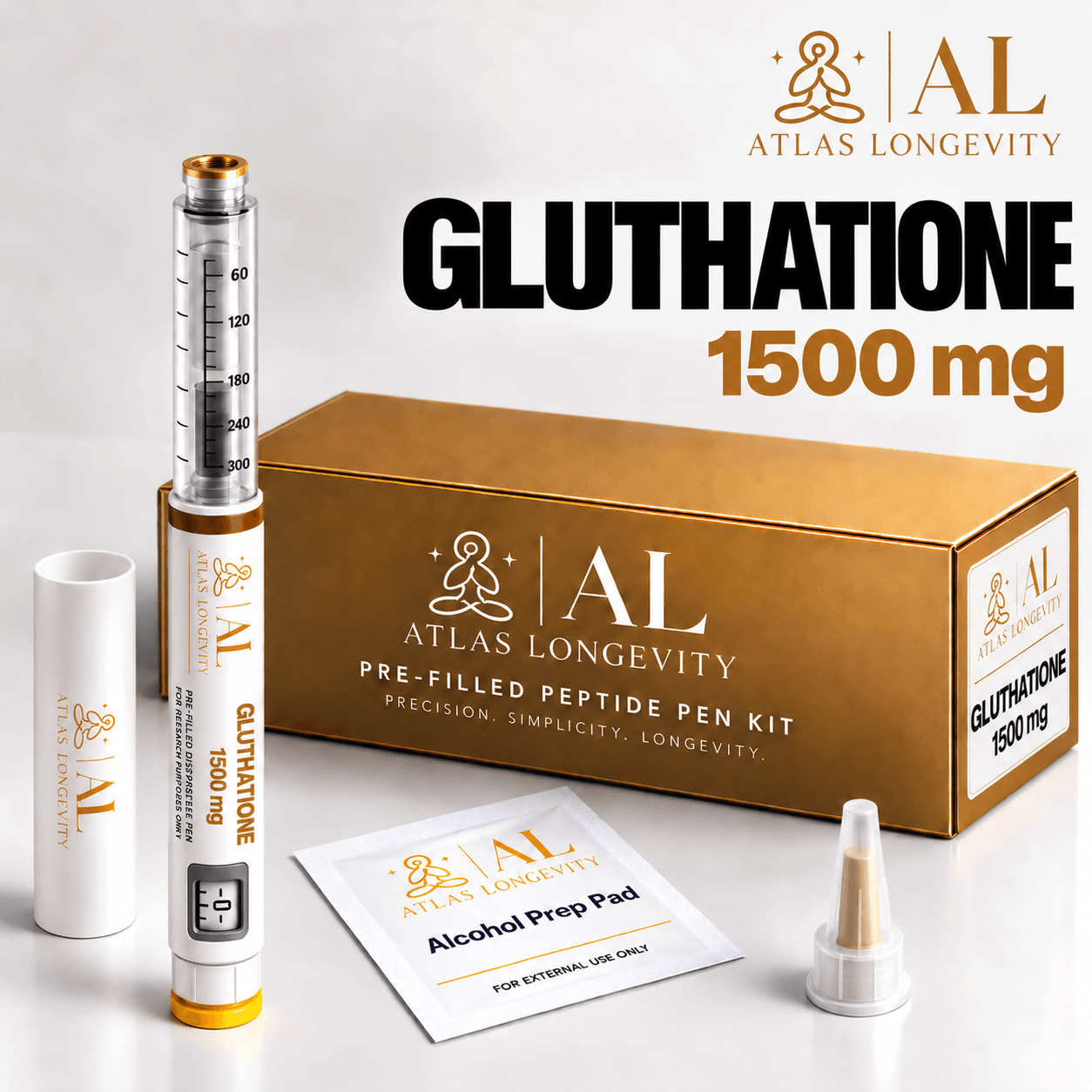
The Atlas Longevity Glutathione pen contains 1500 mg in a 3 mL pre-mixed cartridge with 300 total units/clicks.
Glutathione is an endogenous biological compound, but that does not mean every formulation or route of administration is clinically established or approved for every proposed use.
Clinical / Research Status
Glutathione has been studied extensively across human, animal, observational, and laboratory research.
The supplied reference identifies evidence involving oxidative stress, liver-related research, immune function, dermatological applications, and metabolic biology. Pasted text
| Evidence Type | Status Based on Supplied Material |
|---|---|
| Human randomized clinical research | Yes |
| Human observational research | Yes |
| Animal research | Yes |
| In-vitro research | Yes |
| Regulatory therapeutic approval for this pen formulation | Not established |
A key distinction is that research involving oral, intravenous, topical, liposomal, or other glutathione formulations should not automatically be treated as evidence for a pre-mixed injection pen.
Route of administration matters when interpreting both effectiveness and safety.
Evidence Type
The supplied research material includes:
- human oral glutathione trials;
- human systemic administration research;
- liver-related observational studies;
- animal oxidative-stress models;
- hepatotoxicity models;
- neurodegenerative experimental models;
- melanocyte cultures;
- inflammatory models;
- pharmacokinetic studies. Pasted text
The strength and relevance of the evidence varies depending on the formulation and research question.
Mechanism of Action
Glutathione acts primarily as a cellular redox buffer.
Its reduced form, GSH, can donate electrons to neutralize reactive oxygen species and peroxides. During this process, glutathione becomes oxidized and can subsequently be regenerated by cellular enzyme systems.
The supplied material describes several major biochemical roles:
- glutathione peroxidase-mediated peroxide neutralization;
- glutathione reductase-dependent regeneration;
- glutathione S-transferase-mediated conjugation;
- xenobiotic and reactive-metabolite processing;
- mitochondrial redox regulation;
- interaction with apoptosis and oxidative-phosphorylation pathways. Pasted text
These mechanisms explain why glutathione is widely studied across oxidative-stress, detoxification, mitochondrial, and cellular-protection research.
Potential Benefits / Research Areas
Antioxidant and Redox Research
Glutathione is one of the most important intracellular antioxidant molecules.
Research has examined its role in protecting:
- DNA;
- proteins;
- lipids;
- cell membranes;
- mitochondrial structures
from oxidative damage.
The scientific focus is not simply on “detoxification” but on maintaining the balance between oxidative and reducing processes inside cells. Pasted text
Liver and Detoxification Pathways
Glutathione participates in phase II conjugation pathways through glutathione S-transferases.
These pathways help process certain reactive metabolites and xenobiotics into forms that can be more readily eliminated.
Experimental research has therefore examined glutathione in models involving:
- hepatotoxicity;
- reactive metabolites;
- environmental toxins;
- oxidative liver stress;
- drug-induced cellular injury. Pasted text
Claims of broad “body detoxification” should not be overstated beyond the biochemical pathways supported by evidence.
Antioxidant Recycling
Glutathione also interacts with the wider antioxidant network.
The supplied material describes research involving regeneration of oxidized vitamin C and vitamin E, which helps maintain cellular antioxidant cycling. Pasted text
This contributes to glutathione’s central role in cellular redox biology.
Mitochondrial Research
Mitochondria generate reactive oxygen species as part of normal energy metabolism.
Glutathione within mitochondria contributes to:
- protection against oxidative injury;
- maintenance of membrane integrity;
- redox regulation;
- regulation of cell-death signalling;
- preservation of mitochondrial function. Pasted text
This makes glutathione an important research compound in cellular-energy and ageing-related models.
Immune-System Research
Glutathione is involved in multiple immune processes, including lymphocyte function, macrophage activity, cytokine regulation, and cellular redox signalling.
For this reason, it has been investigated in research concerning immune resilience and inflammatory regulation. Pasted text
These mechanisms do not establish glutathione as a treatment for infections or immune disorders.
Cellular Ageing and DNA Protection
Oxidative stress can damage DNA, proteins, lipids, and other cellular components.
Research into glutathione therefore includes its relationship with:
- oxidative DNA damage;
- genomic stability;
- stress-response pathways;
- apoptosis;
- age-associated oxidative burden. Pasted text
Describing glutathione as involved in longevity research is reasonable, but claims of extending human lifespan are not supported by the supplied material.
Inflammation and Oxidative Stress
The supplied material reports experimental changes involving inflammatory mediators including TNF-α and IL-6.
Glutathione research often examines the interaction between oxidative stress and inflammatory signalling because these processes can amplify one another in disease models. Pasted text
Skin Pigmentation and Dermatological Research
Glutathione has also been investigated in skin-pigmentation research.
The supplied material describes effects involving tyrosinase activity and melanin synthesis, which has led to investigation of glutathione in skin-tone and pigmentation studies. Pasted text
However, effects observed with one route of administration should not automatically be applied to injectable use.
Neurological Oxidative-Stress Research
The nervous system is particularly sensitive to oxidative injury.
Glutathione has therefore been investigated in experimental neurological models involving mitochondrial function, neuronal oxidative stress, and cellular protection. Pasted text
These findings do not establish glutathione as an approved treatment for neurodegenerative disease.
Cellular Recovery Research
The supplied material also discusses glutathione in relation to cellular recovery after oxidative or metabolic stress.
Research areas include:
- protein function;
- membrane stability;
- enzyme activity;
- redox restoration;
- oxidative-damage recovery. Pasted text
Research Data
| Study / Model | Reported Finding |
|---|---|
| Human oral and IV research | Increased glutathione-related measurements and reduced oxidative-stress biomarkers |
| Animal oxidative-stress models | Reduced lipid-peroxidation markers and changes in GSH:GSSG balance |
| Experimental hepatotoxicity models | Reduced liver-injury markers and improved antioxidant-enzyme activity |
| Neurodegenerative experimental models | Changes in neuronal survival and oxidative-stress markers |
| In-vitro melanocyte cultures | Reduced tyrosinase activity and melanin synthesis |
| Inflammatory research models | Changes in TNF-α, IL-6 and related inflammatory markers |
| Pharmacokinetic research | Differences in glutathione availability depending on formulation and delivery system |
These studies use different formulations and routes of administration, so they should not all be interpreted as direct evidence for the Atlas Longevity pen. Pasted text
Potential Stack / Combination Research
The supplied material discusses experimental combinations involving glutathione with:
- NAD+;
- BPC-157;
- GHK-Cu;
- mitochondrial-focused research compounds. Pasted text
The proposed research rationale includes redox cycling, mitochondrial protection, tissue repair, and skin-related pathways.
However, the supplied information does not establish validated human safety, efficacy, compatibility, or dosing for these combinations.
They should therefore be treated as experimental research concepts rather than recommended stacks.
Atlas Longevity Glutathione Pen Dosage / Click Chart
The Atlas Longevity Glutathione pen contains:
1500 mg Glutathione
3 mL cartridge volume
300 total clicks
1 click = 0.01 mL
Maximum selectable dial amount = 60 clicks
Pen Specification
| Pen Strength | Volume | Concentration | Amount Per Click |
|---|---|---|---|
| 1500 mg | 3 mL | 500 mg/mL | 5 mg |
Concentration Calculation
1500 mg ÷ 3 mL = 500 mg/mL
Amount Per Click
1500 mg ÷ 300 clicks = 5 mg per click
Therefore:
1 click = 5 mg Glutathione
Glutathione Click Conversion Chart
| Clicks | Volume | Glutathione Amount |
|---|---|---|
| 1 | 0.01 mL | 5 mg |
| 5 | 0.05 mL | 25 mg |
| 10 | 0.10 mL | 50 mg |
| 15 | 0.15 mL | 75 mg |
| 20 | 0.20 mL | 100 mg |
| 30 | 0.30 mL | 150 mg |
| 40 | 0.40 mL | 200 mg |
| 50 | 0.50 mL | 250 mg |
| 60 | 0.60 mL | 300 mg |
Useful Conversions
- 10 clicks = 50 mg
- 20 clicks = 100 mg
- 30 clicks = 150 mg
- 40 clicks = 200 mg
- 50 clicks = 250 mg
- 60 clicks = 300 mg
The maximum selectable amount in one dial operation is:
60 clicks = 0.60 mL = 300 mg Glutathione
This is a concentration calculation and not a dosing recommendation.
Protocol / Dosage Information
The supplied reference discusses experimental quantities ranging approximately from 150 mg to 600 mg. Pasted text
Using the Atlas Longevity 1500 mg / 3 mL / 300-click pen, the mathematical equivalents are:
| Source-Referenced Amount | Atlas Pen Equivalent |
|---|---|
| 150 mg | 30 clicks |
| 200 mg | 40 clicks |
| 250 mg | 50 clicks |
| 300 mg | 60 clicks |
| 400 mg | 80 total clicks |
| 500 mg | 100 total clicks |
| 600 mg | 120 total clicks |
Important Pen Limitation
The Atlas pen can select a maximum of 60 clicks in a single dial operation.
Therefore:
- 300 mg = maximum single selectable amount
- 400 mg mathematically equals 80 clicks
- 500 mg mathematically equals 100 clicks
- 600 mg mathematically equals 120 clicks
Amounts above 300 mg cannot be selected in one dial operation.
These larger values are shown only to translate quantities mentioned in the supplied reference into the Atlas concentration. They are not instructions to repeat or divide injections.
The supplied evidence does not establish a universally accepted clinical dose, treatment duration, frequency, cycling schedule, or approved protocol for this Atlas formulation.
Possible Side Effects
Glutathione is naturally present in the body, but that does not mean every route or concentration is free of adverse effects.
The supplied material describes possible effects including:
- nausea;
- abdominal cramping;
- bloating;
- flatulence;
- metallic or sulfur-like taste;
- localized redness or swelling;
- injection-site irritation;
- headache;
- temporary fatigue;
- allergic reactions in some individuals. Pasted text
The source also discusses respiratory reactions associated specifically with inhaled forms.
Those inhalation-related concerns should not automatically be applied to the Atlas pen, but they illustrate that adverse effects can depend strongly on the route of administration.
The available material does not establish a complete safety profile for:
- long-term injectable use;
- pregnancy or breastfeeding;
- medication interactions;
- chronic high-concentration exposure;
- combination protocols;
- individuals with specific metabolic or respiratory conditions.
Product Attributes
| Attribute | Information |
|---|---|
| Compound Name | Glutathione |
| Abbreviation | GSH |
| Chemical Name | γ-L-Glutamyl-L-cysteinyl-glycine |
| CAS Number | 70-18-8 |
| Molecular Formula | C10H17N3O6S |
| Sequence / Composition | H-γ-Glu-Cys-Gly-OH |
| Molecular Weight | 307.32 g/mol |
| PubChem CID | 124886 |
| Half-Life listed by source | 2–3 hours plasma; 8–12 hours cellular |
| Synonyms | GSH, L-Glutathione reduced, γ-L-Glutamyl-L-cysteinyl-glycine |
| Compound Type | Natural tripeptide antioxidant |
| Research Focus | Oxidative stress, redox biology, mitochondrial function, detoxification and skin research |
These specifications are reported in the supplied reference material.
Included in the Box
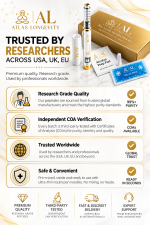
Each Atlas Longevity product is carefully packed to support secure storage, clean handling, and convenient research use. Inside the package, you’ll find the essential items needed for organized laboratory handling:
- 1× Ready-to-Use Injection Pen
- 10× Ultra-Fine Needles (33G, 4 mm)
- 10× Alcohol Prep Pads
- Protective Foam Insert to help keep the pen secure during transport
- Quick-Reference Instruction Panel inside the packaging
- Tamper-Evident Security Seal for added package protection
Each component is arranged in a clean, protective presentation designed to keep the product secure and easy to access.
Storage
Storage conditions should follow the instructions supplied specifically with the Atlas Longevity Glutathione formulation.
The reference source provides refrigeration and stability specifications for its own pre-mixed product, but these conditions should not automatically be transferred to Atlas Longevity without formulation-specific stability evidence.
Follow the temperature requirements, light-protection guidance, handling instructions, and shelf-life information printed on the Atlas Longevity product label or accompanying product documentation.
Frequently Asked Questions
What is Glutathione?
Glutathione is a naturally occurring tripeptide antioxidant composed of glutamate, cysteine, and glycine.
It plays an important role in redox regulation, detoxification pathways, mitochondrial biology, and cellular protection.
What does GSH mean?
GSH is the abbreviation commonly used for reduced glutathione.
This is the form that can donate electrons during antioxidant reactions.
How does Glutathione work?
Glutathione helps maintain cellular redox balance.
It can neutralize peroxides through glutathione-dependent enzyme systems and also participates in detoxification pathways involving glutathione S-transferases. Pasted text
What is Glutathione researched for?
Research areas include:
- oxidative stress;
- antioxidant defence;
- mitochondrial function;
- liver metabolism;
- detoxification pathways;
- immune regulation;
- cellular ageing;
- DNA protection;
- inflammatory signalling;
- skin pigmentation.
Evidence varies depending on the formulation and administration route.
Has Glutathione been studied in humans?
Yes.
The supplied material identifies multiple human randomized and observational studies alongside animal and laboratory research. Pasted text
However, evidence involving oral or IV glutathione should not automatically be treated as evidence for a subcutaneous pen formulation.
How much Glutathione is in each Atlas Longevity pen?
Each Atlas Longevity Glutathione pen contains:
1500 mg in 3 mL.
What is the concentration of the Glutathione pen?
The concentration is:
1500 mg ÷ 3 mL = 500 mg/mL
How many clicks are in an Atlas Longevity Glutathione pen?
Each pen contains:
300 total clicks / units
and:
1 click = 0.01 mL
How much Glutathione is in one click?
Each click contains:
5 mg Glutathione
How many clicks equal 100 mg?
20 clicks = 100 mg.
How many clicks equal 150 mg?
30 clicks = 150 mg.
How many clicks equal 200 mg?
40 clicks = 200 mg.
How many clicks equal 250 mg?
50 clicks = 250 mg.
How many clicks equal 300 mg?
60 clicks = 300 mg.
These values are mathematical concentration conversions rather than dosing recommendations.
Can 400 mg be selected in one dial operation?
No.
Mathematically:
400 mg ÷ 5 mg per click = 80 clicks
The Atlas pen has a maximum selectable range of:
60 clicks per dial operation
Therefore, 400 mg exceeds the pen’s single-selection range.
This does not provide instructions for administering 400 mg; it simply explains the pen’s mechanical limitation.
What is the maximum selectable amount on the pen?
The maximum single dial selection is:
60 clicks
which equals:
0.60 mL
and:
300 mg Glutathione
This describes the pen mechanics rather than a recommended amount.
How long does a Glutathione pen last?
The complete pen contains:
300 clicks and 1500 mg Glutathione.
The number of administrations depends on the number of clicks selected each time.
For cartridge-capacity calculation only:
- 10 clicks at a time = 30 administrations
- 20 clicks at a time = 15 administrations
- 30 clicks at a time = 10 administrations
- 50 clicks at a time = 6 administrations
- 60 clicks at a time = 5 administrations
These calculations describe pen capacity only.
Does the medication disappear when the dial returns to zero?
No.
After administration, the dial returns to zero while the unused formulation remains inside the cartridge.
The remaining product stays inside the pen until all 300 units have been used.
Is Glutathione an antioxidant?
Yes.
Glutathione is an endogenous antioxidant involved in redox regulation and several enzyme systems responsible for controlling oxidative stress.
Does Glutathione support liver detoxification?
Glutathione participates in liver conjugation pathways involving glutathione S-transferases and the processing of certain reactive metabolites. Pasted text
However, broad claims that it “cleanses” or detoxifies the entire body should not replace specific biochemical evidence.
Does Glutathione brighten the skin?
The supplied material includes human and laboratory research relating to glutathione, tyrosinase activity, melanin production, and skin pigmentation. Pasted text
However, results may depend on formulation, dose, route, population, and study design.
Evidence for one method of administration should not automatically be applied to another.
Can Glutathione be combined with NAD+?
The supplied source discusses this as an experimental research concept because both compounds participate in cellular redox and mitochondrial pathways. Pasted text
However, the supplied information does not establish a validated human combination protocol, safety profile, or optimal dosing strategy.
How should the Atlas Longevity Glutathione pen be stored?
Follow the storage instructions supplied with the actual Atlas Longevity formulation.
The reference manufacturer’s refrigeration and stability information applies to its own product and should not automatically be transferred to Atlas without product-specific stability data.
Related products

5-AMINO-1MQ
Price range: Rp3,700,000.00 through Rp6,800,000.00 ~$224.24–$412.12
DSIP Pen
Price range: Rp1,300,000.00 through Rp3,100,000.00 ~$78.79–$187.88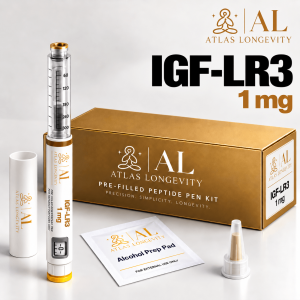
IGF-LR3 1mg Pen
Price range: Rp2,700,000.00 through Rp3,300,000.00 ~$163.64–$200.00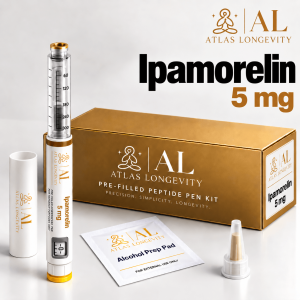
Ipamorelin Pen
Price range: Rp1,200,000.00 through Rp2,600,000.00 ~$72.73–$157.58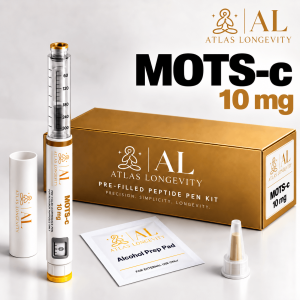
MOTS-C Pen
Price range: Rp1,700,000.00 through Rp3,800,000.00 ~$103.03–$230.30
Reconstitution Service for Disposable Peptide Pens
Rp250,000.00 ~$15.15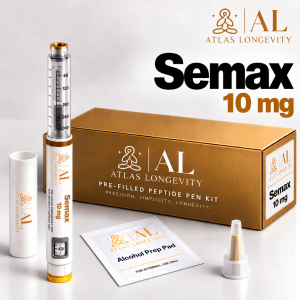
Semax 10mg Pen
Price range: Rp1,600,000.00 through Rp2,200,000.00 ~$96.97–$133.33
 Peptide Vials
 Peptide Nasal Sprays
 Peptide Protocols
 Bundles