
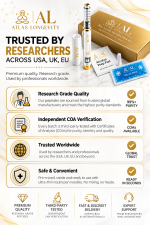
DSIP Pen
Price range: Rp1,300,000.00 through Rp3,100,000.00 ~$78.79–$187.88
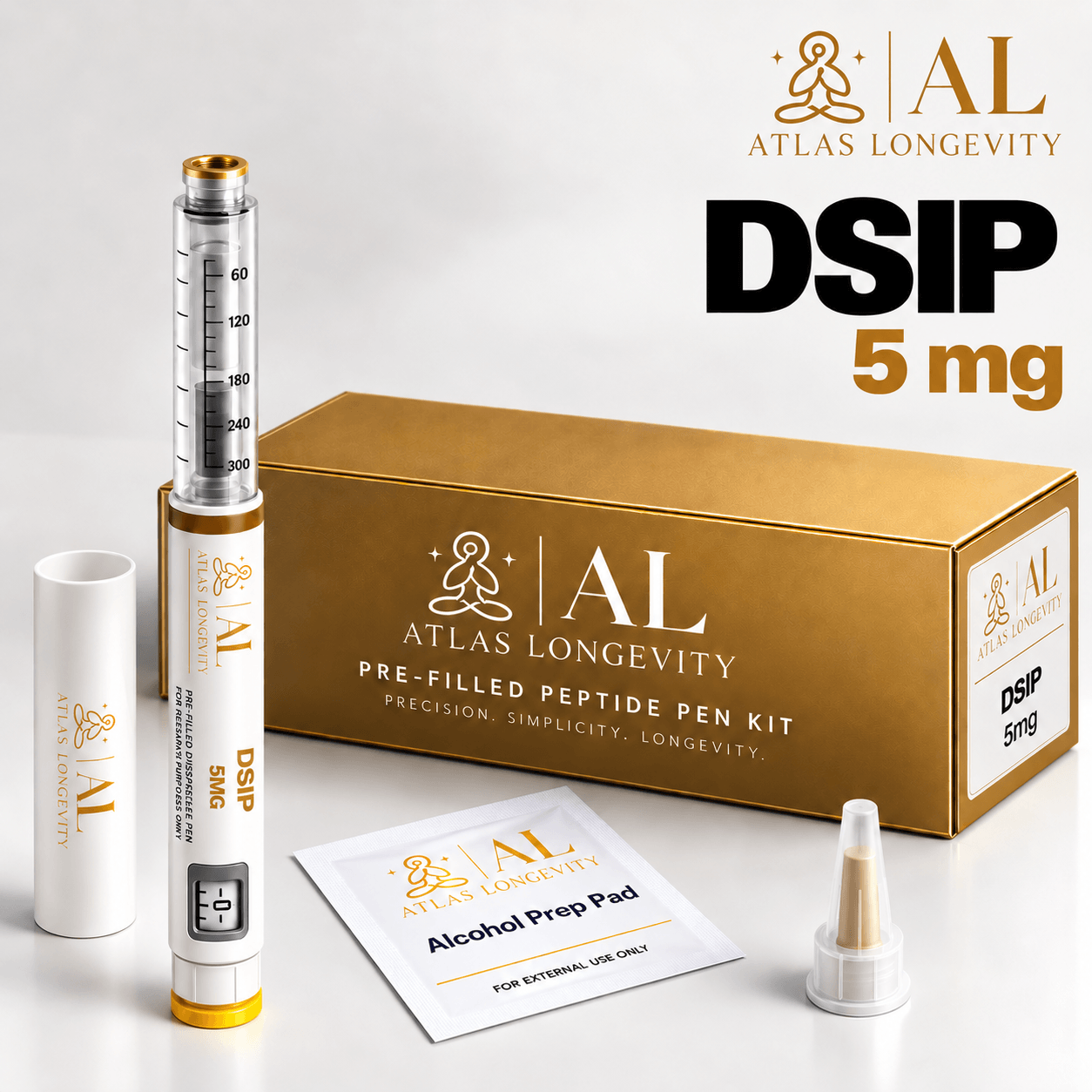
DSIP 10mg Pen is a convenient, ready-to-use peptide commonly associated with sleep support and recovery.
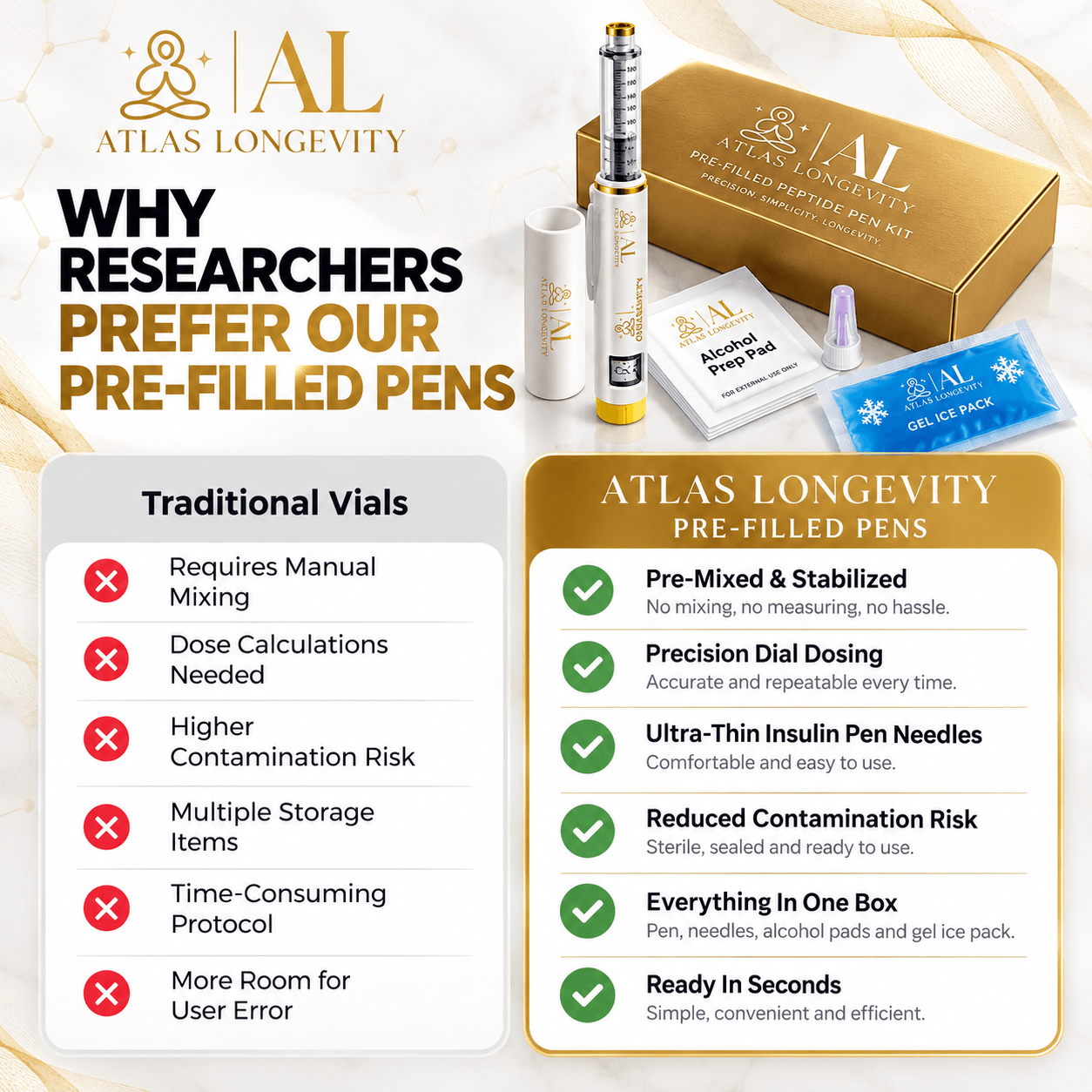
No mixing required — simple and easy to use.
✔ No mixing required
✔ Easy-to-use pen
✔ Sleep & recovery support
✔ Fast Bali delivery
DSIP 5 mg Pen
Product Description
DSIP (Delta Sleep-Inducing Peptide) is an endogenous nonapeptide originally identified during research into delta-wave sleep and neurophysiological sleep regulation.
The peptide has since been investigated across several research areas involving sleep architecture, circadian signalling, hypothalamic function, neuroendocrine regulation, and physiological stress responses.
Rather than functioning like a conventional sedative, DSIP is studied as a potential regulatory signal within neural and endocrine systems involved in sleep-stage coordination and stress-related hormone activity. Pasted text
The Atlas Longevity DSIP pen contains 5 mg in a 3 mL pre-mixed cartridge with 300 total units/clicks.
DSIP remains an investigational research peptide. The available evidence does not establish it as an approved treatment for insomnia, anxiety, stress disorders, endocrine conditions, or other medical conditions.
Clinical / Research Status
DSIP has been investigated in animal, laboratory, observational, and limited controlled human research.
The supplied material characterizes the evidence base as primarily preclinical and exploratory, with only limited controlled human studies. Pasted text
| Evidence Type | Status Based on Supplied Material |
|---|---|
| Human controlled research | Limited |
| Human observational research | Limited |
| Animal research | Yes |
| In-vitro research | Yes |
| Regulatory therapeutic approval | Not established in supplied material |
The existence of early human research should not be interpreted as proof of therapeutic effectiveness.
Evidence Type
Research described in the supplied material includes:
- rodent EEG and sleep studies;
- animal stress-response models;
- human insomnia observations and controlled studies;
- opioid-withdrawal observations;
- neuroendocrine research;
- oxidative-stress laboratory models;
- pituitary-hormone investigations;
- animal pain-perception models. Pasted text
The level of evidence differs substantially between these research areas.
Mechanism of Action
The exact physiological role of DSIP remains incompletely defined.
Research has focused on whether DSIP interacts with central nervous system and neuroendocrine pathways involved in:
- delta-wave sleep;
- hypothalamic signalling;
- pituitary activity;
- stress-hormone regulation;
- circadian coordination;
- inhibitory neurotransmission;
- endocrine rhythm synchronization. Pasted text
Unlike conventional hypnotic agents that directly suppress neural activity through well-defined receptor systems, DSIP is investigated more as a neuroregulatory peptide that may influence networks governing sleep and hormonal timing.
Its mechanisms remain under investigation and should not be presented as clinically established.
Potential Benefits / Research Areas
Delta-Wave and Slow-Wave Sleep Research
DSIP was originally identified during studies of delta-wave activity.
Slow-wave sleep is characterized by synchronized low-frequency brain activity and is an important component of normal sleep architecture.
Experimental DSIP research has examined whether the peptide can influence the duration, organization, or continuity of delta-dominant sleep phases. Pasted text
This does not establish DSIP as a proven treatment for insomnia.
Hypothalamic Signalling
The hypothalamus plays a central role in regulating:
- sleep and wakefulness;
- circadian rhythms;
- pituitary signalling;
- autonomic function;
- endocrine responses.
DSIP has been investigated for potential interactions with hypothalamic regulatory pathways involved in coordinating these systems. Pasted text
Stress and HPA-Axis Research
The hypothalamic-pituitary-adrenal (HPA) axis coordinates physiological stress responses through signalling involving CRH, ACTH, and cortisol.
Animal and exploratory research has examined whether DSIP can modify this signalling network and influence stress-related hormonal activity. Pasted text
These findings should not be interpreted as evidence that DSIP treats anxiety, chronic stress, or cortisol disorders.
Neurotransmitter Regulation
Sleep depends on a balance between excitatory and inhibitory neural signalling.
DSIP has been investigated for possible effects on central neurotransmitter balance, including pathways associated with inhibitory signalling.
Unlike conventional sedatives, the supplied material describes DSIP as potentially influencing these systems indirectly rather than acting as a direct receptor agonist. Pasted text
Circadian and Endocrine Rhythm Research
Sleep architecture and endocrine secretion are closely interconnected.
Hormones including growth hormone, cortisol, and melatonin follow circadian or sleep-associated patterns.
DSIP research has therefore explored whether changes in sleep architecture may interact with the timing of endocrine secretion. Pasted text
This remains a mechanistic research area rather than an established anti-ageing or hormonal therapy.
Stress-Adaptation Research
Chronic physiological stress can disrupt both sleep and neuroendocrine signalling.
DSIP has been examined experimentally in models of altered stress responses to determine whether it influences central regulatory pathways involved in adaptation.
The supplied material positions this as a neuroendocrine research area rather than direct pharmacological suppression of stress hormones. Pasted text
Neural Recovery and Sleep Architecture
Deep sleep is associated with several physiological processes involving neural recovery, memory consolidation, and endocrine timing.
Because DSIP is studied in relation to delta-wave activity, researchers have investigated its potential relevance to the interaction between sleep architecture and neuroendocrine recovery processes. Pasted text
Human clinical significance remains uncertain.
Research Data
| Study / Model | Reported Finding |
|---|---|
| Rodent EEG sleep studies | Increased delta-wave activity and changes in slow-wave sleep continuity |
| Stress-related animal models | Reduced corticosteroid output and changes in HPA-axis activity |
| Chronic-insomnia observational research | Improvements in subjective sleep onset and nocturnal awakening measures were reported |
| Opioid-withdrawal clinical observations | Changes in withdrawal severity and autonomic measures were reported |
| In-vitro oxidative-stress models | Changes in lipid-peroxidation and antioxidant markers |
| Animal neuroendocrine studies | Changes in GH, LH and somatostatin secretion patterns |
| Rodent pain models | Changes in nociceptive thresholds |
These findings include animal, laboratory, observational, and limited human evidence and should not be treated as equivalent levels of proof. Pasted text
Potential Stack / Combination Research
The supplied source discusses experimental combination concepts involving DSIP with:
- Epitalon;
- Selank;
- Semax;
- GHK-Cu. Pasted text
These combinations are proposed around research themes such as circadian signalling, stress-response pathways, cognitive biology, and recovery.
However, the supplied information does not establish validated human safety, compatibility, efficacy, or dosing for these combinations.
Atlas Longevity therefore does not present them as recommended protocols.
Atlas Longevity DSIP Pen Dosage / Click Chart
The Atlas Longevity DSIP pen contains:
5 mg DSIP
3 mL cartridge volume
300 total clicks
1 click = 0.01 mL
Pen Specification
| Pen Strength | Volume | Concentration | Amount Per Click |
|---|---|---|---|
| 5 mg | 3 mL | ≈1.667 mg/mL | ≈0.0167 mg / 16.7 mcg |
Concentration Calculation
5 mg ÷ 3 mL = 1.6667 mg/mL
Rounded:
≈1.667 mg/mL
Amount Per Click
5 mg ÷ 300 clicks = 0.0166667 mg per click
Therefore:
1 click ≈ 0.0167 mg
or:
≈16.7 mcg
DSIP Click Conversion Chart
| Clicks | Volume | DSIP Amount |
|---|---|---|
| 1 | 0.01 mL | ≈0.0167 mg / 16.7 mcg |
| 3 | 0.03 mL | 0.050 mg / 50 mcg |
| 5 | 0.05 mL | ≈0.0833 mg / 83.3 mcg |
| 6 | 0.06 mL | 0.100 mg / 100 mcg |
| 10 | 0.10 mL | ≈0.1667 mg / 166.7 mcg |
| 15 | 0.15 mL | 0.250 mg / 250 mcg |
| 18 | 0.18 mL | 0.300 mg / 300 mcg |
| 20 | 0.20 mL | ≈0.333 mg / 333 mcg |
| 30 | 0.30 mL | 0.500 mg / 500 mcg |
| 40 | 0.40 mL | ≈0.667 mg / 667 mcg |
| 50 | 0.50 mL | ≈0.833 mg / 833 mcg |
| 60 | 0.60 mL | 1.000 mg / 1,000 mcg |
Useful Conversions
- 3 clicks = 0.05 mg
- 6 clicks = 0.10 mg
- 15 clicks = 0.25 mg
- 18 clicks = 0.30 mg
- 30 clicks = 0.50 mg
- 60 clicks = 1.00 mg
The Atlas pen can select a maximum of 60 clicks in a single dial operation.
For this DSIP formulation:
60 clicks = 0.60 mL = 1 mg DSIP
This is a concentration calculation and not a dosing recommendation.
Protocol / Dosage Information
The supplied reference discusses experimental quantities ranging from approximately 0.05 mg to 0.5 mg across several research protocols. Pasted text
Those calculations were originally based on a different pen concentration and therefore cannot be copied directly into the Atlas system.
Using the Atlas Longevity 5 mg / 3 mL / 300-click pen, the corresponding mathematical conversions are:
| Source-Referenced Amount | Atlas Pen Conversion |
|---|---|
| 0.05 mg | 3 clicks |
| 0.10 mg | 6 clicks |
| 0.20 mg | 12 clicks |
| 0.25 mg | 15 clicks |
| 0.30 mg | 18 clicks |
| 0.50 mg | 30 clicks |
These values translate research quantities into the Atlas pen concentration only.
They do not establish a recommended dose, treatment schedule, timing strategy, treatment duration, or clinical protocol.
The supplied evidence does not establish a universally accepted therapeutic human dosing regimen for DSIP.
Possible Side Effects
The supplied material describes DSIP as generally tolerated in animal and limited human research, but the human evidence base remains small.
Effects reported in the source include:
- mild headache;
- dizziness;
- temporary drowsiness or grogginess;
- localized injection-site irritation;
- changes in dream intensity or vividness. Pasted text
The source also states that certain hormonal, hepatic, or cardiovascular adverse effects were not observed in available data.
However, absence of a signal in limited research should not be interpreted as proof that such risks cannot occur.
Long-term human safety, contraindications, interactions, reproductive risks, and effects of repeated or combination use are not established by the supplied material.
Product Attributes
| Attribute | Information |
|---|---|
| Compound Name | DSIP |
| Full Name | Delta Sleep-Inducing Peptide |
| CAS Number | 62568-57-4 |
| Molecular Formula | C35H48N10O15 |
| Amino Acid Sequence | WAGGDASGE |
| Molecular Weight | 848.8 g/mol |
| PubChem CID | 68816 |
| Half-Life listed by source | Approximately 7–15 minutes |
| Synonyms | Delta Sleep-Inducing Peptide, DSIP-9, Delta-Sleep Inducing Nonapeptide |
| Compound Type | Endogenous research neuropeptide / nonapeptide |
| Research Focus | Sleep, circadian biology, stress response and neuroendocrine regulation |
These specifications are reported in the supplied reference material.
Included in the Box
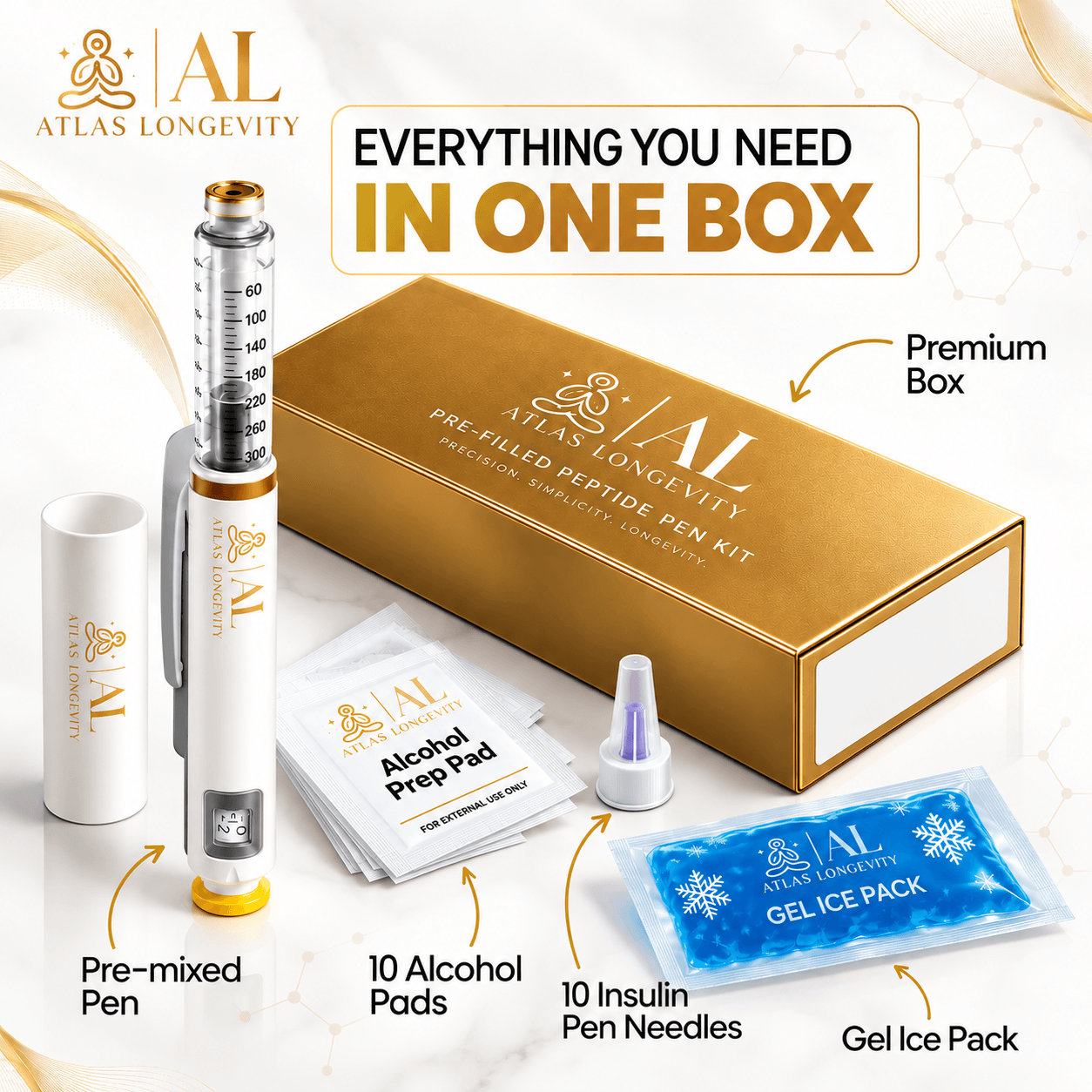
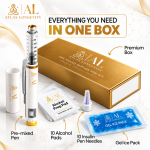
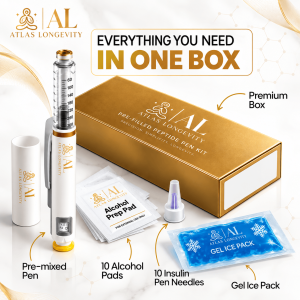
Each Atlas Longevity product is carefully packed to support secure storage, clean handling, and convenient research use. Inside the package, you’ll find the essential items needed for organized laboratory handling:
- 1× Ready-to-Use Injection Pen
- 10× Ultra-Fine Needles (33G, 4 mm)
- 10× Alcohol Prep Pads
- Protective Foam Insert to help keep the pen secure during transport
- Quick-Reference Instruction Panel inside the packaging
- Tamper-Evident Security Seal for added package protection
Each component is arranged in a clean, protective presentation designed to keep the product secure and easy to access.
Storage
Storage conditions should follow the instructions supplied with the specific Atlas Longevity DSIP formulation.
The reference source provides refrigeration and stability instructions for its own pre-mixed formulation, but those conditions should not automatically be transferred to the Atlas Longevity product without formulation-specific stability confirmation.
Follow the storage temperature, handling requirements, light-protection guidance, and shelf-life information shown on the Atlas Longevity product label or accompanying documentation.
Frequently Asked Questions
What is DSIP?
DSIP stands for Delta Sleep-Inducing Peptide.
It is a naturally occurring nonapeptide that was originally identified in research involving delta-wave sleep and has since been investigated in sleep, circadian, stress-response, and neuroendocrine models. Pasted text
Is DSIP a sleeping medication?
No.
DSIP is an investigational peptide rather than an established sedative medication.
Research has focused on whether it influences regulatory pathways involved in sleep architecture rather than simply producing pharmacological sedation.
How does DSIP work?
Its exact physiological mechanism remains uncertain.
Research suggests potential interactions with pathways involving:
- delta-wave sleep;
- hypothalamic signalling;
- HPA-axis activity;
- pituitary hormones;
- central neurotransmission;
- circadian endocrine rhythms. Pasted text
What is DSIP being researched for?
Research areas described in the supplied material include:
- sleep architecture;
- slow-wave sleep;
- circadian rhythm;
- neuroendocrine signalling;
- stress-response regulation;
- pituitary hormone secretion;
- oxidative-stress biology;
- pain-perception models.
Evidence strength varies considerably between these areas.
Has DSIP been studied in humans?
Yes, limited human research is described in the supplied material, including sleep-related and neuroendocrine studies.
However, the source itself characterizes controlled human evidence as limited. Pasted text
How much DSIP is in each Atlas Longevity pen?
Each Atlas Longevity DSIP pen contains:
5 mg DSIP in 3 mL.
What is the concentration of the DSIP pen?
The concentration is:
5 mg ÷ 3 mL = approximately 1.667 mg/mL.
How many clicks are in an Atlas Longevity DSIP pen?
Each pen contains:
300 total clicks / units
with:
1 click = 0.01 mL
How much DSIP is in one click?
Each click contains approximately:
0.0167 mg
or:
16.7 mcg DSIP
How many clicks equal 0.1 mg DSIP?
6 clicks = 0.1 mg / 100 mcg.
How many clicks equal 0.25 mg?
15 clicks = 0.25 mg / 250 mcg.
How many clicks equal 0.3 mg?
18 clicks = 0.3 mg / 300 mcg.
How many clicks equal 0.5 mg?
30 clicks = 0.5 mg / 500 mcg.
These values are concentration conversions rather than dosing recommendations.
What is the maximum selectable amount on the DSIP pen?
The pen allows a maximum selection of:
60 clicks
which equals:
0.60 mL
and:
1 mg DSIP
This represents the mechanical pen limit, not a recommended amount.
How long does a DSIP pen last?
The pen contains 300 total clicks.
The number of administrations depends entirely on the number of clicks selected each time.
For cartridge-capacity calculations only:
- 3 clicks at a time = 100 administrations
- 6 clicks at a time = 50 administrations
- 15 clicks at a time = 20 administrations
- 30 clicks at a time = 10 administrations
- 60 clicks at a time = 5 administrations
These examples are mathematical capacity calculations rather than research protocols.
Does the pen become empty when the dial returns to zero?
No.
After administration, the dial returns to zero while the unused DSIP remains inside the cartridge.
The cartridge continues to contain the remaining formulation until all 300 units have been used.
Is there an established human dosage for DSIP?
The supplied material describes experimental quantities used in research but does not establish a universally accepted medical dosing standard.
Research amounts should therefore not be interpreted as approved human treatment protocols.
Is DSIP approved for insomnia?
The supplied material does not establish regulatory approval of DSIP as a treatment for insomnia.
Although human sleep studies are referenced, clinical investigation and therapeutic approval are not the same thing.
Can DSIP be combined with other peptides?
The supplied material discusses experimental combinations with compounds including Epitalon, Selank, Semax, and GHK-Cu. Pasted text
However, the source does not establish validated human safety or dosing for these combinations.
How should the Atlas Longevity DSIP pen be stored?
Follow the storage instructions supplied with the actual Atlas Longevity formulation.
The competitor source’s refrigeration and stability specifications apply to its own formulation and should not automatically be copied to Atlas without supporting product-specific stability information.
Related products
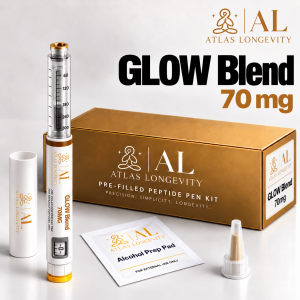
Glow Plus 70mg Pen (GHK-Cu + BPC-157 + TB-500)
Price range: Rp3,000,000.00 through Rp3,600,000.00 ~$181.82–$218.18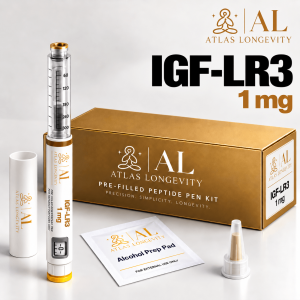
IGF-LR3 1mg Pen
Price range: Rp2,700,000.00 through Rp3,300,000.00 ~$163.64–$200.00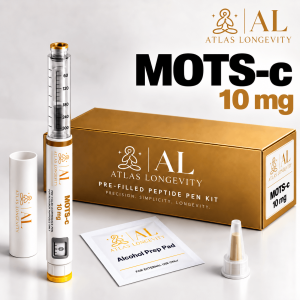
MOTS-C Pen
Price range: Rp1,700,000.00 through Rp3,800,000.00 ~$103.03–$230.30
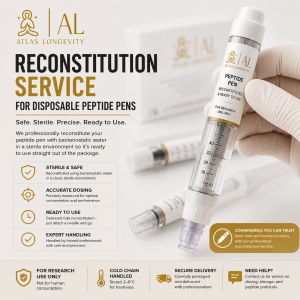
Reconstitution Service for Disposable Peptide Pens
Rp250,000.00 ~$15.15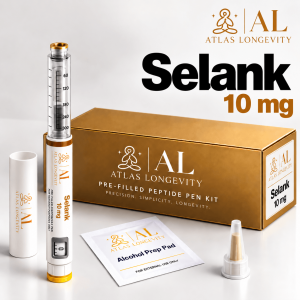
Selank 10mg Pen
Price range: Rp1,600,000.00 through Rp2,200,000.00 ~$96.97–$133.33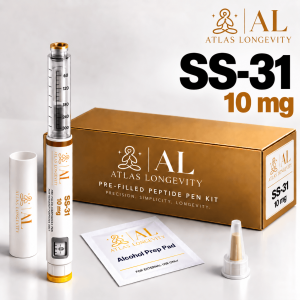
SS-31 Pen
Price range: Rp1,800,000.00 through Rp4,050,000.00 ~$109.09–$245.45
 Peptide Vials
 Peptide Nasal Sprays
 Peptide Protocols
 Bundles