

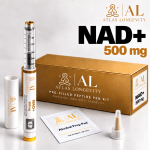
NAD+ Pen
Price range: Rp2,000,000.00 through Rp3,800,000.00 ~$121.21–$230.30
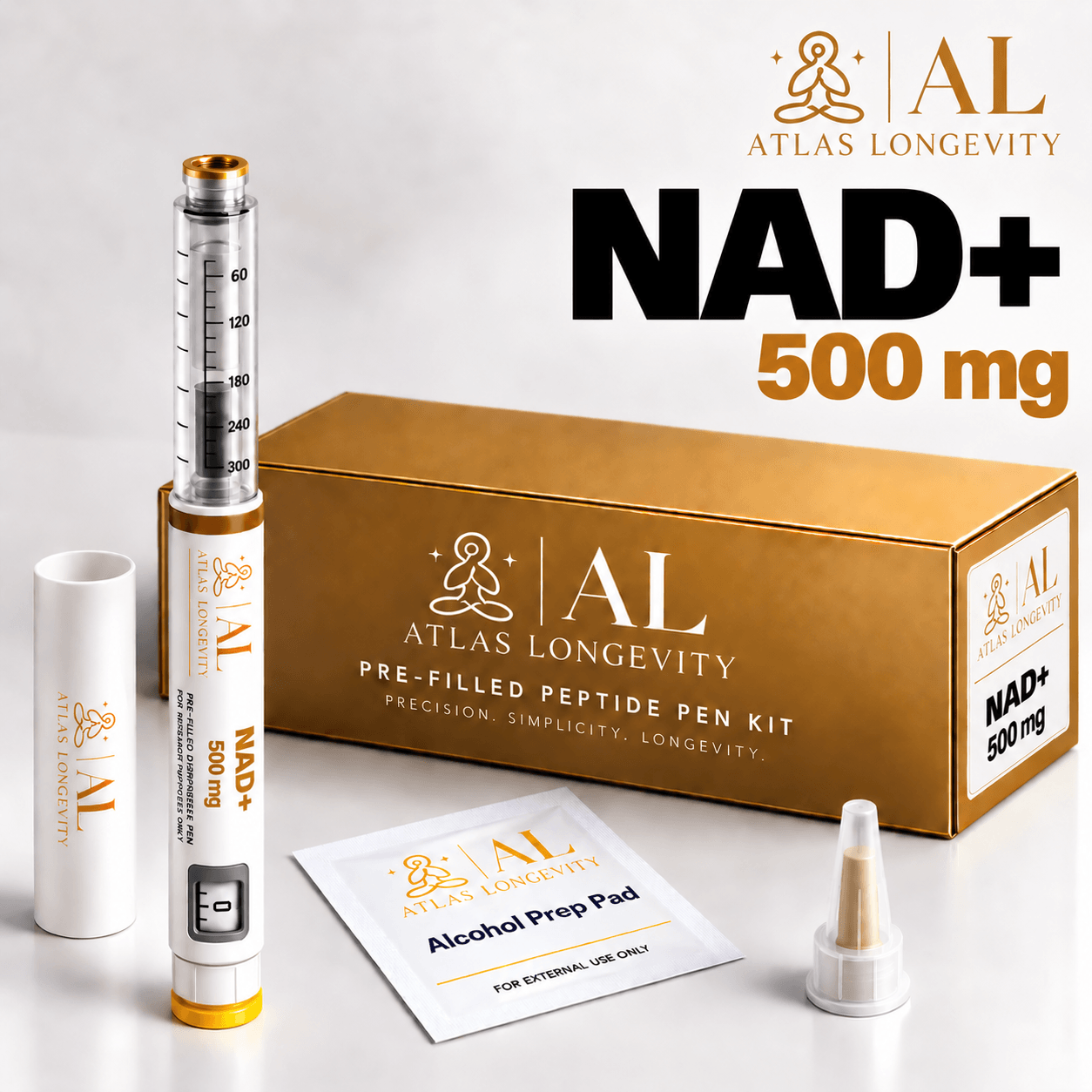
NAD+ 500 mg / 1000 mg Pen
Product Description
NAD+ (Nicotinamide Adenine Dinucleotide) is an endogenous coenzyme central to cellular energy metabolism, redox reactions, mitochondrial respiration, and intracellular signalling.
NAD exists primarily in two interconvertible forms:
- NAD+ — the oxidized form
- NADH — the reduced form
Together, these molecules participate in electron-transfer reactions that help cells convert nutrients into usable energy through metabolic pathways including glycolysis, the tricarboxylic acid cycle, and oxidative phosphorylation.
NAD+ also serves as a substrate for enzymes including sirtuins and PARPs, connecting NAD biology with DNA repair, cellular stress responses, gene regulation, inflammation research, and mitochondrial function. Pasted text
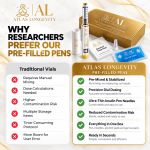
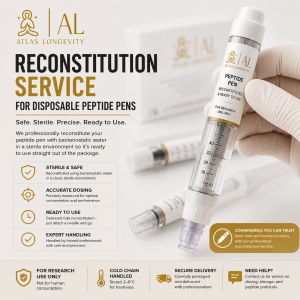
Atlas Longevity NAD+ pens use the standard 3 mL / 300-click cartridge system and are available in:
- 500 mg NAD+
- 1000 mg NAD+
NAD+ is naturally present in the body, but injectable NAD+ preparations remain investigational and should not be presented as approved treatments for ageing, fatigue, cognitive decline, metabolic disease, or other medical conditions. Pasted text
Clinical / Research Status
NAD biology has been studied extensively across human, animal, and cellular research.
However, there is an important distinction between research into:
- endogenous NAD metabolism;
- NAD+ itself;
- NAD precursors such as NMN or NR;
- intravenous NAD+;
- other injectable NAD+ formulations.
The supplied material states that injectable and IV NAD+ preparations are used experimentally but are not approved for therapeutic purposes. Pasted text
| Evidence Type | Status Based on Supplied Material |
|---|---|
| Human clinical research | Yes |
| Human observational research | Yes |
| Animal research | Yes |
| In-vitro research | Yes |
| Regulatory approval for Atlas NAD+ pen | Not established |
Evidence involving NMN or nicotinamide riboside should not automatically be presented as direct evidence for an NAD+ injection pen.
Evidence Type
The supplied material includes research involving:
- intravenous NAD+ administration;
- human observational metabolic research;
- animal ageing models;
- cellular ageing models;
- neuronal cell cultures;
- metabolic-disease models;
- exercise-related research;
- brain-ischaemia experimental models. Pasted text
The clinical relevance of these studies varies substantially depending on formulation, route of administration, species, and research endpoint.
Mechanism of Action
NAD+ is a central participant in cellular oxidation-reduction reactions.
During energy metabolism, NAD+ accepts electrons and becomes NADH. NADH can then donate electrons within mitochondrial pathways involved in ATP generation.
The supplied material describes NAD+ involvement in:
- glycolysis;
- the TCA / Krebs cycle;
- oxidative phosphorylation;
- electron transport;
- ATP generation;
- PARP-mediated DNA repair;
- sirtuin activity;
- mitochondrial biogenesis;
- stress-response signalling;
- AMPK-associated pathways. Pasted text
Sirtuin Signalling
Sirtuins are NAD-dependent enzymes involved in metabolic regulation, gene expression, stress responses, and mitochondrial biology.
Because sirtuin activity requires NAD+, changes in cellular NAD availability may alter several downstream signalling systems.
PARP and DNA Repair
PARP enzymes also consume NAD+ during responses to DNA damage.
This relationship has generated substantial interest in NAD metabolism within research involving cellular ageing and genomic stability.
These mechanisms establish NAD+ as an essential biological molecule but do not by themselves prove that additional injectable NAD+ produces anti-ageing or disease-treatment effects.
Potential Benefits / Research Areas
Cellular Energy and ATP Research
NAD+ is essential for numerous redox reactions involved in cellular energy metabolism.
Research examines how NAD+/NADH balance affects:
- mitochondrial respiration;
- nutrient metabolism;
- ATP generation;
- cellular energy availability. Pasted text
This fundamental biological role should not be converted into guaranteed claims of increased energy following supplementation.
Mitochondrial Function
NAD+ plays an important role in oxidative phosphorylation and mitochondrial metabolism.
Experimental studies therefore investigate NAD-related pathways in:
- mitochondrial function;
- mitochondrial biogenesis;
- oxidative metabolism;
- cellular stress resilience. Pasted text
Sirtuin and Ageing Research
NAD+ is required by SIRT1–SIRT7 enzymes.
This has generated significant interest in research involving:
- metabolic regulation;
- gene expression;
- mitochondrial signalling;
- stress resistance;
- cellular ageing. Pasted text
Animal lifespan findings involving NAD-related pathways do not establish that injectable NAD+ extends human lifespan.
DNA-Repair Research
NAD+ serves as a substrate for PARP enzymes involved in DNA-damage responses.
Researchers therefore study the relationship between NAD availability, PARP activity, DNA repair, genomic stability, and cellular stress. Pasted text
This does not establish NAD+ injection as a treatment for DNA damage or ageing.
Neurological and Brain-Energy Research
NAD-related pathways are also studied in neurons because the brain has substantial energy demands and is sensitive to mitochondrial dysfunction.
The source discusses experimental research involving:
- neuronal metabolism;
- oxidative stress;
- neuroinflammation;
- neurite biology;
- brain injury models. Pasted text
Claims of improved memory or prevention of neurodegenerative disease are not established by the supplied evidence.
Inflammatory and Oxidative-Stress Research
NAD-dependent pathways may influence inflammatory signalling through interactions involving sirtuins, NF-κB, and cellular redox systems.
The supplied material describes research involving inflammatory mediators such as TNF-α and IL-6. Pasted text
Metabolic Research
NAD metabolism is closely connected with:
- glucose metabolism;
- lipid metabolism;
- AMPK signalling;
- insulin-related pathways;
- mitochondrial oxidation. Pasted text
This has made NAD biology important in obesity, metabolic syndrome, insulin-resistance, and diabetes research.
It does not establish injectable NAD+ as an approved metabolic treatment.
Exercise and Skeletal-Muscle Research
Because NAD+/NADH cycling is essential to cellular energy production, NAD-related research also extends into skeletal-muscle physiology and exercise metabolism.
The supplied material discusses mitochondrial density, oxidative capacity, endurance, and recovery-related endpoints. Pasted text
These findings should not be presented as guaranteed performance enhancement.
Liver and Cardiometabolic Research
NAD-related pathways have also been investigated in models involving:
- hepatic lipid metabolism;
- mitochondrial β-oxidation;
- oxidative stress;
- vascular function;
- cardiometabolic biology. Pasted text
Human therapeutic benefits are not established by these mechanisms alone.
Circadian Biology
NAD metabolism follows circadian patterns and interacts with clock-related cellular pathways.
The supplied source therefore discusses NAD+ in relation to circadian rhythm and metabolic timing. Pasted text
Claims of improved sleep or hormonal balance should remain research-oriented unless supported by formulation-specific clinical evidence.
Longevity Research
NAD+ levels and NAD-dependent signalling have become major areas of ageing research.
Studies investigate relationships among:
- mitochondrial function;
- DNA repair;
- sirtuins;
- metabolism;
- cellular stress;
- ageing-related decline. Pasted text
Preclinical findings should not be described as proof of human age reversal or lifespan extension.
Research Data
| Study / Model | Reported Finding |
|---|---|
| Human IV NAD+ research | Increased plasma NAD-related measurements with changes in fatigue or alertness scores reported by source |
| Aged-animal models | Changes in mitochondrial function and lifespan-related outcomes |
| Cellular ageing models | Increased sirtuin/PARP-related activity and DNA-repair-associated signalling |
| Human observational research | Associations between low NAD status and metabolic dysfunction |
| In-vitro neuronal cultures | Changes in oxidative-stress resistance and neurite-associated measures |
| Metabolic models | Reduced triglyceride or hepatic lipid markers in some experimental systems |
| Exercise research | Changes in muscle NAD+/NADH ratio and endurance-related outcomes |
| Brain-ischaemia models | Reduced injury markers and improved neuronal-survival measures |
These studies involve different forms of NAD manipulation and should not all be treated as direct evidence for the Atlas NAD+ pen. Pasted text
Potential Stack / Combination Research
The supplied source discusses experimental combinations involving NAD+ with:
- SS-31;
- Glutathione;
- BPC-157;
- Epitalon;
- NMN / NR. Pasted text
The proposed research rationale includes mitochondrial signalling, redox biology, tissue repair, and NAD-precursor metabolism.
However, the supplied material does not establish validated human safety, compatibility, efficacy, or dosing for these combinations.
They should therefore be treated as experimental research concepts rather than recommended stacks.
Atlas Longevity NAD+ Pen Dosage / Click Chart
Atlas Longevity NAD+ is available in:
500 mg NAD+
and:
1000 mg NAD+
Both pens use:
3 mL cartridge volume
300 total clicks
1 click = 0.01 mL
Maximum selectable dial amount = 60 clicks
NAD+ 500 mg Pen
Pen Specification
| Pen Strength | Volume | Concentration | Amount Per Click |
|---|---|---|---|
| 500 mg | 3 mL | ≈166.67 mg/mL | ≈1.667 mg |
Concentration Calculation
500 mg ÷ 3 mL = 166.6667 mg/mL
Rounded:
≈166.67 mg/mL
Amount Per Click
500 mg ÷ 300 clicks = 1.6667 mg per click
Therefore:
1 click ≈1.67 mg NAD+
500 mg Pen Click Conversion
| Clicks | Volume | NAD+ Amount |
|---|---|---|
| 1 | 0.01 mL | ≈1.67 mg |
| 5 | 0.05 mL | ≈8.33 mg |
| 10 | 0.10 mL | ≈16.67 mg |
| 15 | 0.15 mL | 25 mg |
| 20 | 0.20 mL | ≈33.33 mg |
| 30 | 0.30 mL | 50 mg |
| 40 | 0.40 mL | ≈66.67 mg |
| 45 | 0.45 mL | 75 mg |
| 50 | 0.50 mL | ≈83.33 mg |
| 60 | 0.60 mL | 100 mg |
NAD+ 1000 mg Pen
Pen Specification
| Pen Strength | Volume | Concentration | Amount Per Click |
|---|---|---|---|
| 1000 mg | 3 mL | ≈333.33 mg/mL | ≈3.333 mg |
Concentration Calculation
1000 mg ÷ 3 mL = 333.333 mg/mL
Rounded:
≈333.33 mg/mL
Amount Per Click
1000 mg ÷ 300 clicks = 3.3333 mg per click
Therefore:
1 click ≈3.33 mg NAD+
1000 mg Pen Click Conversion
| Clicks | Volume | NAD+ Amount |
|---|---|---|
| 1 | 0.01 mL | ≈3.33 mg |
| 5 | 0.05 mL | ≈16.67 mg |
| 10 | 0.10 mL | ≈33.33 mg |
| 15 | 0.15 mL | 50 mg |
| 20 | 0.20 mL | ≈66.67 mg |
| 30 | 0.30 mL | 100 mg |
| 40 | 0.40 mL | ≈133.33 mg |
| 45 | 0.45 mL | 150 mg |
| 50 | 0.50 mL | ≈166.67 mg |
| 60 | 0.60 mL | 200 mg |
Useful Conversions
500 mg pen:
- 15 clicks = 25 mg
- 30 clicks = 50 mg
- 45 clicks = 75 mg
- 60 clicks = 100 mg
1000 mg pen:
- 15 clicks = 50 mg
- 30 clicks = 100 mg
- 45 clicks = 150 mg
- 60 clicks = 200 mg
The maximum selectable amount in one dial operation is:
- 500 mg pen: 60 clicks = 100 mg
- 1000 mg pen: 60 clicks = 200 mg
These are concentration calculations and not dosing recommendations.
Protocol / Dosage Information
The supplied source discusses experimental quantities ranging approximately from 50 mg to 250 mg. Pasted text
Using the Atlas 3 mL / 300-click system:
| Source-Referenced Amount | 500 mg Pen | 1000 mg Pen |
|---|---|---|
| 50 mg | 30 clicks | 15 clicks |
| 100 mg | 60 clicks | 30 clicks |
| 150 mg | 90 total clicks | 45 clicks |
| 200 mg | 120 total clicks | 60 clicks |
| 250 mg | 150 total clicks | 75 total clicks |
Important Pen Limitation
The Atlas pen allows a maximum single dial selection of:
60 clicks
Therefore:
500 mg pen
- Maximum single selectable amount = 100 mg
- 150 mg = 90 clicks mathematically
- 200 mg = 120 clicks mathematically
- 250 mg = 150 clicks mathematically
1000 mg pen
- Maximum single selectable amount = 200 mg
- 250 mg = 75 clicks mathematically
Amounts above those single-dial limits cannot be selected as one dial amount.
These larger mathematical equivalents are included only to translate values appearing in the supplied source. They are not instructions to divide, repeat, or administer multiple injections.
The source’s frequency, timing, duration, and cycle schedules should likewise not be copied as self-administration guidance.
Possible Side Effects
The supplied material describes several effects associated with experimental NAD+ administration.
These include:
- headache;
- nausea;
- dizziness or light-headedness;
- flushing or warmth;
- temporary fatigue;
- possible hypersensitivity with prolonged exposure. Pasted text
The source characterizes many of these effects as mild and transient, but the evidence supplied does not establish a complete long-term safety profile for this type of pre-mixed subcutaneous formulation.
Important uncertainties include:
- long-term repeated exposure;
- formulation-specific tolerability;
- cardiovascular effects;
- glucose and metabolic responses;
- medication interactions;
- pregnancy or reproductive exposure;
- renal or hepatic disease;
- combination protocols.
Being an endogenous molecule does not mean that every concentration, route, formulation, or exposure level is automatically safe.
Product Attributes
| Attribute | Information |
|---|---|
| Compound Name | NAD+ |
| Full Name | Nicotinamide Adenine Dinucleotide |
| CAS Number | 53-84-9 |
| Molecular Formula | C21H27N7O14P2 |
| Amino Acid Sequence | Not applicable — NAD+ is a coenzyme, not a peptide |
| Molecular Weight | 663.43 g/mol |
| PubChem CID | 5893 |
| Half-Life listed by source | Approximately 1–2 hours systemic |
| Common Terms | NAD+, oxidized nicotinamide adenine dinucleotide, Coenzyme I, DPN |
| Compound Type | Endogenous nucleotide coenzyme |
| Research Focus | Cellular energy, mitochondria, redox biology, metabolism and ageing research |
These specifications are reported in the supplied material. Pasted text
Terminology Note
The supplied source lists “NADH oxidized form” among the synonyms, but this conflicts with its own earlier description:
- NAD+ = oxidized form
- NADH = reduced form
For accuracy, Atlas content should not list NADH as a synonym for NAD+.
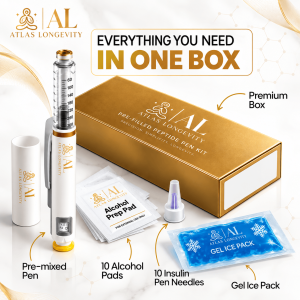
Included in the Box
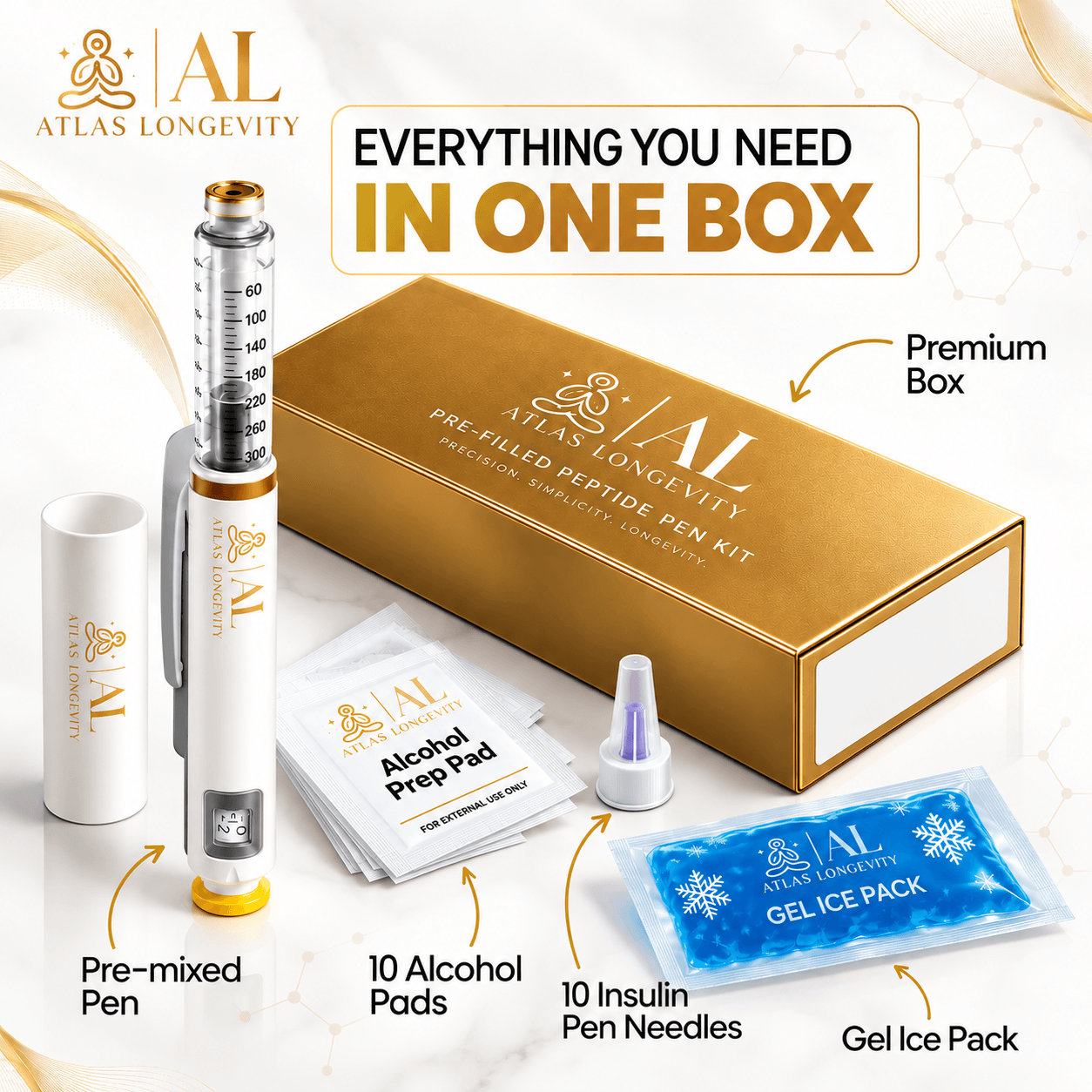
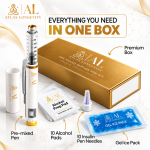
Each Atlas Longevity product is carefully packed to support secure storage, clean handling, and convenient research use. Inside the package, you’ll find the essential items needed for organized laboratory handling:
- 1× Ready-to-Use Injection Pen
- 10× Ultra-Fine Needles (33G, 4 mm)
- 10× Alcohol Prep Pads
- Protective Foam Insert to help keep the pen secure during transport
- Quick-Reference Instruction Panel inside the packaging
- Tamper-Evident Security Seal for added package protection
Each component is arranged in a clean, protective presentation designed to keep the product secure and easy to access.
Storage
Storage conditions should follow the instructions supplied specifically with the Atlas Longevity NAD+ formulation.
The reference product provides refrigeration and stability specifications for its own finished formulation. Those conditions should not automatically be transferred to Atlas Longevity without formulation-specific stability evidence.
Follow the temperature requirements, light-protection guidance, handling instructions, and shelf-life information printed on the Atlas Longevity product label or accompanying documentation.
Frequently Asked Questions
What is NAD+?
NAD+ stands for Nicotinamide Adenine Dinucleotide.
It is an endogenous coenzyme required for numerous cellular redox reactions and plays a central role in energy metabolism and mitochondrial function. Pasted text
Is NAD+ a peptide?
No.
NAD+ is a nucleotide coenzyme, not a peptide.
Therefore, it does not have an amino-acid sequence.
What is the difference between NAD+ and NADH?
NAD+ is the oxidized form, while NADH is the reduced form.
The two continuously cycle between these states during cellular redox reactions and energy metabolism. Pasted text
How does NAD+ work?
NAD+ accepts and transfers electrons during metabolic reactions.
It also serves as a required substrate for several enzyme families, including sirtuins and PARPs, linking NAD biology to metabolism, mitochondrial function, DNA repair, and stress-response signalling. Pasted text
What is NAD+ researched for?
Research areas include:
- mitochondrial function;
- cellular energy metabolism;
- NAD+/NADH redox balance;
- DNA repair;
- sirtuin signalling;
- metabolic function;
- oxidative stress;
- neurological energy metabolism;
- cellular ageing;
- exercise physiology.
Clinical relevance varies between these areas.
Has NAD+ been studied in humans?
Yes.
The supplied material references human studies and observational research.
However, many of the scientific references listed by the source actually concern NAD precursors such as NMN or nicotinamide riboside, which should not automatically be treated as equivalent evidence for direct NAD+ administration. Pasted text
Is injectable NAD+ approved?
The supplied source states that injectable and intravenous NAD+ preparations are used experimentally but are not approved for therapeutic purposes. Pasted text
Does NAD+ increase energy?
NAD+ is essential to cellular energy metabolism.
However, its fundamental role in ATP production does not automatically mean that supplemental injectable NAD+ produces a predictable increase in subjective human energy.
That outcome depends on formulation, route, exposure, population, and evidence.
Does NAD+ activate sirtuins?
Sirtuin enzymes require NAD+ as a cofactor.
This relationship is one of the major reasons NAD metabolism is studied in ageing and metabolic biology. Pasted text
Does NAD+ repair DNA?
NAD+ is consumed by PARP enzymes involved in DNA-damage responses.
It therefore plays an important biochemical role in DNA-repair pathways, but describing NAD+ itself as directly “repairing DNA” would oversimplify the mechanism.
Does NAD+ extend lifespan?
Preclinical research involving NAD metabolism has produced lifespan-related findings in certain animal models.
This does not establish that NAD+ injections extend human lifespan.
How much NAD+ is in each Atlas Longevity pen?
Two strengths are available:
500 mg NAD+ in 3 mL
and:
1000 mg NAD+ in 3 mL
How many clicks are in each NAD+ pen?
Every Atlas Longevity NAD+ pen contains:
300 total clicks / units
with:
1 click = 0.01 mL
How much NAD+ is in one click of the 500 mg pen?
500 mg ÷ 300 = approximately 1.667 mg
Therefore:
1 click ≈1.67 mg NAD+
How much NAD+ is in one click of the 1000 mg pen?
1000 mg ÷ 300 = approximately 3.333 mg
Therefore:
1 click ≈3.33 mg NAD+
How many clicks equal 50 mg?
For the 500 mg pen:
30 clicks = 50 mg
For the 1000 mg pen:
15 clicks = 50 mg
How many clicks equal 100 mg?
For the 500 mg pen:
60 clicks = 100 mg
For the 1000 mg pen:
30 clicks = 100 mg
How many clicks equal 150 mg?
For the 500 mg pen:
90 clicks mathematically, which exceeds the 60-click single-dial limit.
For the 1000 mg pen:
45 clicks = 150 mg
These are concentration calculations, not dosing recommendations.
How many clicks equal 200 mg?
For the 500 mg pen:
120 clicks mathematically, which exceeds the 60-click single-dial limit.
For the 1000 mg pen:
60 clicks = 200 mg
What is the maximum selectable amount on each NAD+ pen?
The maximum single dial selection is 60 clicks.
For the 500 mg pen:
60 clicks = 100 mg
For the 1000 mg pen:
60 clicks = 200 mg
These values describe pen mechanics rather than recommended doses.
How long does a 500 mg NAD+ pen last?
The 500 mg pen contains 300 clicks.
For cartridge-capacity calculation only:
- 15 clicks at a time = 20 administrations
- 30 clicks at a time = 10 administrations
- 60 clicks at a time = 5 administrations
These examples describe cartridge capacity only.
How long does a 1000 mg NAD+ pen last?
The 1000 mg pen also contains 300 clicks.
For cartridge-capacity calculation only:
- 15 clicks at a time = 20 administrations
- 30 clicks at a time = 10 administrations
- 45 clicks at a time = approximately 6 full administrations with product remaining
- 60 clicks at a time = 5 administrations
These are capacity calculations rather than treatment protocols.
Does the product disappear when the dial returns to zero?
No.
After administration, the dial returns to zero while unused formulation remains inside the cartridge.
The pen continues to contain the remaining NAD+ until all 300 units have been used.
Can NAD+ be combined with Glutathione?
The supplied source discusses NAD+ and Glutathione together as an experimental concept involving redox biology. Pasted text
However, validated human combination safety, compatibility, efficacy, and dosing are not established by the supplied information.
Can NAD+ be combined with MOTS-c or SS-31?
The source also discusses MOTS-c and SS-31 in mitochondrial research contexts.
These remain experimental combination concepts rather than established clinical protocols.
Is there an established human dosage for the Atlas NAD+ pen?
The supplied source describes experimental quantities, but it does not establish a universally accepted or approved human dosing standard for the Atlas formulation.
The click charts above therefore represent concentration mathematics only.
How should the Atlas Longevity NAD+ pen be stored?
Follow the storage instructions supplied specifically with the actual Atlas Longevity NAD+ formulation.
The reference manufacturer’s refrigeration and stability claims apply to its own product and should not automatically be transferred to Atlas without product-specific stability evidence.
Related products
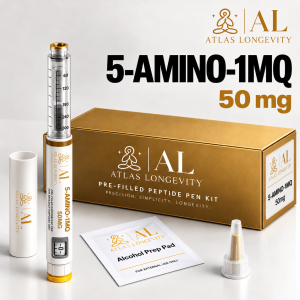
5-AMINO-1MQ
Price range: Rp3,700,000.00 through Rp6,800,000.00 ~$224.24–$412.12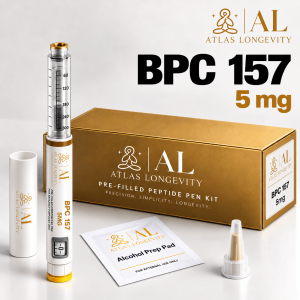
BPC-157 Pen
Price range: Rp1,200,000.00 through Rp3,500,000.00 ~$72.73–$212.12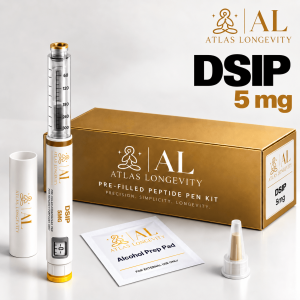
DSIP Pen
Price range: Rp1,300,000.00 through Rp3,100,000.00 ~$78.79–$187.88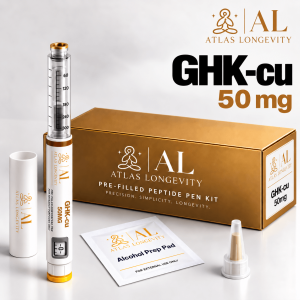
GHK-Cu Peptide Pen
Price range: Rp1,400,000.00 through Rp3,000,000.00 ~$84.85–$181.82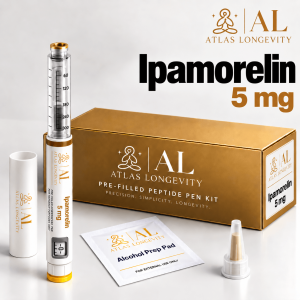
Ipamorelin Pen
Price range: Rp1,200,000.00 through Rp2,600,000.00 ~$72.73–$157.58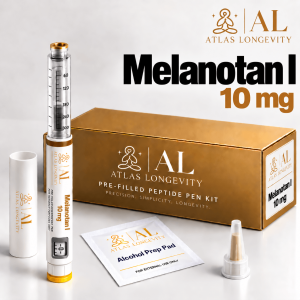
Melanotan I 10mg Pen
Price range: Rp2,500,000.00 through Rp3,100,000.00 ~$151.52–$187.88
 Peptide Vials
 Peptide Nasal Sprays
 Peptide Protocols
 Bundles