
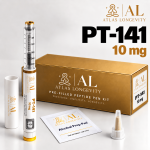

PT-141 Pen
Price range: Rp1,600,000.00 through Rp2,200,000.00 ~$96.97–$133.33
PT-141 10 mg Pen
Product Description
PT-141 (Bremelanotide) is a synthetic melanocortin receptor agonist derived from alpha-melanocyte-stimulating hormone research and studied primarily for its effects on central sexual-arousal pathways, melanocortin signalling, motivation, and hypothalamic neurobiology.
Unlike compounds that act mainly through peripheral vasodilation, PT-141 works primarily through the central nervous system, particularly melanocortin receptors associated with neural pathways involved in sexual desire and arousal.
Clinical and preclinical research described in the supplied material links PT-141 with activation of MC4R and MC3R, downstream dopaminergic signalling, and limbic-system pathways involved in sexual motivation. Pasted text
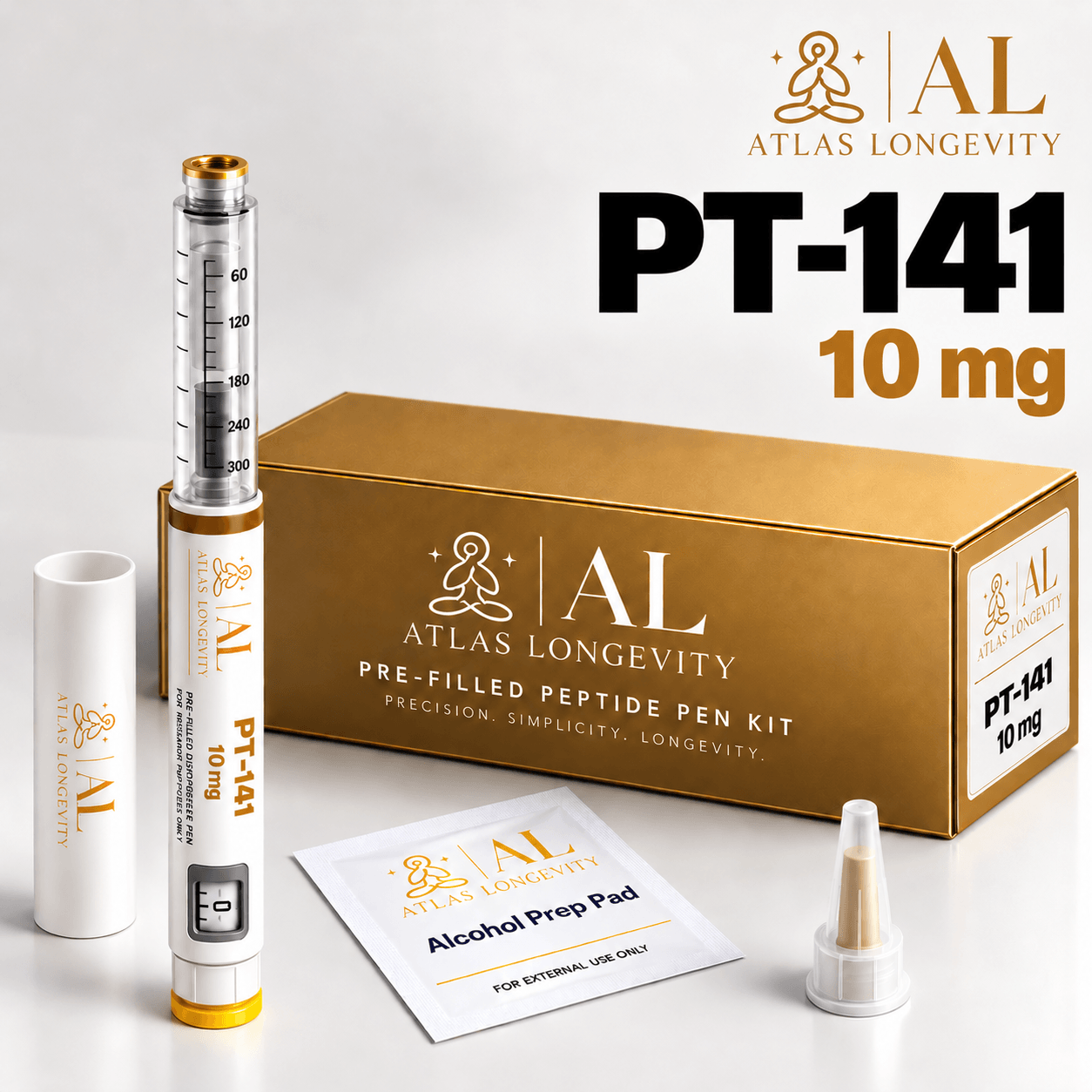
The Atlas Longevity PT-141 pen contains 10 mg in a 3 mL cartridge with 300 total units/clicks.
Bremelanotide has been clinically investigated and approved in certain jurisdictions for specific sexual-desire indications. However, approval applies to particular authorized formulations, populations, and indications and should not be interpreted as approval of the Atlas Longevity PT-141 pen.
Clinical / Research Status
PT-141 has a meaningful human evidence base compared with many investigational peptides.
The supplied material identifies:
| Evidence Type | Status Based on Supplied Material |
|---|---|
| Human randomized clinical research | Yes |
| Human observational research | Yes |
| Animal research | Yes |
| In-vitro research | Yes |
| Regulatory approval | Yes, for specific formulations and indications in certain jurisdictions |
The source notes that PT-141 / Bremelanotide has undergone controlled clinical investigation and regulatory evaluation for particular sexual-desire indications. Pasted text
That regulatory history should not be generalized to all PT-141 formulations or unapproved uses.
Evidence Type
The supplied material includes research involving:
- Phase 3 studies in women with HSDD;
- clinical research in men with erectile dysfunction;
- rodent hypothalamic models;
- subcutaneous pharmacokinetic studies;
- non-human primate behavioural models;
- healthy-volunteer research;
- in-vitro melanocortin receptor-binding studies. Pasted text
This gives PT-141 a combination of human, animal, pharmacological, and receptor-level evidence.
Mechanism of Action
PT-141 acts primarily through central melanocortin receptors, especially MC4R and MC3R.
Activation of these receptors in hypothalamic and limbic pathways can influence:
- sexual motivation;
- arousal signalling;
- dopaminergic activity;
- reward-related neural circuits;
- behavioural response.
The supplied material distinguishes PT-141 from PDE-5 inhibitors because its mechanism does not primarily depend on nitric-oxide-mediated peripheral vasodilation. Pasted text
Instead, PT-141 acts further upstream through central neural pathways associated with desire and arousal.
MC4R and MC3R Signalling
The supplied material describes PT-141 binding to melanocortin receptors and influencing intracellular cAMP-related signalling.
Research also discusses downstream effects involving dopaminergic pathways and POMC-related hypothalamic systems. Pasted text
Potential Benefits / Research Areas
Central Sexual-Arousal Research
PT-141 is primarily studied for its effects on central neural circuits involved in sexual desire and motivation.
Clinical research described by the source has examined desire-related endpoints and satisfying sexual-event measures in controlled populations. Pasted text
This differs from compounds whose main action is peripheral vascular response.
MC4R and MC3R Research
PT-141 interacts primarily with MC4R and MC3R, two receptor subtypes involved in central melanocortin signalling.
Research focuses on how activation of these receptors influences:
- cAMP signalling;
- dopamine-related pathways;
- motivational behaviour;
- hypothalamic and limbic activity. Pasted text
Dopaminergic Reward-Signalling Research
The source describes PT-141 in relation to mesolimbic dopamine pathways involved in reward anticipation and sexual motivation.
This makes it relevant to experimental research involving the relationship between melanocortin signalling and central motivational circuits. Pasted text
Research Distinct from PDE-5 Inhibitors
PT-141’s mechanism is different from sildenafil-type compounds.
According to the supplied material, PT-141 does not primarily depend on nitric oxide or peripheral smooth-muscle vasodilation.
Instead, it acts through central melanocortin pathways. Pasted text
This mechanistic distinction is important when describing the compound accurately.
Female Sexual-Desire Research
The supplied material references randomized human studies involving women with hypoactive sexual desire research diagnoses.
These trials examined changes in sexual-desire scores and satisfying sexual events. Pasted text
These findings apply to defined clinical populations and should not be generalized beyond the populations and formulations studied.
Male Arousal Research
PT-141 has also been investigated in male research populations.
The supplied source describes changes in erectile response and sexual behaviour associated with central melanocortin activation. Pasted text
This does not make PT-141 interchangeable with conventional vascular erectile-function treatments.
Neuroendocrine Research
The source describes PT-141 as interacting with POMC-associated and melanocortin pathways within the hypothalamus.
These systems influence broader motivational and behavioural signalling beyond sexual response alone. Pasted text
Hormone-Independent Arousal Signalling
PT-141 does not primarily work by directly increasing testosterone or replacing gonadal hormones.
The supplied material therefore positions it as a centrally acting neuroendocrine modulator rather than a hormone-replacement compound. Pasted text
Research Data
| Study / Model | Reported Finding |
|---|---|
| Premenopausal women with HSDD | Increased desire-related scores and satisfying sexual-event measures |
| Men with erectile dysfunction | Increased erectile response independent of primary PDE-5 pathway activity |
| Rodent hypothalamic models | Increased MC4R-associated signalling and dopaminergic activity |
| Subcutaneous pharmacokinetic research | Rapid systemic absorption with central effects reported within hours |
| Female non-human primate models | Increased solicitation and proceptive behaviour |
| Healthy volunteer research | Predictable systemic exposure following subcutaneous administration |
| In-vitro receptor-binding studies | Activity at MC4R and MC3R with lower MC1R involvement |
These findings span clinical, animal, and cellular research and should be interpreted according to the exact formulation and study population used. Pasted text
Potential Stack / Combination Research
The supplied source discusses experimental combinations involving:
- PT-141 + Kisspeptin-10;
- PT-141 + Oxytocin;
- PT-141 + Selank;
- PT-141 + Tesamorelin. Pasted text
The theoretical research rationale involves combining melanocortin signalling with reproductive, emotional, anxiolytic, or metabolic pathways.
However, the supplied evidence does not establish validated human safety, compatibility, efficacy, or dosing for these combinations.
They should therefore be treated only as experimental research concepts.
Atlas Longevity PT-141 Pen Dosage / Click Chart
The Atlas Longevity PT-141 pen contains:
10 mg PT-141
3 mL cartridge volume
300 total clicks
1 click = 0.01 mL
Maximum selectable dial amount = 60 clicks
Pen Specification
| Pen Strength | Volume | Concentration | Amount Per Click |
|---|---|---|---|
| 10 mg | 3 mL | ≈3.333 mg/mL | ≈0.0333 mg / 33.3 mcg |
Concentration Calculation
10 mg ÷ 3 mL = 3.3333 mg/mL
Rounded:
≈3.333 mg/mL
Amount Per Click
10 mg ÷ 300 clicks = 0.033333 mg per click
Therefore:
1 click ≈0.0333 mg
or:
≈33.3 mcg PT-141
PT-141 Click Conversion Chart
| Clicks | Volume | PT-141 Amount |
|---|---|---|
| 1 | 0.01 mL | ≈0.0333 mg / 33.3 mcg |
| 5 | 0.05 mL | ≈0.1667 mg |
| 10 | 0.10 mL | ≈0.333 mg |
| 15 | 0.15 mL | 0.500 mg |
| 20 | 0.20 mL | ≈0.667 mg |
| 30 | 0.30 mL | 1.000 mg |
| 40 | 0.40 mL | ≈1.333 mg |
| 45 | 0.45 mL | 1.500 mg |
| 50 | 0.50 mL | ≈1.667 mg |
| 52 | 0.52 mL | ≈1.733 mg |
| 53 | 0.53 mL | ≈1.767 mg |
| 60 | 0.60 mL | 2.000 mg |
Useful Conversions
- 15 clicks = 0.50 mg
- 30 clicks = 1 mg
- 45 clicks = 1.50 mg
- 60 clicks = 2 mg
The maximum selectable amount in one dial operation is:
60 clicks = 0.60 mL = 2 mg PT-141
This is a mathematical concentration conversion and not a dosing recommendation.
Protocol / Dosage Information
The supplied source discusses experimental quantities ranging from approximately 0.5 mg to 2 mg. Pasted text
Its original click calculations were based on a different 10 mg / 2 mL formulation, so those values must not be copied into the Atlas Longevity 3 mL system.
Using the Atlas 10 mg / 3 mL / 300-click formulation:
| Source-Referenced Amount | Atlas Pen Mathematical Equivalent |
|---|---|
| 0.50 mg | 15 clicks |
| 1.00 mg | 30 clicks |
| 1.50 mg | 45 clicks |
| 1.75 mg | ≈52.5 clicks* |
| 2.00 mg | 60 clicks |
*A calculated value of 52.5 clicks cannot be selected exactly using whole pen units.
The supplied source also describes timing, frequency, duration, and cycling examples. Those should not be reproduced as self-administration instructions for the Atlas product.
The table above simply translates quantities appearing in the supplied research material into the Atlas pen concentration.
Possible Side Effects
The supplied material reports several adverse effects observed in PT-141 / Bremelanotide research.
These include:
- nausea;
- facial flushing;
- skin warmth;
- temporary increases in blood pressure;
- reciprocal decreases in heart rate;
- headache;
- dizziness;
- darkening of pigmented skin areas with repeated exposure. Pasted text
Blood Pressure and Heart Rate
The source specifically reports temporary blood-pressure increases accompanied by decreases in heart rate.
Because these are measurable cardiovascular effects, they should not be minimized as merely cosmetic or insignificant reactions.
Pigmentation Changes
PT-141 is derived from melanocortin research and can interact with pathways related to pigmentation.
Repeated exposure may therefore produce darkening of existing pigmented areas in some research observations. Pasted text
Safety Interpretation
The supplied source states that severe cardiovascular, hepatic, or endocrine adverse effects were not observed within the research ranges it describes.
However, absence of a signal in particular studies does not prove that serious adverse effects cannot occur, especially when formulation, exposure, population, or combination protocols differ.
Product Attributes
| Attribute | Information |
|---|---|
| Compound Name | PT-141 |
| Generic Name | Bremelanotide |
| CAS Number | 189691-06-3 |
| Molecular Formula | C50H68N14O10 |
| Amino Acid Sequence | Ac-Nle-cyclo[Asp-His-D-Phe-Arg-Trp-Lys]-OH |
| Molecular Weight | 1025.2 g/mol |
| PubChem CID | 9941379 |
| Half-Life listed by source | Approximately 2 hours |
| Synonyms | Bremelanotide, PT-141, BMT-141 |
| Compound Type | Synthetic melanocortin receptor agonist peptide |
| Primary Research Targets | MC4R and MC3R |
| Research Focus | Sexual-function, arousal and central melanocortin signalling |
These specifications are reported in the supplied source material.
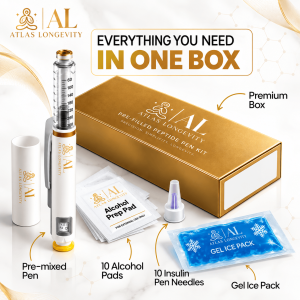
Included in the Box
Each Atlas Longevity product is carefully packed to support secure storage, clean handling, and convenient research use. Inside the package, you’ll find the essential items needed for organized laboratory handling:
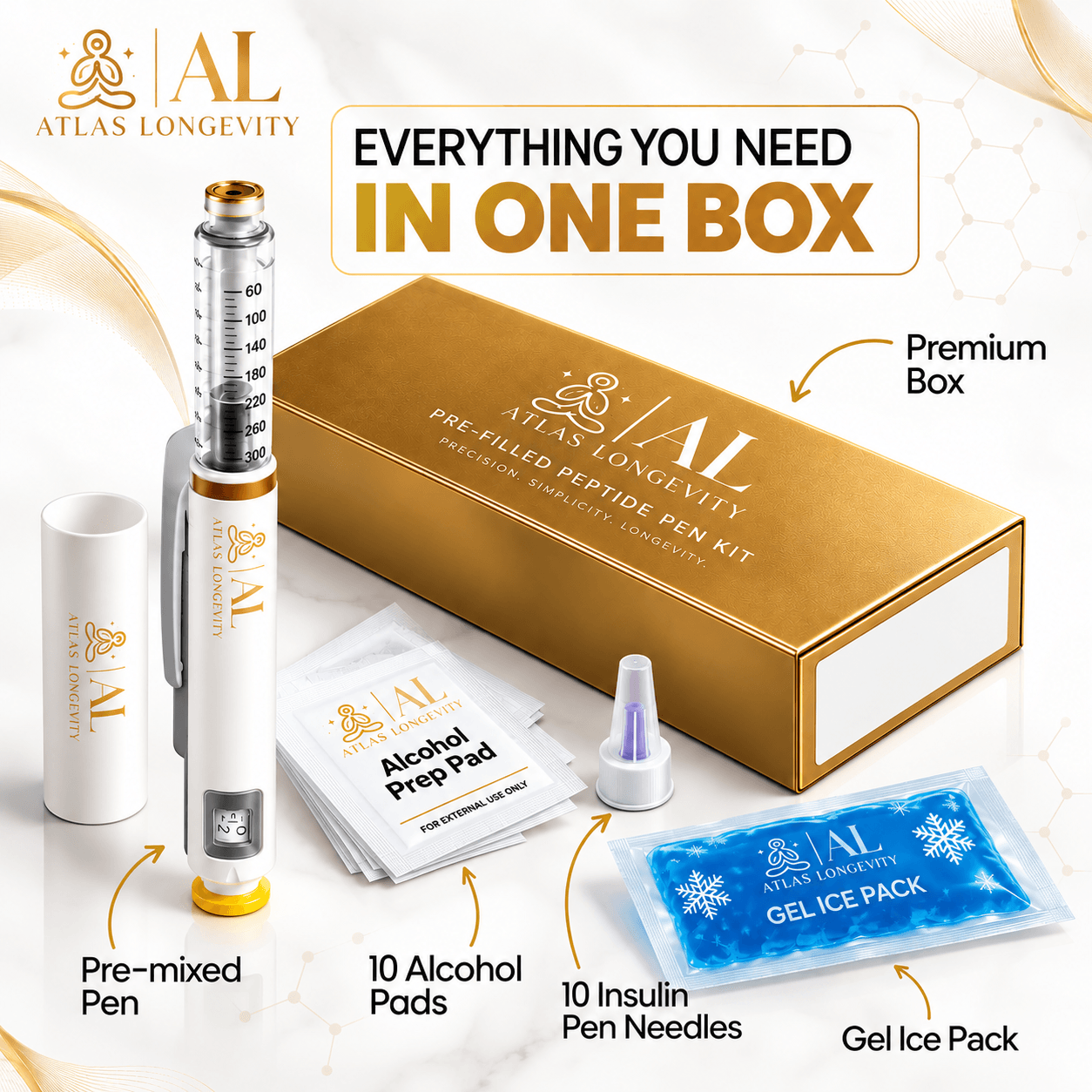
- 1× Ready-to-Use Injection Pen
- 10× Ultra-Fine Needles (33G, 4 mm)
- 10× Alcohol Prep Pads
- Protective Foam Insert to help keep the pen secure during transport
- Quick-Reference Instruction Panel inside the packaging
- Tamper-Evident Security Seal for added package protection
Each component is arranged in a clean, protective presentation designed to keep the product secure and easy to access.
Storage
Storage conditions should follow the instructions supplied specifically with the Atlas Longevity PT-141 formulation.
The reference product provides refrigeration and stability specifications for its own finished formulation. Those conditions should not automatically be transferred to Atlas Longevity without formulation-specific stability evidence.
Follow the temperature requirements, light-protection guidance, handling instructions, and shelf-life information shown on the Atlas Longevity product label or accompanying documentation.
The source also lists a proprietary approved-product name as a synonym. That brand terminology should not be used as Atlas Longevity product naming.
Frequently Asked Questions
What is PT-141?
PT-141, also called Bremelanotide, is a synthetic melanocortin receptor agonist studied primarily for its effects on central sexual-arousal and motivation pathways. Pasted text
How does PT-141 work?
PT-141 primarily activates melanocortin receptors in the central nervous system, especially MC4R and MC3R.
This influences neural signalling associated with sexual motivation, arousal, and dopaminergic pathways. Pasted text
Is PT-141 a PDE-5 inhibitor?
No.
PT-141 does not primarily work by inhibiting phosphodiesterase enzymes or increasing nitric-oxide-mediated peripheral vasodilation.
Its principal mechanism is central melanocortin receptor activation.
Is PT-141 testosterone?
No.
PT-141 is not testosterone and does not primarily act by replacing or directly increasing androgen production.
Its mechanism is mainly neuroendocrine and centrally mediated. Pasted text
What is PT-141 researched for?
Research areas include:
- sexual desire;
- sexual arousal;
- melanocortin signalling;
- MC4R / MC3R activity;
- dopaminergic motivation pathways;
- central nervous system control of sexual behaviour;
- hypothalamic neurobiology.
Has PT-141 been studied in humans?
Yes.
The supplied material includes randomized controlled trials, observational studies, pharmacokinetic research, and regulatory evidence involving Bremelanotide. Pasted text
Is Bremelanotide approved?
The supplied source states that Bremelanotide has been approved in certain jurisdictions for a specific sexual-desire indication. Pasted text
That approval applies to a specific authorized formulation and population and should not be generalized to the Atlas Longevity PT-141 pen.
Is PT-141 approved for all sexual dysfunction?
No.
The supplied information does not establish broad regulatory approval for every form of sexual dysfunction, every patient population, or every formulation.
How much PT-141 is in each Atlas Longevity pen?
Each Atlas Longevity PT-141 pen contains:
10 mg in 3 mL.
What is the concentration of the PT-141 pen?
The concentration is:
10 mg ÷ 3 mL = approximately 3.333 mg/mL
How many clicks are in the PT-141 pen?
Each pen contains:
300 total clicks / units
with:
1 click = 0.01 mL
How much PT-141 is in one click?
Each click contains approximately:
0.0333 mg
or:
33.3 mcg PT-141
How many clicks equal 0.5 mg?
15 clicks = 0.50 mg.
How many clicks equal 1 mg?
30 clicks = 1 mg.
How many clicks equal 1.5 mg?
45 clicks = 1.50 mg.
How many clicks equal 2 mg?
60 clicks = 2 mg.
These values are concentration calculations rather than dosing recommendations.
How many clicks equal 1.75 mg?
Mathematically:
1.75 mg ÷ 0.033333 mg per click ≈52.5 clicks
Because the pen uses whole clicks, 1.75 mg does not correspond exactly to a whole-click setting.
This calculation is provided for concentration reference only.
What is the maximum selectable amount on the PT-141 pen?
The maximum single dial selection is:
60 clicks
which equals:
0.60 mL
and:
2 mg PT-141
This describes pen mechanics rather than a recommended amount.
How long does a PT-141 pen last?
The complete pen contains:
300 clicks and 10 mg PT-141.
The number of administrations depends on the number of clicks selected each time.
For cartridge-capacity calculations only:
- 10 clicks at a time = 30 administrations
- 15 clicks at a time = 20 administrations
- 20 clicks at a time = 15 administrations
- 30 clicks at a time = 10 administrations
- 60 clicks at a time = 5 administrations
These examples describe cartridge capacity rather than a treatment protocol.
Does the product disappear when the dial returns to zero?
No.
After administration, the dial returns to zero while the unused formulation remains inside the cartridge.
The remaining PT-141 stays in the pen until all 300 units have been used.
Does PT-141 increase testosterone?
The supplied material does not describe direct testosterone elevation as PT-141’s primary mechanism.
Its principal activity is central melanocortin signalling rather than direct gonadal hormone stimulation. Pasted text
Can PT-141 affect blood pressure?
Yes.
The supplied research observations include temporary increases in blood pressure with reciprocal decreases in heart rate. Pasted text
Can PT-141 cause nausea?
Yes.
Nausea is one of the adverse effects specifically described in the supplied clinical research material. Pasted text
Can PT-141 cause skin darkening?
The supplied source reports darkening of pigmented skin areas following repeated exposure in some research observations. Pasted text
Can PT-141 be combined with Kisspeptin?
The supplied material discusses PT-141 + Kisspeptin-10 as an experimental research concept involving melanocortin and reproductive-signalling pathways. Pasted text
Validated human combination safety, efficacy, compatibility, and dosing are not established by the supplied information.
Is there an established dosage for the Atlas PT-141 pen?
The supplied source describes quantities used in research, but its click calculations are based on a different formulation.
The Atlas chart therefore provides concentration mathematics only and should not be interpreted as an approved or recommended dosing protocol.
How should the Atlas Longevity PT-141 pen be stored?
Follow the storage instructions supplied specifically with the actual Atlas Longevity PT-141 formulation.
The reference manufacturer’s refrigeration and stability claims apply to its own finished product and should not automatically be transferred to Atlas without product-specific stability evidence.
Related products
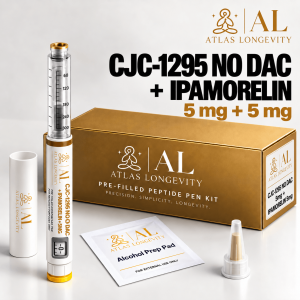
CJC-1295 No DAC 5mg + Ipamorelin 5mg Pen
Price range: Rp1,900,000.00 through Rp2,500,000.00 ~$115.15–$151.52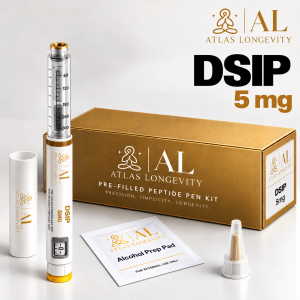
DSIP Pen
Price range: Rp1,300,000.00 through Rp2,600,000.00 ~$78.79–$157.58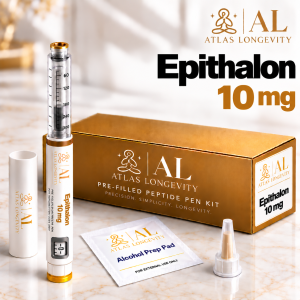
Epithalon Peptide Pen
Price range: Rp1,800,000.00 through Rp4,050,000.00 ~$109.09–$245.45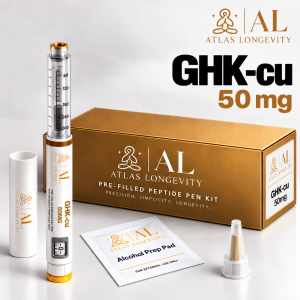
GHK-Cu Peptide Pen
Price range: Rp1,400,000.00 through Rp3,000,000.00 ~$84.85–$181.82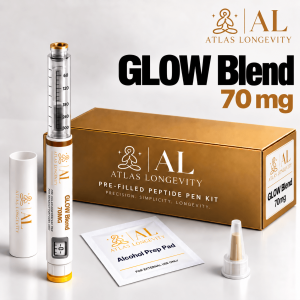
Glow Plus 70mg Pen (GHK-Cu + BPC-157 + TB-500)
Price range: Rp3,000,000.00 through Rp3,600,000.00 ~$181.82–$218.18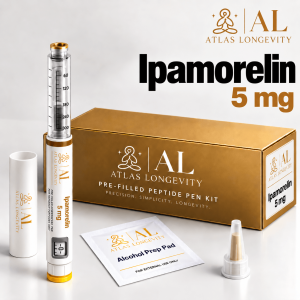
Ipamorelin Pen
Price range: Rp1,200,000.00 through Rp2,600,000.00 ~$72.73–$157.58
 Peptide Vials
 Peptide Nasal Sprays
 Peptide Protocols
 Bundles