
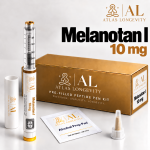

Melanotan I 10mg Pen
Price range: Rp2,500,000.00 through Rp3,100,000.00 ~$151.52–$187.88
Melatonin 10mg Pen from Atlas Longevity provides melatonin in our convenient premium pen format.
Melatonin is a naturally occurring hormone involved in the body’s circadian rhythm and sleep-wake cycle and is widely studied in sleep and circadian research.
✓ 10mg total content
✓ Premium Atlas Pen format
✓ 3ml / 300-unit cartridge
✓ Convenient dial mechanism
✓ Premium quality
✓ Discreet packaging
✓ Fast delivery across Bali
✓ Professional customer support
Please note: This product is not intended to diagnose, treat, cure or prevent any medical condition.
Melanotan I 10 mg Pen
Product Description
Melanotan I, also known as Afamelanotide, MT-I, or NDP-MSH, is a synthetic analogue of alpha-melanocyte-stimulating hormone (α-MSH) developed for research into melanocortin signalling, pigmentation biology, melanogenesis, and photoprotection.
Its primary research target is the melanocortin-1 receptor (MC1R) expressed on melanocytes. Activation of MC1R stimulates intracellular signalling involved in the production of eumelanin, the darker melanin pigment associated with skin pigmentation and natural photoprotective responses.
Compared with broader melanocortin agonists, Melanotan I is described in the supplied material as having greater selectivity toward pigmentation-related MC1R pathways. Pasted text
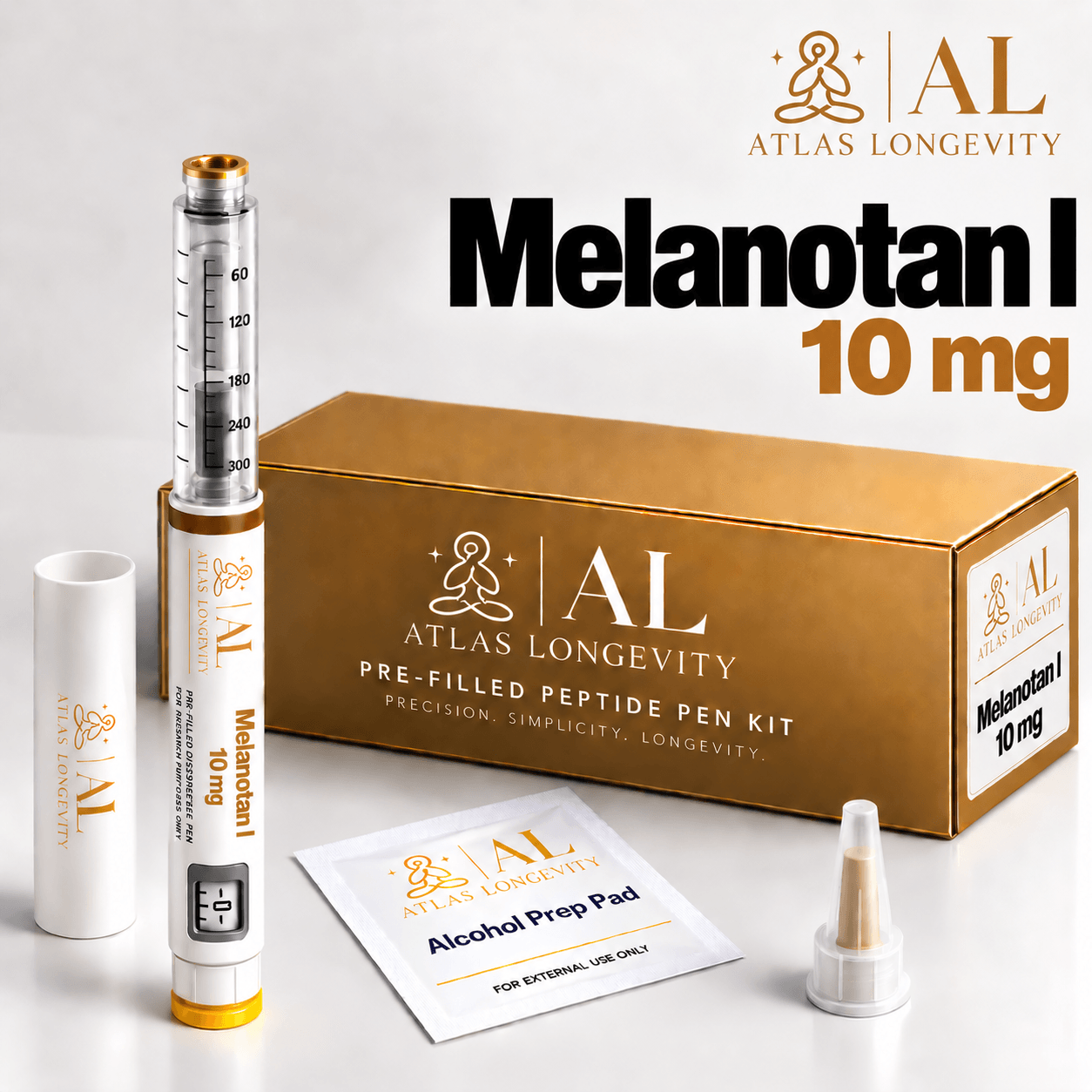
The Atlas Longevity Melanotan I pen contains 10 mg in a 3 mL pre-mixed cartridge with 300 total units/clicks.
Afamelanotide has been clinically studied and has regulatory approval in certain jurisdictions for specific photoprotection indications. However, that regulatory status applies to specific approved formulations and indications and should not be interpreted as approval of the Atlas Longevity pre-mixed pen or of Melanotan I for cosmetic tanning.
Clinical / Research Status
Melanotan I / Afamelanotide has a more developed human evidence base than many experimental peptides.
The supplied material identifies:
| Evidence Type | Status Based on Supplied Material |
|---|---|
| Human randomized clinical research | Yes |
| Human observational research | Yes |
| Animal research | Yes |
| In-vitro research | Yes |
| Regulatory approval | Yes, for specific indications/formulations in certain jurisdictions |
The source specifically notes clinical evaluation and approval for certain photoprotection indications. Pasted text
This distinction is important:
Approval of an Afamelanotide medicinal product does not automatically mean that every Melanotan I formulation, injection pen, concentration, or use is approved.
Evidence Type
The supplied material includes research involving:
- erythropoietic protoporphyria clinical trials;
- healthy human pigmentation studies;
- vitiligo combination studies;
- melanocyte cell cultures;
- UV-exposure animal models;
- photosensitivity research;
- pharmacokinetic studies involving an implant formulation. Pasted text
Evidence should always be interpreted according to the specific formulation and indication studied.
Mechanism of Action
Melanotan I acts primarily as an agonist of the melanocortin-1 receptor (MC1R).
MC1R is expressed on melanocytes, the cells responsible for producing melanin.
When MC1R is activated, intracellular signalling involving cyclic AMP (cAMP) increases. This signalling can influence:
- MITF-related transcription;
- tyrosinase activity;
- melanogenesis;
- eumelanin production;
- pigmentation responses.
The supplied material describes Melanotan I as a more stable analogue of endogenous α-MSH with greater resistance to enzymatic breakdown and more sustained receptor engagement. Pasted text
Potential Benefits / Research Areas
MC1R Signalling Research
Melanotan I is primarily studied for selective activation of MC1R receptors.
These receptors regulate melanocyte signalling pathways involved in skin pigmentation and eumelanin synthesis.
Because Melanotan I is described as relatively selective for MC1R, it is particularly relevant to focused research involving pigmentation rather than broader melanocortin-system activity. Pasted text
Eumelanin Production Research
Activation of MC1R can increase cAMP signalling and stimulate pathways involved in melanin production.
The supplied material specifically describes:
- increased MITF signalling;
- increased tyrosinase-related activity;
- increased eumelanin production. Pasted text
These mechanisms form the main scientific basis for Melanotan I pigmentation research.
Photoprotection Research
Melanin absorbs and dissipates part of the energy associated with ultraviolet exposure.
For this reason, increased eumelanin production has been investigated in research examining photoprotection and UV-response biology.
The supplied source describes human research involving EPP and experimental models examining UV-associated skin responses. Pasted text
This should not be interpreted as meaning Melanotan I replaces sunscreen, protective clothing, or other established UV-protection measures.
Stability Compared With Natural α-MSH
Natural α-MSH is rapidly degraded.
Melanotan I contains structural modifications intended to improve peptide stability and prolong interaction with melanocortin receptors.
This makes it more suitable for controlled research than native α-MSH in certain experimental settings. Pasted text
Dermatological Research
Melanotan I / Afamelanotide has been investigated in several dermatological research areas, including:
- photosensitivity;
- pigmentation biology;
- EPP;
- vitiligo-related repigmentation;
- UV-response pathways.
The supplied material describes controlled human research in some of these areas. Pasted text
Results from specialist dermatological indications should not automatically be converted into cosmetic tanning claims.
Research Data
| Study / Model | Reported Finding |
|---|---|
| Erythropoietic protoporphyria clinical trials | Increased pain-free light exposure and improved photoprotection associated with increased eumelanin |
| Healthy human volunteer research | Increased skin pigmentation following repeated administration |
| Vitiligo combination studies | More rapid or uniform repigmentation when studied with NB-UVB |
| In-vitro melanocyte cultures | Increased tyrosinase activity and eumelanin production through MC1R/cAMP signalling |
| UV-exposure animal models | Reduced photodamage markers and altered erythema responses |
| Photosensitivity research | Changes in phototoxic skin responses |
| Implant pharmacokinetic research | Sustained melanocortin activity associated with a long-acting implant formulation |
The research includes strong human evidence for specific medical and photobiological contexts, but findings from approved implant formulations should not automatically be applied to an Atlas Longevity pre-mixed pen. Pasted text
Potential Stack / Combination Research
The supplied source discusses experimental combination concepts involving Melanotan I with:
- GHK-Cu;
- Glutathione;
- BPC-157;
- Epitalon. Pasted text
The proposed research rationale involves pigmentation, extracellular-matrix biology, antioxidant pathways, tissue repair, and ageing-related skin research.
However, the supplied information does not establish validated human safety, compatibility, efficacy, or dosing for these combinations.
They should therefore be regarded as experimental research concepts rather than recommended stacks.
Atlas Longevity Melanotan I Pen Dosage / Click Chart
The Atlas Longevity Melanotan I pen contains:
10 mg Melanotan I
3 mL cartridge volume
300 total clicks
1 click = 0.01 mL
Maximum selectable dial amount = 60 clicks
Pen Specification
| Pen Strength | Volume | Concentration | Amount Per Click |
|---|---|---|---|
| 10 mg | 3 mL | ≈3.333 mg/mL | ≈0.0333 mg / 33.3 mcg |
Concentration Calculation
10 mg ÷ 3 mL = 3.3333 mg/mL
Rounded:
≈3.333 mg/mL
Amount Per Click
10 mg ÷ 300 clicks = 0.033333 mg per click
Therefore:
1 click ≈0.0333 mg
or:
≈33.3 mcg Melanotan I
Melanotan I Click Conversion Chart
| Clicks | Volume | Melanotan I Amount |
|---|---|---|
| 1 | 0.01 mL | ≈0.0333 mg / 33.3 mcg |
| 5 | 0.05 mL | ≈0.1667 mg / 166.7 mcg |
| 10 | 0.10 mL | ≈0.333 mg / 333 mcg |
| 15 | 0.15 mL | 0.500 mg / 500 mcg |
| 20 | 0.20 mL | ≈0.667 mg / 667 mcg |
| 30 | 0.30 mL | 1.000 mg |
| 40 | 0.40 mL | ≈1.333 mg |
| 45 | 0.45 mL | 1.500 mg |
| 50 | 0.50 mL | ≈1.667 mg |
| 60 | 0.60 mL | 2.000 mg |
Useful Conversions
- 15 clicks = 0.50 mg
- 30 clicks = 1 mg
- 45 clicks = 1.50 mg
- 60 clicks = 2 mg
The maximum selectable amount in one dial operation is:
60 clicks = 0.60 mL = 2 mg Melanotan I
This is a mathematical concentration conversion and not a dosing recommendation.
Protocol / Dosage Information
The supplied source describes experimental quantities ranging from approximately 0.25 mg to 2 mg. Pasted text
Its original click calculations were based on a different 10 mg / 2 mL formulation, so those click values cannot be copied into the Atlas Longevity pen.
Using the Atlas 10 mg / 3 mL / 300-click formulation:
| Source-Referenced Amount | Atlas Pen Mathematical Equivalent |
|---|---|
| 0.25 mg | ≈7.5 clicks* |
| 0.50 mg | 15 clicks |
| 1.00 mg | 30 clicks |
| 1.50 mg | 45 clicks |
| 2.00 mg | 60 clicks |
*A calculated value of 7.5 clicks cannot be selected exactly using whole pen units.
The source also provides schedules involving daily or repeated administration. These should not be converted into self-administration instructions for the Atlas product.
The table above simply translates source-referenced quantities into Atlas concentration mathematics.
Possible Side Effects
The supplied material describes several adverse effects observed in Melanotan I / Afamelanotide research.
These include:
- localized injection-site redness or irritation;
- nausea;
- temporary gastrointestinal discomfort;
- headache;
- mild fatigue;
- facial flushing or warmth;
- darkening of existing freckles;
- darkening of existing nevi or moles. Pasted text
Pigmentation Changes
Because Melanotan I directly stimulates melanogenesis, pigmentation changes are expected to be a major biological effect.
This can include darkening of:
- skin;
- freckles;
- existing pigmented lesions;
- nevi.
Changes in existing moles or newly changing pigmented lesions should not be dismissed simply as an expected cosmetic effect.
Long-Term Safety
The supplied material describes a generally favorable safety profile within specific clinical contexts.
However, the evidence does not establish complete safety for:
- cosmetic tanning use;
- different injectable formulations;
- prolonged unsupervised exposure;
- repeated high exposure;
- combination protocols;
- individuals with dermatological risk factors.
Regulatory experience with an approved Afamelanotide product should not automatically be used to claim that every Melanotan I product or route has the same safety profile.
Product Attributes
| Attribute | Information |
|---|---|
| Compound Name | Melanotan I |
| Generic / Clinical Name | Afamelanotide |
| CAS Number | 75921-69-6 |
| Molecular Formula | C78H111N21O19 |
| Amino Acid Sequence | Ac-Ser-Tyr-Ser-Nle-Glu-His-D-Phe-Arg-Trp-Gly-Lys-Pro-Val-NH2 |
| Molecular Weight | 1646.85 g/mol |
| PubChem CID | 16132139 |
| Half-Life listed by source | Approximately 30–60 minutes |
| Synonyms | Afamelanotide, MT-I, MT-1, NDP-MSH, [Nle4, D-Phe7]-α-MSH |
| Compound Type | Synthetic α-MSH analogue / MC1R agonist |
| Primary Target | Melanocortin-1 receptor (MC1R) |
| Research Focus | Pigmentation, melanogenesis and photoprotection |
These specifications are reported in the supplied reference material.
Included in the Box
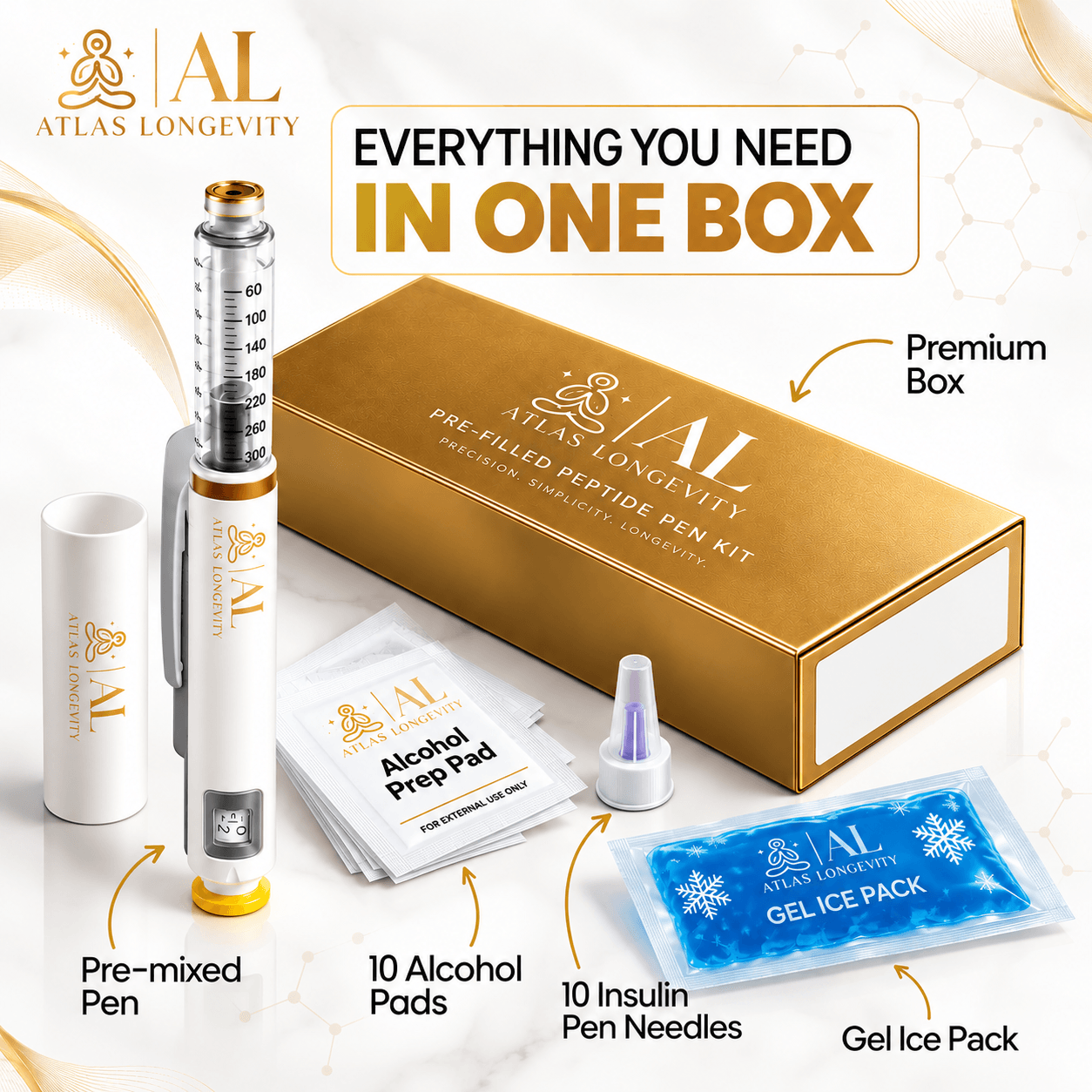
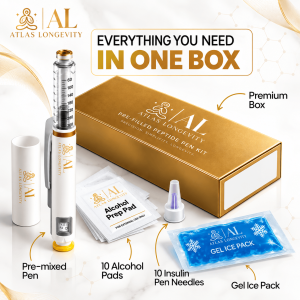
Each Atlas Longevity product is carefully packed to support secure storage, clean handling, and convenient research use. Inside the package, you’ll find the essential items needed for organized laboratory handling:
- 1× Ready-to-Use Injection Pen
- 10× Ultra-Fine Needles (33G, 4 mm)
- 10× Alcohol Prep Pads
- Protective Foam Insert to help keep the pen secure during transport
- Quick-Reference Instruction Panel inside the packaging
- Tamper-Evident Security Seal for added package protection
Each component is arranged in a clean, protective presentation designed to keep the product secure and easy to access.
Storage
Storage conditions should follow the instructions supplied specifically with the Atlas Longevity Melanotan I formulation.
The reference product provides refrigeration and stability specifications for its own finished formulation. Those conditions should not automatically be transferred to Atlas Longevity without formulation-specific stability evidence.
Follow the temperature requirements, light-protection guidance, handling instructions, and shelf-life information printed on the Atlas Longevity product label or accompanying documentation.
The source also lists a proprietary approved product name as a synonym. That branding should not be used as Atlas Longevity product terminology.
Frequently Asked Questions
What is Melanotan I?
Melanotan I is a synthetic analogue of alpha-melanocyte-stimulating hormone (α-MSH).
It is primarily studied for its ability to activate MC1R receptors and influence eumelanin production and pigmentation. Pasted text
Is Melanotan I the same as Afamelanotide?
The supplied source identifies Afamelanotide as another name for Melanotan I.
However, approved Afamelanotide medicinal products may use specific formulations and delivery systems that are not equivalent to an Atlas Longevity pre-mixed pen.
How does Melanotan I work?
Melanotan I activates MC1R receptors on melanocytes.
This can stimulate cAMP-related signalling, increase tyrosinase-related activity, and promote eumelanin production. Pasted text
What is MC1R?
MC1R stands for melanocortin-1 receptor.
It is a receptor expressed primarily on melanocytes and plays a major role in regulating pigmentation and eumelanin production.
What is eumelanin?
Eumelanin is a darker form of melanin pigment.
It contributes to skin and hair pigmentation and has greater UV-absorbing capacity than some lighter melanin forms.
What is Melanotan I researched for?
The supplied material describes research involving:
- melanogenesis;
- pigmentation;
- MC1R signalling;
- photoprotection;
- EPP;
- vitiligo;
- UV-response biology;
- photosensitivity.
Evidence strength varies depending on the specific indication and formulation.
Has Melanotan I been studied in humans?
Yes.
The supplied material includes controlled human trials, observational studies, and regulatory research involving Afamelanotide. Pasted text
Is Afamelanotide approved?
The supplied source states that Afamelanotide has regulatory approval in certain jurisdictions for specific photoprotection indications. Pasted text
That approval applies to particular authorized medicinal products and should not be interpreted as approval of all Melanotan I products or uses.
Is Melanotan I approved for cosmetic tanning?
The supplied material does not establish approval of Melanotan I for cosmetic tanning.
Clinical research and regulatory approval for a specific medical photoprotection indication should not be generalized to cosmetic use.
How much Melanotan I is in each Atlas Longevity pen?
Each Atlas Longevity Melanotan I pen contains:
10 mg in 3 mL.
What is the concentration of the Melanotan I pen?
The concentration is:
10 mg ÷ 3 mL = approximately 3.333 mg/mL
How many clicks are in the pen?
Each Atlas Longevity pen contains:
300 total clicks / units
with:
1 click = 0.01 mL
How much Melanotan I is in one click?
Each click contains approximately:
0.0333 mg
or:
33.3 mcg Melanotan I
How many clicks equal 0.5 mg?
15 clicks = 0.50 mg.
How many clicks equal 1 mg?
30 clicks = 1 mg.
How many clicks equal 2 mg?
60 clicks = 2 mg.
These are concentration calculations rather than dosing recommendations.
What is the maximum selectable amount on the Melanotan I pen?
The maximum single dial selection is:
60 clicks
which equals:
0.60 mL
and:
2 mg Melanotan I
This describes pen mechanics rather than a recommended amount.
How long does a Melanotan I pen last?
The full cartridge contains:
300 clicks and 10 mg Melanotan I.
The number of administrations depends on the number of clicks selected each time.
For cartridge-capacity calculation only:
- 10 clicks at a time = 30 administrations
- 15 clicks at a time = 20 administrations
- 20 clicks at a time = 15 administrations
- 30 clicks at a time = 10 administrations
- 60 clicks at a time = 5 administrations
These examples describe cartridge capacity rather than a therapeutic or tanning protocol.
Does the medication disappear when the dial returns to zero?
No.
After administration, the dial returns to zero while unused formulation remains inside the cartridge.
The remaining Melanotan I stays in the pen until all 300 units have been used.
Can Melanotan I darken moles or freckles?
The supplied clinical material reports darkening of pre-existing nevi and freckles as a possible effect associated with increased melanogenesis. Pasted text
Any concerning change in a pigmented lesion should not simply be assumed to be harmless pigmentation.
Does Melanotan I protect against UV exposure?
Afamelanotide has been studied in specific photoprotection settings, particularly EPP.
However, this should not be interpreted as permission to increase UV exposure or as a replacement for established sun-protection measures.
Can Melanotan I be combined with GHK-Cu or Glutathione?
The supplied source discusses these as experimental research concepts. Pasted text
It does not establish validated human safety, efficacy, compatibility, or dosing for these combinations.
Is there an established dosage for the Atlas Melanotan I pen?
The source contains research quantities, but those were based on a different formulation.
There is no universal approved dosing standard established by the supplied material for the Atlas Longevity pre-mixed pen.
The Atlas click chart therefore represents concentration mathematics only.
How should the Atlas Longevity Melanotan I pen be stored?
Follow the storage instructions supplied with the actual Atlas Longevity formulation.
The competitor product’s refrigeration and stability specifications relate to its own finished product and should not automatically be applied to Atlas without product-specific stability evidence.
Related products
GHK-Cu Peptide Pen
Price range: Rp1,400,000.00 through Rp3,000,000.00 ~$84.85–$181.82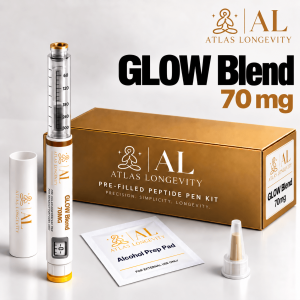
Glow Plus 70mg Pen (GHK-Cu + BPC-157 + TB-500)
Price range: Rp3,000,000.00 through Rp3,600,000.00 ~$181.82–$218.18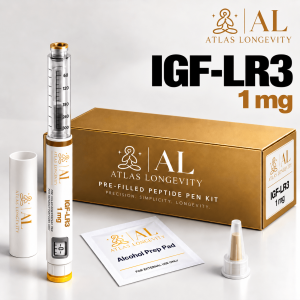
IGF-LR3 1mg Pen
Price range: Rp2,700,000.00 through Rp3,300,000.00 ~$163.64–$200.00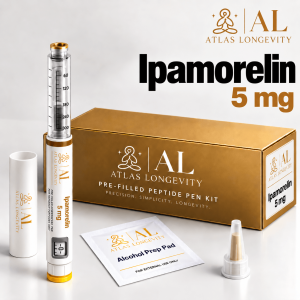
Ipamorelin Pen
Price range: Rp1,200,000.00 through Rp2,600,000.00 ~$72.73–$157.58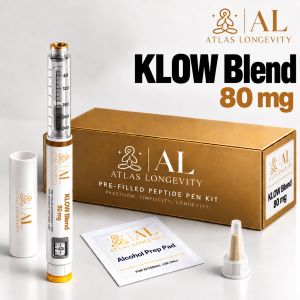
KLOW 80mg Pen (GHK-Cu + KPV + BPC-157 + TB-500)
Price range: Rp3,200,000.00 through Rp3,800,000.00 ~$193.94–$230.30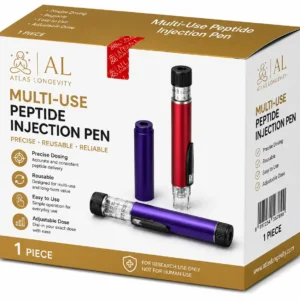
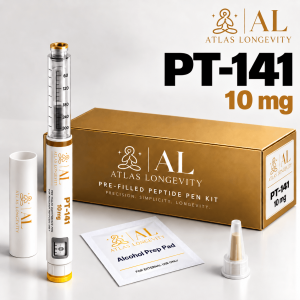
PT-141 Pen
Price range: Rp1,600,000.00 through Rp2,200,000.00 ~$96.97–$133.33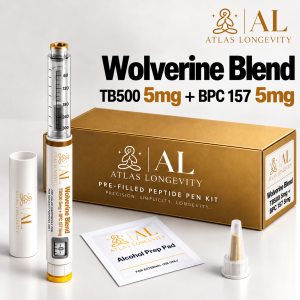
 Peptide Vials
 Peptide Nasal Sprays
 Peptide Protocols
 Bundles