

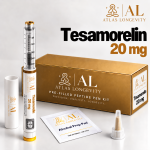


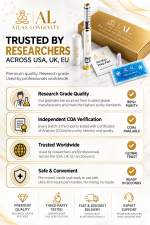
Tesamorelin Pen
Price range: Rp2,300,000.00 through Rp4,800,000.00 ~$139.39–$290.91
Tesamorelin 10 mg / 20 mg Pen
Product Description
Tesamorelin is a synthetic analogue of growth hormone-releasing hormone (GHRH) studied for its ability to stimulate endogenous growth hormone secretion through the pituitary gland.
Rather than supplying growth hormone directly, Tesamorelin activates the body’s GHRH receptor pathway, increasing pulsatile growth hormone signalling and subsequently influencing circulating IGF-1. Clinical research has focused particularly on visceral adipose tissue, metabolic function, lipid biology, liver-related outcomes, and the broader GH–IGF-1 axis. Pasted markdown
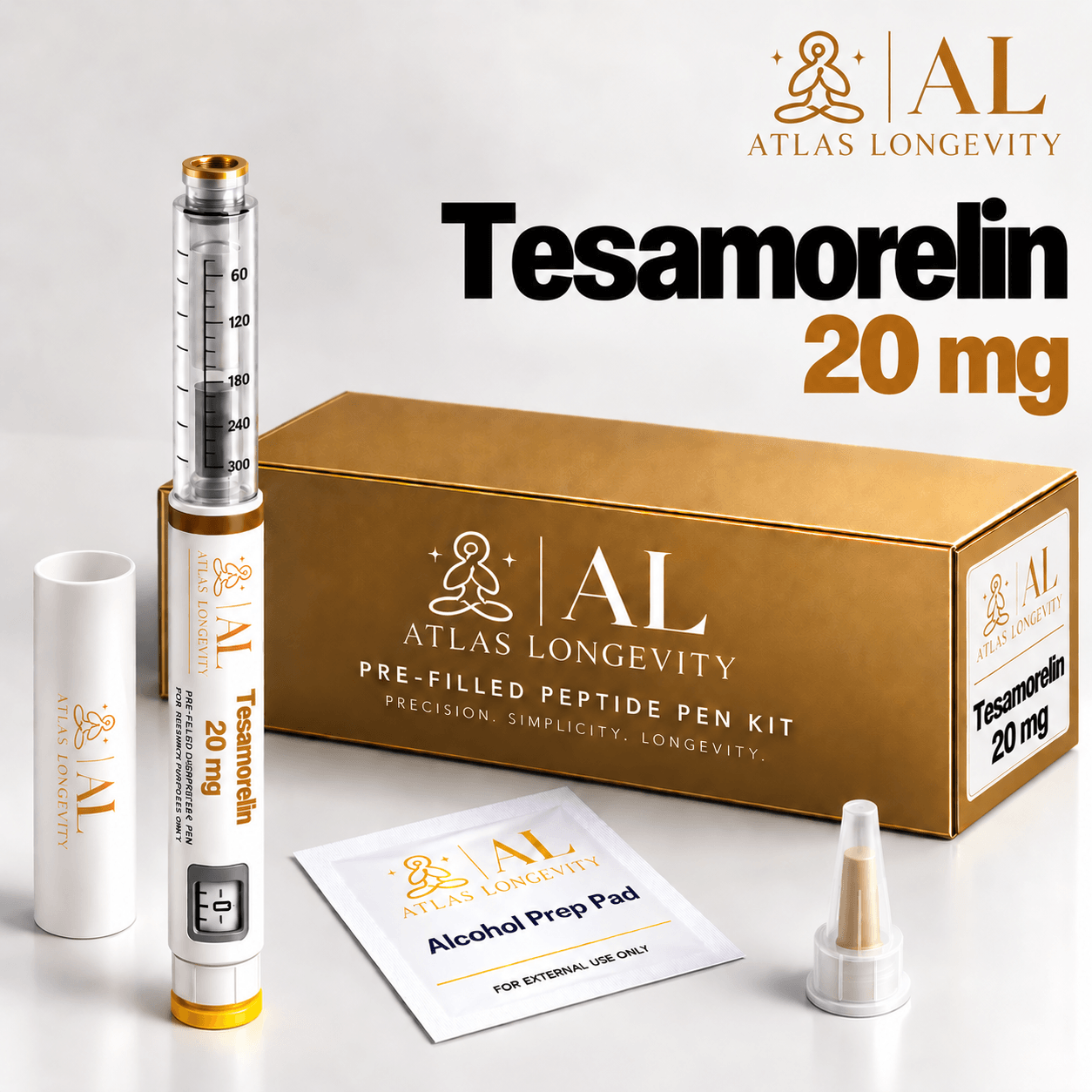
Atlas Longevity Tesamorelin pens use the standard 3 mL / 300-click cartridge system and are available in:
- 10 mg Tesamorelin
- 20 mg Tesamorelin
Tesamorelin has undergone substantial human clinical investigation and has regulatory approval for a specific HIV-associated lipodystrophy indication. That regulatory history applies to authorized Tesamorelin products and indications and should not automatically be interpreted as approval of the Atlas Longevity pen or of unrelated anti-ageing, body-composition, performance, or longevity uses. Pasted markdown
Clinical / Research Status
Tesamorelin has a considerably stronger clinical evidence base than many experimental peptides.
| Evidence Type | Status Based on Supplied Material |
|---|---|
| Human randomized clinical research | Yes |
| Human observational research | Yes |
| Animal research | Yes |
| In-vitro research | Yes |
| Regulatory approval | Yes, for a specific indication/formulation |
The supplied material identifies Tesamorelin as FDA-approved in the context of HIV-associated lipodystrophy, while broader metabolic, neurological, regenerative, and ageing applications remain research areas. Pasted markdown
Evidence Type
The supplied research material includes:
- multicentre randomized human studies;
- HIV-associated visceral-fat research;
- metabolic and lipid studies;
- liver-fat research;
- pituitary-receptor assays;
- muscle and body-composition research;
- neurocognitive pilot research;
- observational studies. Pasted markdown
Evidence strength varies depending on the outcome studied.
The strongest human evidence relates to GH/IGF-1 signalling and visceral adipose tissue in defined clinical populations, while claims involving anti-ageing, performance enhancement, skin rejuvenation, or lifespan extension are substantially less established.
Mechanism of Action
Tesamorelin binds to growth hormone-releasing hormone receptors (GHRHR) located on pituitary somatotroph cells.
According to the supplied material, receptor activation stimulates the:
Gαs → adenylate cyclase → cAMP → PKA pathway
which promotes growth hormone synthesis and pulsatile secretion.
The resulting increase in circulating GH can then stimulate hepatic production of IGF-1, which participates in downstream pathways involving:
- PI3K-Akt;
- mTOR;
- JAK-STAT;
- protein metabolism;
- lipolysis;
- tissue signalling. Pasted markdown
GHRH Analogue Activity
Tesamorelin acts upstream at the pituitary gland rather than supplying exogenous growth hormone directly.
The source describes this as allowing endogenous GH feedback mechanisms and pulsatile signalling to remain involved.
Structural Modification
The supplied material describes an N-terminal structural modification intended to increase resistance to DPP-IV degradation, giving Tesamorelin greater stability than native GHRH. Pasted markdown
Potential Benefits / Research Areas
Endogenous Growth Hormone Research
Tesamorelin is primarily studied as a GHRH receptor agonist capable of increasing endogenous GH release.
This subsequently influences circulating IGF-1 and provides a model for investigating the physiological GH axis without directly administering growth hormone. Pasted markdown
Visceral Adipose Tissue Research
One of the best-documented research areas for Tesamorelin is visceral adipose tissue (VAT).
Human clinical research described in the supplied material reports reductions in abdominal visceral fat in defined study populations while generally preserving lean tissue. Pasted markdown
This evidence should not be generalized into guaranteed weight-loss or cosmetic body-recomposition outcomes for other populations.
Lipid and Metabolic Research
Tesamorelin has also been investigated for effects involving:
- triglycerides;
- cholesterol-related markers;
- insulin sensitivity;
- glucose metabolism;
- broader cardiometabolic endpoints. Pasted markdown
Results vary by population and study design.
Muscle and Recovery Research
The GH–IGF-1 axis plays an important role in protein metabolism and tissue signalling.
The source therefore discusses Tesamorelin in experimental research involving:
- protein synthesis;
- muscle-related signalling;
- satellite-cell activity;
- recovery physiology. Pasted markdown
This does not establish Tesamorelin as an approved muscle-building or athletic-performance treatment.
Liver and Hepatic-Fat Research
Tesamorelin has been investigated in human research involving hepatic fat and metabolic liver outcomes, particularly in defined HIV populations.
The source discusses changes involving:
- hepatic steatosis;
- lipid metabolism;
- liver-related biomarkers. Pasted markdown
These findings should not be interpreted as broad approval for fatty-liver disease treatment outside studied populations.
Neurocognitive Research
The source also describes emerging research into the relationship between the GH–IGF-1 axis and neurological function.
Experimental areas include:
- memory;
- neuronal survival;
- synaptic plasticity;
- brain glucose metabolism;
- neuroendocrine signalling. Pasted markdown
Evidence here is much less established than the visceral-fat clinical literature.
Physiological GH Pulsatility Research
Because Tesamorelin stimulates pituitary GH secretion, research can examine GH signalling while preserving more of the body’s endogenous regulatory architecture than direct GH administration.
The source describes this in relation to:
- pulsatile secretion;
- hypothalamic-pituitary feedback;
- circadian endocrine signalling. Pasted markdown
Collagen and Skin Biology
The supplied material also discusses collagen synthesis and skin-related research through GH/IGF-1 signalling. Pasted markdown
Claims involving younger-looking skin, wound healing, or aesthetic rejuvenation should remain experimental unless supported by formulation-specific clinical evidence.
Physical-Performance Research
Tesamorelin has been discussed in research involving:
- muscle metabolism;
- energy utilisation;
- physical function;
- endurance-related endpoints. Pasted markdown
The supplied evidence does not establish Tesamorelin as an approved performance-enhancing treatment.
Ageing and Longevity Research
GH and IGF-1 pathways are deeply involved in ageing biology.
The supplied source discusses Tesamorelin in relation to:
- cellular repair;
- protein turnover;
- oxidative stress;
- metabolic ageing;
- neuroprotection. Pasted markdown
These are research areas rather than proof that Tesamorelin slows or reverses human ageing.
Research Data
| Study / Model | Reported Finding |
|---|---|
| Human RCTs in HIV-associated lipodystrophy | Reduced visceral adipose tissue with increased IGF-1 |
| Human metabolic studies | Changes in triglyceride, LDL and insulin-related measures |
| Rodent metabolic models | Increased lipolysis and reduced adipocyte size |
| In-vitro pituitary assays | Increased GH secretion through GHRH/cAMP signalling |
| Comparative GH research | Preservation of physiological GH pulsatility reported by source |
| Muscle-regeneration models | Changes in protein synthesis and satellite-cell-related signalling |
| Neurocognitive pilot research | Changes in memory-related outcomes and GH–IGF-1 signalling |
The supplied source reports a 15–20% visceral-fat reduction and approximately 1.7-fold IGF-1 increase after 26 weeks in selected human trial populations. Those figures should be understood as study-specific results, not guaranteed outcomes for other populations or formulations. Pasted markdown
Potential Stack / Combination Research
The supplied source discusses experimental combinations involving Tesamorelin with:
- CJC-1295 (No-DAC);
- Ipamorelin;
- AOD-9604;
- 5-Amino-1MQ. Pasted markdown
The theoretical rationale involves combining GH-secretagogue, metabolic, or body-composition pathways.
However, the supplied material does not establish validated human safety, efficacy, compatibility, or dosing for these combinations.
Combining multiple GH-axis compounds could also produce overlapping biological effects.
Atlas Longevity therefore does not present these as recommended stacks.
Atlas Longevity Tesamorelin Pen Dosage / Click Chart
Atlas Longevity Tesamorelin is available in:
10 mg
and:
20 mg
Both pens use:
3 mL cartridge volume
300 total clicks
1 click = 0.01 mL
Maximum selectable dial amount = 60 clicks
Tesamorelin 10 mg Pen
Pen Specification
| Pen Strength | Volume | Concentration | Amount Per Click |
|---|---|---|---|
| 10 mg | 3 mL | ≈3.333 mg/mL | ≈0.0333 mg / 33.3 mcg |
Concentration Calculation
10 mg ÷ 3 mL = 3.3333 mg/mL
Rounded:
≈3.333 mg/mL
Amount Per Click
10 mg ÷ 300 clicks = 0.033333 mg
Therefore:
1 click ≈0.0333 mg
or:
≈33.3 mcg Tesamorelin
10 mg Pen Click Conversion
| Clicks | Volume | Tesamorelin Amount |
|---|---|---|
| 1 | 0.01 mL | ≈0.0333 mg / 33.3 mcg |
| 5 | 0.05 mL | ≈0.1667 mg |
| 10 | 0.10 mL | ≈0.333 mg |
| 15 | 0.15 mL | 0.500 mg |
| 20 | 0.20 mL | ≈0.667 mg |
| 30 | 0.30 mL | 1.000 mg |
| 40 | 0.40 mL | ≈1.333 mg |
| 45 | 0.45 mL | 1.500 mg |
| 50 | 0.50 mL | ≈1.667 mg |
| 60 | 0.60 mL | 2.000 mg |
Tesamorelin 20 mg Pen
Pen Specification
| Pen Strength | Volume | Concentration | Amount Per Click |
|---|---|---|---|
| 20 mg | 3 mL | ≈6.667 mg/mL | ≈0.0667 mg / 66.7 mcg |
Concentration Calculation
20 mg ÷ 3 mL = 6.6667 mg/mL
Rounded:
≈6.667 mg/mL
Amount Per Click
20 mg ÷ 300 clicks = 0.066667 mg
Therefore:
1 click ≈0.0667 mg
or:
≈66.7 mcg Tesamorelin
20 mg Pen Click Conversion
| Clicks | Volume | Tesamorelin Amount |
|---|---|---|
| 1 | 0.01 mL | ≈0.0667 mg / 66.7 mcg |
| 5 | 0.05 mL | ≈0.333 mg |
| 10 | 0.10 mL | ≈0.667 mg |
| 15 | 0.15 mL | 1.000 mg |
| 20 | 0.20 mL | ≈1.333 mg |
| 30 | 0.30 mL | 2.000 mg |
| 40 | 0.40 mL | ≈2.667 mg |
| 45 | 0.45 mL | 3.000 mg |
| 50 | 0.50 mL | ≈3.333 mg |
| 60 | 0.60 mL | 4.000 mg |
Useful Conversions
10 mg pen:
- 15 clicks = 0.50 mg
- 30 clicks = 1 mg
- 45 clicks = 1.50 mg
- 60 clicks = 2 mg
20 mg pen:
- 15 clicks = 1 mg
- 30 clicks = 2 mg
- 45 clicks = 3 mg
- 60 clicks = 4 mg
These figures are concentration calculations and not dosing recommendations.
Protocol / Dosage Information
The supplied source describes experimental quantities primarily in the range of 1–2 mg for its research examples. Pasted markdown
Its original click calculations were based on 2 mL formulations, so those source click values must not be copied to the Atlas 3 mL pens.
Using the Atlas system:
| Source-Referenced Amount | 10 mg Pen | 20 mg Pen |
|---|---|---|
| 0.50 mg | 15 clicks | ≈7.5 clicks* |
| 1.00 mg | 30 clicks | 15 clicks |
| 1.50 mg | 45 clicks | ≈22.5 clicks* |
| 2.00 mg | 60 clicks | 30 clicks |
*Calculated values of 7.5 or 22.5 clicks cannot be selected exactly using whole pen units.
Single-Dial Limits
For the 10 mg pen:
60 clicks = 2 mg maximum selectable amount in one dial operation
For the 20 mg pen:
60 clicks = 4 mg maximum selectable amount in one dial operation
These limits describe the mechanical properties of the pen and are not recommended quantities.
The supplied source also includes daily, alternate-day, maintenance, cycling, and duration schedules. Those should not be reproduced as self-administration instructions for the Atlas formulation.
Possible Side Effects
Because Tesamorelin activates the GH–IGF-1 axis, its adverse-effect profile may involve endocrine, metabolic, fluid-balance, and musculoskeletal effects.
The supplied material reports:
- injection-site redness;
- injection-site swelling or discomfort;
- arthralgia or joint stiffness;
- headache;
- peripheral edema;
- muscle pain;
- carpal-tunnel-type symptoms;
- hypersensitivity or rash;
- glucose-intolerance concerns associated with increased IGF-1 activity. Pasted markdown
Glucose Regulation
GH and IGF-1 signalling can influence carbohydrate metabolism.
The source specifically notes the relevance of monitoring glucose-related effects. Pasted markdown
IGF-1 Elevation
Tesamorelin can raise circulating IGF-1.
Therefore, biological consequences associated with prolonged or excessive IGF-1 signalling should not be ignored simply because the compound stimulates endogenous GH rather than supplying growth hormone directly.
Fluid Retention and Musculoskeletal Effects
Edema, joint discomfort, myalgia, and carpal-tunnel-type symptoms are consistent with the broader physiological consequences of GH-axis stimulation described in the supplied material.
Long-Term Safety
The source notes continued monitoring in relation to persistent adverse effects and malignancy-related concerns. Pasted markdown
Regulatory and clinical evidence from an approved Tesamorelin product should not automatically be assumed to establish the safety of every formulation, concentration, duration, or combination.
Product Attributes
| Attribute | Information |
|---|---|
| Compound Name | Tesamorelin |
| Research Name | TH9507 |
| CAS Number | 218949-48-5 |
| Molecular Formula | C221H366N72O67S |
| Amino Acid Sequence | Tyr-DAla-Asp-Ala-Ile-Phe-Thr-Asn-Ser-Tyr-Arg-Lys-Val-Leu-Gly-Gln-Leu-Ser-Ala-Arg-Lys-Leu-Leu-Gln-Asp-Ile-Met-Ser-Arg-Gln-Gln-Gly-Glu-Ser-Asn-Gln-Glu-Arg-Gly-Ala-Arg-Ala-Arg-Leu-NH2 |
| Molecular Weight | 5135.87 g/mol |
| PubChem CID | 16137828 |
| Half-Life listed by source | Approximately 30 minutes |
| Synonyms | TH9507, Tesamorelin acetate, GHRH / growth hormone-releasing factor analogue |
| Compound Type | Synthetic GHRH analogue |
| Primary Target | GHRH receptor |
| Research Focus | GH/IGF-1 signalling, visceral adipose tissue, metabolism and endocrine regulation |
These specifications are reported in the supplied source material. Pasted markdown
The source includes a proprietary approved-product name among its synonyms. That branding should not be used as Atlas Longevity product terminology.
Atlas should also confirm the precise sequence, salt form, and finished-product specifications against its own COA before final publication.
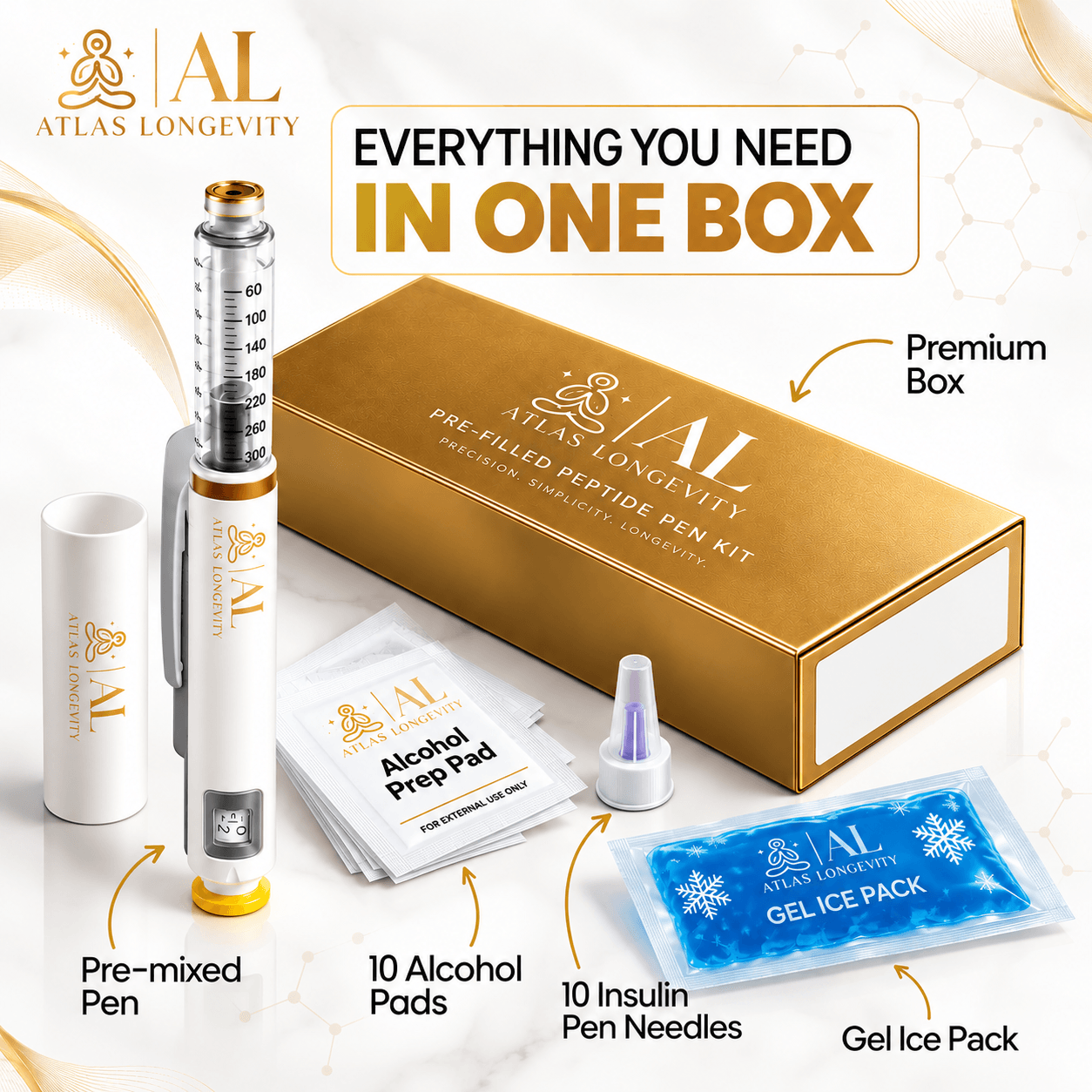
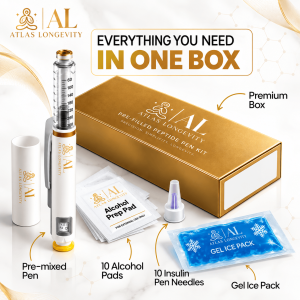
Included in the Box
Each Atlas Longevity product is carefully packed to support secure storage, clean handling, and convenient research use. Inside the package, you’ll find the essential items needed for organized laboratory handling:
- 1× Ready-to-Use Injection Pen
- 10× Ultra-Fine Needles (33G, 4 mm)
- 10× Alcohol Prep Pads
- Protective Foam Insert to help keep the pen secure during transport
- Quick-Reference Instruction Panel inside the packaging
- Tamper-Evident Security Seal for added package protection
Each component is arranged in a clean, protective presentation designed to keep the product secure and easy to access.
Storage
Storage conditions should follow the instructions supplied specifically with the Atlas Longevity Tesamorelin formulation.
The reference product provides refrigeration and stability specifications for its own finished formulation. Those conditions should not automatically be transferred to Atlas Longevity without product-specific stability evidence.
Follow the temperature requirements, light-protection guidance, handling instructions, and shelf-life information shown on the Atlas Longevity product label or accompanying documentation.
Frequently Asked Questions
What is Tesamorelin?
Tesamorelin is a synthetic analogue of growth hormone-releasing hormone (GHRH).
It acts at GHRH receptors in the pituitary and stimulates endogenous growth hormone secretion, which subsequently influences circulating IGF-1. Pasted markdown
How does Tesamorelin work?
Tesamorelin activates GHRH receptors on pituitary somatotroph cells.
This activates intracellular cAMP-related signalling and increases endogenous growth hormone release.
Growth hormone subsequently stimulates hepatic production of IGF-1. Pasted markdown
Is Tesamorelin the same as growth hormone?
No.
Tesamorelin is not growth hormone.
It is a GHRH analogue that stimulates the pituitary to release endogenous GH.
Does Tesamorelin increase IGF-1?
Yes, increased circulating IGF-1 is one of the expected downstream biological effects of stimulating the GH axis.
The supplied clinical material reports increased IGF-1 in human studies. Pasted markdown
Is Tesamorelin FDA approved?
The supplied source states that Tesamorelin is FDA approved in connection with a specific HIV-associated lipodystrophy indication. Pasted markdown
That approval applies to particular authorized products and should not be interpreted as approval of the Atlas Longevity pen or other uses.
Is Tesamorelin approved for general weight loss?
The supplied material does not establish Tesamorelin as a generally approved weight-loss treatment.
Clinical evidence involving visceral adipose tissue comes from specific studied populations and indications.
Does Tesamorelin reduce visceral fat?
Human randomized studies described in the supplied source reported reductions in visceral adipose tissue in selected populations. Pasted markdown
Those trial outcomes should not be treated as guaranteed results for every population.
Does Tesamorelin build muscle?
Tesamorelin influences the GH–IGF-1 axis, which is involved in protein and tissue metabolism.
The supplied material discusses muscle-related and regenerative research, but this does not establish Tesamorelin as an approved muscle-building treatment.
Is Tesamorelin researched for liver fat?
Yes.
The supplied reference list includes randomized human research examining Tesamorelin and hepatic fat in people with HIV. Pasted markdown
What strengths are available?
Atlas Longevity Tesamorelin pens are available in:
10 mg
and:
20 mg
What is the concentration of the 10 mg Tesamorelin pen?
The 10 mg pen contains:
10 mg ÷ 3 mL = approximately 3.333 mg/mL
What is the concentration of the 20 mg Tesamorelin pen?
The 20 mg pen contains:
20 mg ÷ 3 mL = approximately 6.667 mg/mL
How many clicks are in each Tesamorelin pen?
Every Atlas Longevity pen contains:
300 total clicks / units
with:
1 click = 0.01 mL
How much Tesamorelin is in one click of the 10 mg pen?
10 mg ÷ 300 = approximately 0.0333 mg
Therefore:
1 click ≈33.3 mcg Tesamorelin
How much Tesamorelin is in one click of the 20 mg pen?
20 mg ÷ 300 = approximately 0.0667 mg
Therefore:
1 click ≈66.7 mcg Tesamorelin
How many clicks equal 1 mg?
For the 10 mg pen:
30 clicks = 1 mg
For the 20 mg pen:
15 clicks = 1 mg
How many clicks equal 2 mg?
For the 10 mg pen:
60 clicks = 2 mg
For the 20 mg pen:
30 clicks = 2 mg
These are mathematical concentration calculations rather than dosing recommendations.
How many clicks equal 1.5 mg?
For the 10 mg pen:
45 clicks = 1.50 mg
For the 20 mg pen:
≈22.5 clicks mathematically
Because the pen uses whole-click increments, 1.5 mg does not correspond exactly to a whole-click setting on the 20 mg variant.
What is the maximum selectable amount on each Tesamorelin pen?
The maximum single dial selection is:
60 clicks
For the 10 mg pen:
60 clicks = 2 mg
For the 20 mg pen:
60 clicks = 4 mg
This describes the pen’s mechanical range rather than a recommended quantity.
How long does a 10 mg Tesamorelin pen last?
The 10 mg pen contains:
300 clicks and 10 mg total Tesamorelin.
For cartridge-capacity calculations only:
- 15 clicks at a time = 20 administrations
- 30 clicks at a time = 10 administrations
- 60 clicks at a time = 5 administrations
These examples describe cartridge capacity rather than a treatment protocol.
How long does a 20 mg Tesamorelin pen last?
The 20 mg pen also contains:
300 total clicks.
For cartridge-capacity calculations only:
- 15 clicks at a time = 20 administrations
- 30 clicks at a time = 10 administrations
- 60 clicks at a time = 5 administrations
The difference is the amount of Tesamorelin contained in each click.
Does the product disappear when the dial returns to zero?
No.
The dial returns to zero after administration while unused formulation remains inside the cartridge.
The remaining Tesamorelin stays in the pen until all 300 units have been used.
Can Tesamorelin affect blood glucose?
The supplied material identifies glucose intolerance as an area requiring monitoring because Tesamorelin influences GH and IGF-1 signalling. Pasted markdown
Can Tesamorelin cause fluid retention?
Peripheral edema is included among the adverse effects described in the supplied material. Pasted markdown
Can Tesamorelin cause joint pain?
Yes.
Arthralgia and joint stiffness are included among the reported effects associated with GH-axis changes. Pasted markdown
Can Tesamorelin be combined with Ipamorelin?
The supplied source discusses Tesamorelin + Ipamorelin as an experimental GH-secretagogue research concept. Pasted markdown
Validated combination safety, compatibility, efficacy, and dosing are not established by the supplied material.
Can Tesamorelin be combined with CJC-1295?
The source also discusses CJC-1295 as an experimental combination.
Because both compounds can influence the GH axis, overlapping biological effects should be considered rather than assuming additional stimulation is automatically beneficial.
Is there an established human Tesamorelin dosage?
Approved Tesamorelin products have formulation- and indication-specific prescribing information.
The source’s research quantities and click calculations should not be transferred directly to the Atlas Longevity formulation.
The Atlas charts above therefore represent concentration mathematics only.
How should the Atlas Longevity Tesamorelin pen be stored?
Follow the storage instructions supplied specifically with the actual Atlas Longevity Tesamorelin formulation.
The reference manufacturer’s refrigeration, stability, and handling claims apply to its own finished product and should not automatically be transferred to Atlas without product-specific stability evidence.
Related products
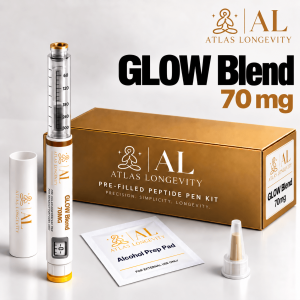
Glow Plus 70mg Pen (GHK-Cu + BPC-157 + TB-500)
Price range: Rp3,000,000.00 through Rp3,600,000.00 ~$181.82–$218.18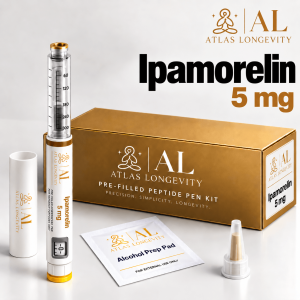
Ipamorelin Pen
Price range: Rp1,200,000.00 through Rp2,600,000.00 ~$72.73–$157.58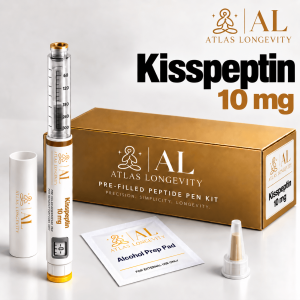
Kisspeptin 10mg Pen
Price range: Rp1,450,000.00 through Rp2,050,000.00 ~$87.88–$124.24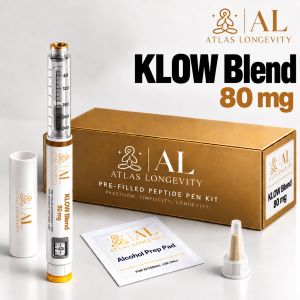
KLOW 80mg Pen (GHK-Cu + KPV + BPC-157 + TB-500)
Price range: Rp3,200,000.00 through Rp3,800,000.00 ~$193.94–$230.30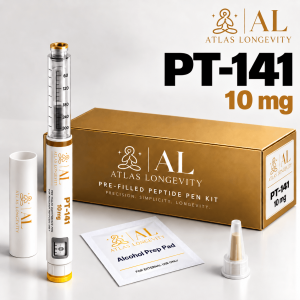
PT-141 Pen
Price range: Rp1,600,000.00 through Rp2,200,000.00 ~$96.97–$133.33
Reconstitution Service for Reusable Peptide Pen Cartridges
Rp250,000.00 ~$15.15
Selank 10mg Pen
Price range: Rp1,600,000.00 through Rp2,200,000.00 ~$96.97–$133.33
 Peptide Vials
 Peptide Nasal Sprays
 Peptide Protocols
 Bundles