
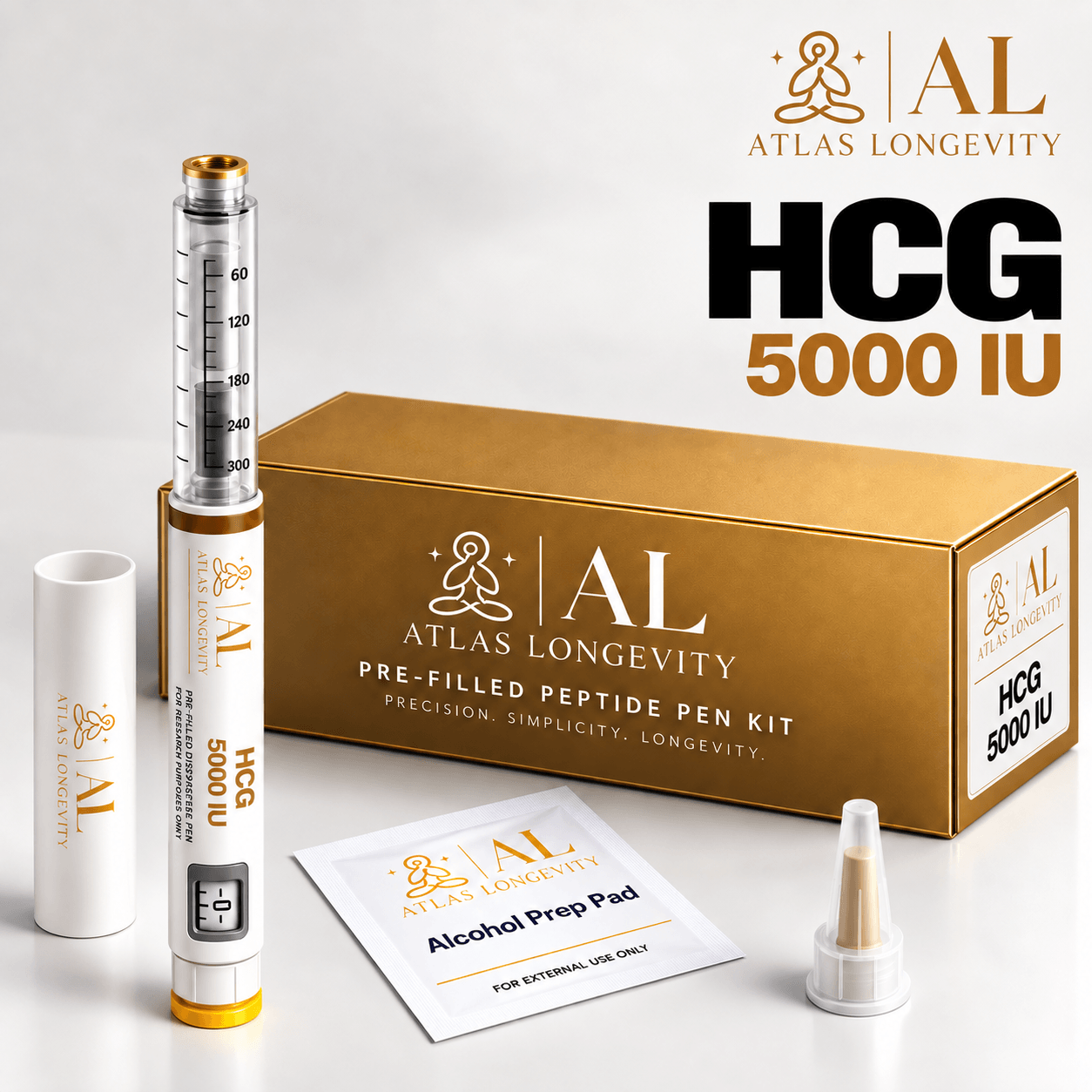
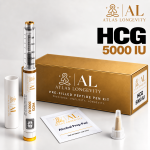

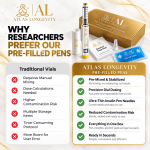
HCG 5000IU
Price range: Rp1,200,000.00 through Rp1,800,000.00 ~$72.73–$109.09
Product Description
Human Chorionic Gonadotropin (HCG) is a heterodimeric glycoprotein hormone studied extensively in reproductive endocrinology and gonadal signalling research.
Unlike most products in this catalogue, HCG is standardized in International Units (IU) rather than milligrams. This is important because HCG is not a simple synthetic peptide with activity that can be described reliably by mass alone.
The molecule consists of two non-covalently associated subunits:
- an alpha subunit of 92 amino-acid residues;
- a beta subunit of 145 amino-acid residues.
Carbohydrate structures account for approximately one-third of the molecule’s mass, giving HCG an overall molecular mass of approximately 37 kDa.
Because glycosylation can vary between individual molecular forms, different HCG glycoforms may exhibit different levels of biological activity. For this reason, biological potency is standardized against international reference preparations and expressed in IU rather than mg.
The supplied Atlas Longevity HCG product is presented as a lyophilized research material with a Certificate of Analysis.
The total IU content of the vial was not supplied in the source material, so strength-specific concentration or reconstitution calculations should not be published until the actual Atlas product specification is confirmed.
Why HCG Is Measured in IU Rather Than Milligrams
For many research peptides, milligram quantity provides a useful indication of how much compound is present.
HCG is different.
Its biological activity depends not only on the mass of protein present but also on characteristics including:
- glycosylation pattern;
- molecular heterogeneity;
- biological receptor activity;
- reference-standard potency.
Two samples with the same mass could therefore differ in biological activity.
For this reason, HCG preparations are standardized against an international biological reference preparation and labelled according to activity in International Units (IU).
A milligram figure alone would provide less meaningful information about biological potency.
Molecular Structure
HCG is a heterodimeric glycoprotein hormone composed of an alpha and beta subunit held together non-covalently.
Alpha Subunit
The alpha subunit contains approximately:
92 amino-acid residues
and is structurally related to the alpha subunits found in several other glycoprotein hormones.
Beta Subunit
The beta subunit contains approximately:
145 amino-acid residues
and provides much of the biological specificity associated with HCG.
The HCG beta subunit is closely homologous to the beta subunit of luteinising hormone (LH), but HCG contains an additional C-terminal extension with O-linked carbohydrate structures.
This structural extension contributes to the substantially longer persistence of HCG in circulation compared with endogenous LH.
Mechanism of Action
HCG acts primarily through the luteinising hormone/choriogonadotropin receptor (LHCGR).
This receptor is expressed in gonadal tissues including:
- Leydig cells;
- granulosa cells;
- other reproductive endocrine cell populations.
Binding to LHCGR activates intracellular signalling involved in steroidogenesis and reproductive endocrine function.
Because HCG persists considerably longer than endogenous LH, researchers frequently use it as a longer-acting experimental LHCGR agonist.
Relationship Between HCG and LH
HCG and luteinising hormone activate the same primary receptor:
LHCGR
However, their pharmacological behaviour differs.
HCG contains structural and carbohydrate modifications that slow its clearance relative to endogenous LH.
This difference allows researchers to investigate:
- sustained LHCGR activation;
- gonadal steroidogenic responses;
- prolonged receptor stimulation;
- receptor desensitisation;
- differences between acute and persistent gonadotropin signalling.
HCG should therefore not simply be described as another form of LH. The two hormones share receptor activity but differ significantly in molecular structure and duration of action.
Research Areas
Gonadal Steroidogenesis Research
HCG is widely studied for its ability to activate LHCGR-associated steroidogenic pathways.
Experimental research examines changes in steroid hormone production following receptor stimulation.
Leydig Cell Research
Leydig cells express LHCGR and are central to male gonadal steroidogenesis.
HCG is therefore frequently used in laboratory models investigating:
- LHCGR activity;
- Leydig-cell responsiveness;
- steroidogenic enzyme signalling;
- sustained gonadotropin exposure.
Granulosa Cell Research
In ovarian research, HCG is also used to investigate granulosa-cell and related reproductive endocrine responses.
Receptor Desensitisation Research
Because HCG can produce relatively prolonged LHCGR stimulation, it is useful for studying receptor regulation during sustained activation.
Research areas include:
- receptor sensitivity;
- receptor internalisation;
- signalling attenuation;
- endocrine feedback;
- prolonged gonadotropin exposure.
HCG and Kisspeptin-10 Research
HCG and Kisspeptin-10 can be useful in experimental models examining different levels of the hypothalamic-pituitary-gonadal axis.
Kisspeptin-10
Kisspeptin acts higher in the reproductive endocrine pathway at the hypothalamic level.
Its primary research role involves stimulation of GnRH-associated signalling.
HCG
HCG acts much further downstream.
It directly stimulates LHCGR on gonadal tissue.
This creates a useful mechanistic distinction:
Kisspeptin → hypothalamic signalling
versus:
HCG → direct gonadal LHCGR activation
Research models investigating where dysfunction occurs along the reproductive axis may therefore examine responses to both compounds.
This does not establish a therapeutic combination or human-use protocol.
Research Data / Experimental Applications
| Research Area | Experimental Relevance |
|---|---|
| LHCGR receptor studies | Direct agonism of luteinising hormone/choriogonadotropin receptors |
| Leydig-cell models | Investigation of steroidogenic signalling and gonadal response |
| Granulosa-cell models | Study of ovarian gonadotropin signalling |
| Steroidogenesis research | Evaluation of downstream steroid-hormone synthesis pathways |
| Receptor desensitisation | Study of prolonged LHCGR stimulation and signalling adaptation |
| Reproductive-axis localisation | Comparison with upstream compounds such as Kisspeptin-10 |
| Glycoprotein-hormone research | Study of glycosylation, receptor activity and biological potency |
Product Strength and IU
HCG is standardized in International Units rather than milligrams.
The source material does not specify the total number of IU contained in the Atlas Longevity vial.
For this reason, no specific statements should currently be made regarding:
- total IU per vial;
- IU per mL after reconstitution;
- concentration;
- dilution ratio;
- volume-per-IU calculations.
These values should be added only after the exact Atlas Longevity IU strength and validated reconstitution specification are confirmed.
Reconstitution and Laboratory Handling
The supplied source describes the product as a lyophilized powder intended for laboratory reconstitution with bacteriostatic water.
Because the total IU strength and intended reconstitution volume were not provided, no specific volume-to-IU calculation should be published.
The source also notes that glycoprotein hormones tolerate repeated freeze-thaw cycling poorly.
Where experimental protocols require divided storage, the source recommends aliquoting rather than repeatedly freezing and thawing the same prepared solution.
These statements relate to laboratory handling and are not human-administration instructions.
Storage
The supplied product information gives the following storage conditions for research handling:
Before Reconstitution
Store the sealed lyophilized vial at:
-20°C
and protect the material from unnecessary heat and direct light.
A later handling statement in the supplied source more generally describes unmixed vials as being kept cool and out of direct light. Because these two descriptions differ in specificity, the final Atlas product label and Certificate of Analysis should be treated as the authoritative storage instruction.
After Reconstitution
The supplied material specifies:
2–8°C refrigerated storage
after reconstitution.
It also states that the reconstituted research solution should be used within approximately:
4 weeks
Freeze-Thaw Handling
Repeated freeze-thaw cycling should be avoided.
The source specifically notes that glycoprotein hormones tolerate repeated freezing and thawing poorly.
Possible Research Limitations and Handling Considerations
Because HCG is a biologically active glycoprotein rather than a simple synthetic peptide, several variables may affect experimental performance.
These include:
- glycosylation heterogeneity;
- biological potency;
- reconstitution conditions;
- storage temperature;
- freeze-thaw exposure;
- duration after reconstitution;
- receptor-desensitisation effects during sustained exposure.
Researchers should therefore rely on the actual Atlas Longevity Certificate of Analysis and batch-specific product documentation when designing quantitative experiments.
Product Attributes
| Attribute | Information |
|---|---|
| Compound Name | Human Chorionic Gonadotropin |
| Abbreviation | HCG / hCG |
| Compound Class | Heterodimeric glycoprotein hormone |
| Measurement Standard | International Units (IU) |
| Alpha Subunit | Approximately 92 amino-acid residues |
| Beta Subunit | Approximately 145 amino-acid residues |
| Approximate Molecular Mass | ~37 kDa |
| Carbohydrate Content | Approximately one-third of molecular mass |
| Primary Receptor | LHCGR |
| Related Hormone | Luteinising hormone |
| Research Focus | Gonadal steroidogenesis, Leydig-cell biology, granulosa-cell biology, reproductive endocrinology and receptor desensitisation |
| Form | Lyophilized powder |
| Total IU per Vial | Not supplied in source material |
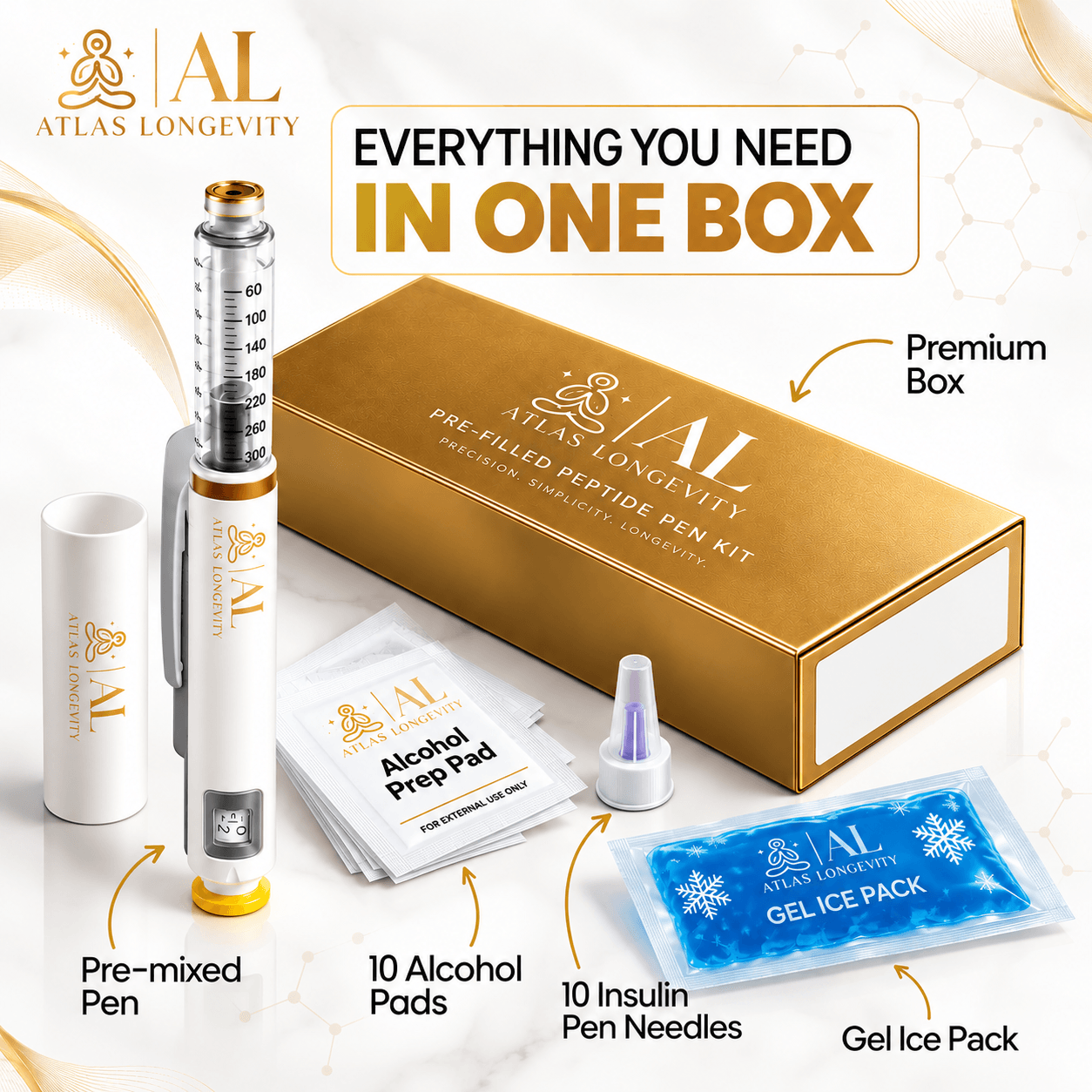
Included in the Box
Each Atlas Longevity product is carefully packed to support secure storage, clean handling, and convenient research use. Inside the package, you’ll find the essential items needed for organized laboratory handling:
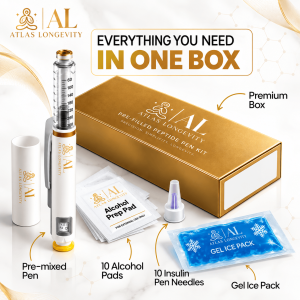
- 1× Ready-to-Use Injection Pen
- 10× Ultra-Fine Needles (33G, 4 mm)
- 10× Alcohol Prep Pads
- Protective Foam Insert to help keep the pen secure during transport
- Quick-Reference Instruction Panel inside the packaging
- Tamper-Evident Security Seal for added package protection
Each component is arranged in a clean, protective presentation designed to keep the product secure and easy to access.
Storage
Unreconstituted vial: the supplied source specifies storage of the sealed vial at -20°C.
After reconstitution: store the prepared research solution at 2–8°C.
The supplied source states that reconstituted material should be used within approximately four weeks.
Avoid repeated freeze-thaw cycles. The source notes that glycoprotein hormones tolerate repeated freezing and thawing poorly.
The supplied material also contains a more general instruction to keep unmixed vials cool and out of direct light. Where any storage wording differs, follow the batch-specific Atlas Longevity label and Certificate of Analysis.
Frequently Asked Questions
What is HCG?
HCG stands for Human Chorionic Gonadotropin.
It is a heterodimeric glycoprotein hormone composed of alpha and beta subunits and studied extensively in reproductive endocrinology.
Is HCG a peptide?
Not in the same sense as the synthetic peptides elsewhere in the catalogue.
HCG is a much larger glycoprotein hormone made from two protein subunits with substantial carbohydrate modification.
Why is HCG measured in IU instead of mg?
HCG biological activity depends partly on its glycosylation and molecular form.
Because mass alone does not reliably predict biological potency, HCG is standardized against an international biological reference preparation and expressed in International Units.
What does IU mean?
IU stands for International Unit.
An IU describes standardized biological activity rather than simply the physical mass of material.
How large is HCG?
The supplied information describes an approximate molecular mass of:
37 kDa
with carbohydrate accounting for roughly one-third of that mass.
What are the HCG alpha and beta subunits?
The source describes:
Alpha subunit: 92 amino-acid residues
Beta subunit: 145 amino-acid residues
The two subunits associate non-covalently to form the active glycoprotein hormone.
How is HCG related to luteinising hormone?
HCG and LH both activate:
LHCGR — luteinising hormone/choriogonadotropin receptor
The HCG beta subunit is closely related to that of LH but includes an additional C-terminal extension with O-linked glycans.
Why does HCG last longer than LH?
The additional structural and carbohydrate features of HCG slow its clearance.
This gives HCG a substantially longer duration of biological activity than endogenous LH.
What is LHCGR?
LHCGR is the luteinising hormone/choriogonadotropin receptor.
It is a receptor expressed in gonadal tissues and involved in reproductive endocrine signalling.
What is HCG researched for?
Research areas include:
- gonadal steroidogenesis;
- Leydig-cell responses;
- granulosa-cell signalling;
- LHCGR biology;
- sustained receptor activation;
- receptor desensitisation;
- reproductive-axis research.
Why might HCG and Kisspeptin-10 be studied together?
They act at different levels of the reproductive endocrine axis.
Kisspeptin-10 acts upstream at the hypothalamus, while HCG acts downstream directly at gonadal LHCGR.
Comparing responses can therefore help researchers investigate where along the axis a signalling abnormality may occur.
Is the Atlas HCG product supplied in a pen?
No.
The supplied information describes the product as a lyophilized research vial, not a pen.
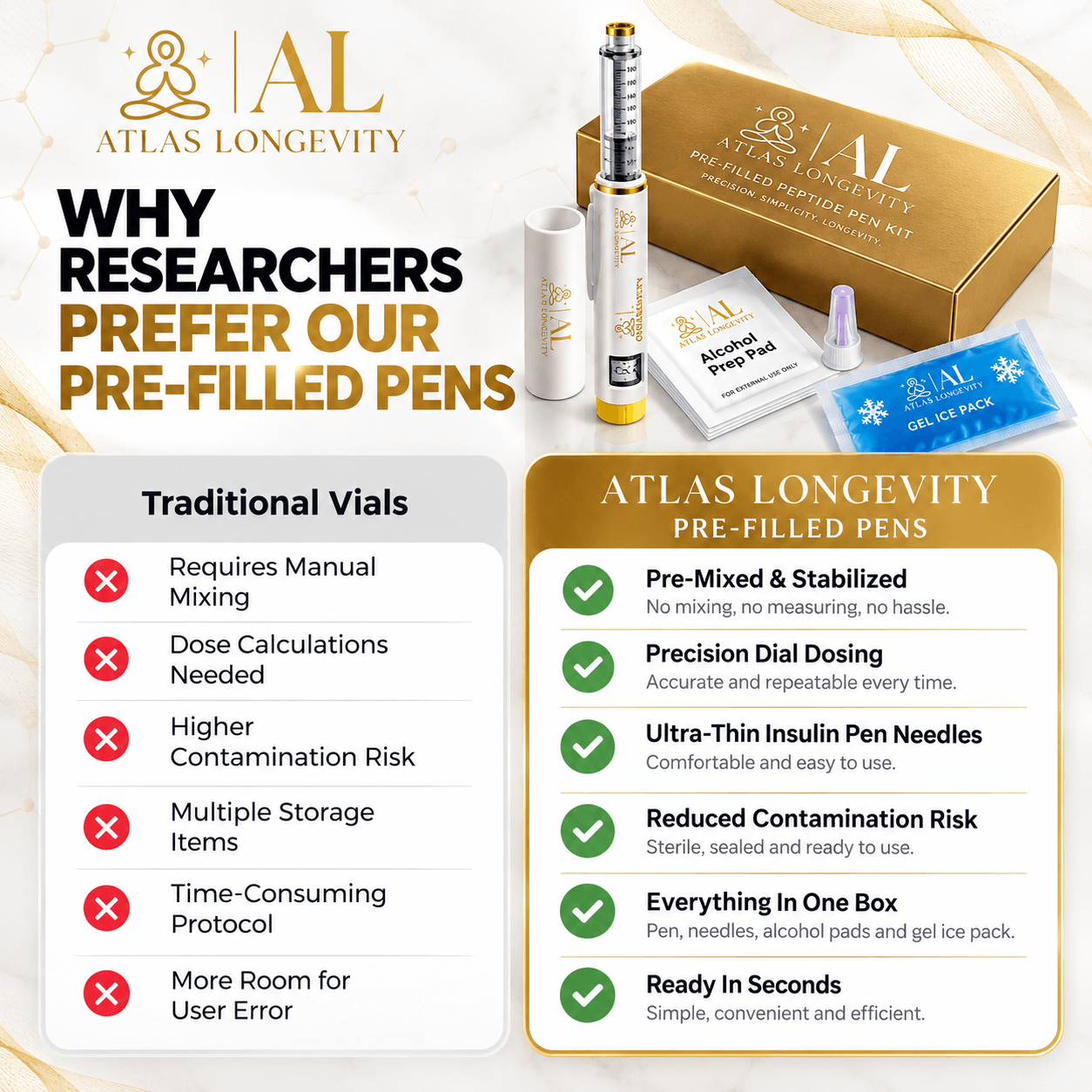
Is HCG pre-mixed?
No.
The supplied material describes HCG as a lyophilized powder that requires reconstitution for laboratory research.
How much HCG is in each Atlas vial?
The total IU amount was not provided in the supplied information.
This should be confirmed from the Atlas product specification or Certificate of Analysis before publication.
Can HCG be converted from IU to mg?
A simple universal conversion should not be used.
The reason HCG is standardized in IU is precisely because mass does not reliably describe its biological activity.
How should HCG be stored before reconstitution?
The supplied source specifies storage of the sealed vial at:
-20°C
How should HCG be stored after reconstitution?
The supplied source specifies:
2–8°C
after reconstitution.
How long can reconstituted HCG be stored?
The supplied handling information states approximately:
four weeks at 2–8°C
for the reconstituted research solution.
Should reconstituted HCG be repeatedly frozen and thawed?
The supplied information advises against repeated freeze-thaw cycling because glycoprotein hormones can be sensitive to this process.
Does HCG have a standard click or dosage chart?
No click chart should be published for this product based on the supplied information.
HCG is supplied as a lyophilized vial, not an Atlas 3 mL / 300-click pen, and the total IU strength and reconstitution volume have not been provided.
Research Use & Handling
Atlas Longevity HCG is supplied for in-vitro laboratory research only.
It is not presented as a medicine and should not be described as intended for human or veterinary use.
The product should be handled according to the batch-specific Certificate of Analysis, storage instructions, and laboratory procedures.
Related products
5-AMINO-1MQ
Price range: Rp3,700,000.00 through Rp6,800,000.00 ~$224.24–$412.12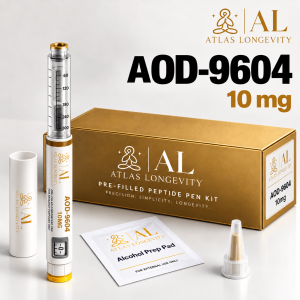
AOD-9604 10mg Pen
Price range: Rp3,200,000.00 through Rp3,800,000.00 ~$193.94–$230.30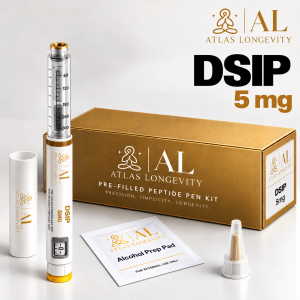
DSIP Pen
Price range: Rp1,300,000.00 through Rp2,600,000.00 ~$78.79–$157.58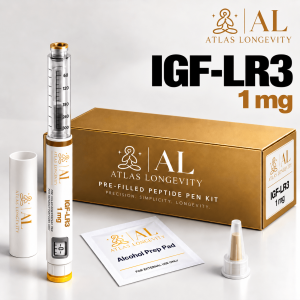
IGF-LR3 1mg Pen
Price range: Rp2,700,000.00 through Rp3,300,000.00 ~$163.64–$200.00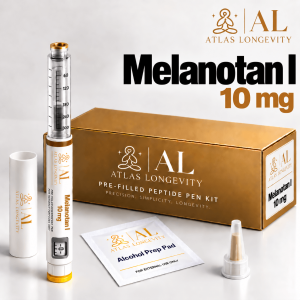
Melanotan I 10mg Pen
Price range: Rp2,500,000.00 through Rp3,100,000.00 ~$151.52–$187.88
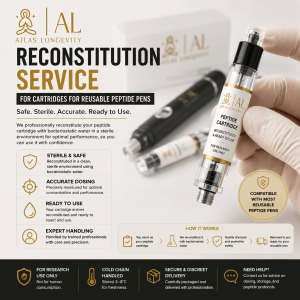
Reconstitution Service for Reusable Peptide Pen Cartridges
Rp250,000.00 ~$15.15
 Peptide Vials
 Peptide Nasal Sprays
 Peptide Protocols
 Bundles