

Blog
How Semaglutide Works: What It Does to Your Body

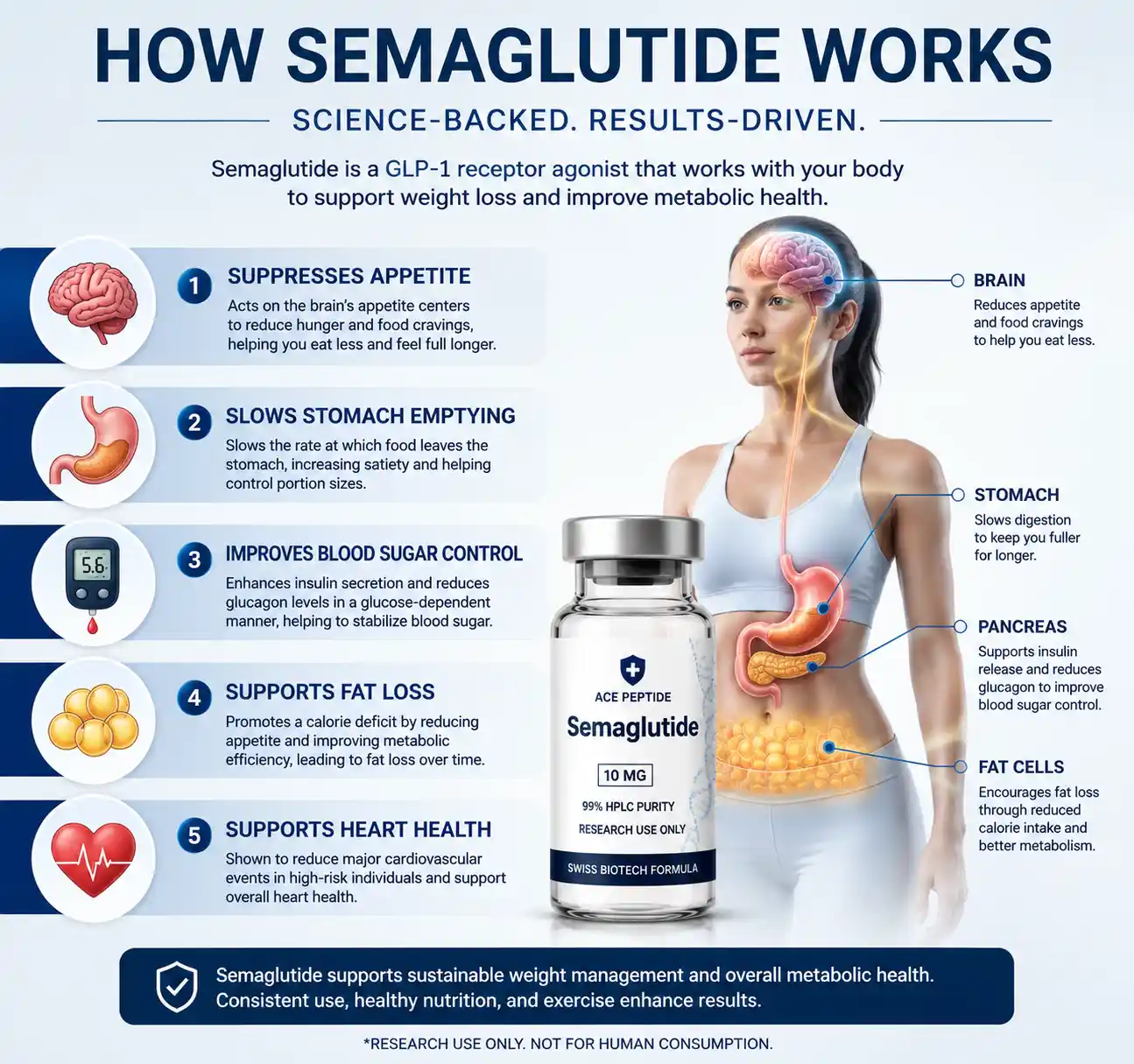
Semaglutide copies a gut hormone called GLP-1 to lower blood sugar, slow digestion and quiet hunger, and it lasts about a week in your body.
If you’ve heard of Ozempic or Wegovy, you’ve already heard of semaglutide. It’s the medicine inside both of them, and inside the Rybelsus tablet too.
Semaglutide gets a lot of attention for weight loss. But what does it actually do once it’s in your body?
Here’s a step-by-step look at how it works, what the research shows and what to keep in mind.
This page is for general education and isn’t medical advice. Approved semaglutide medicines need a prescription. Products sold on this website are for lawful research use only.
Medical note: This page is educational and is not medical advice. Approved tirzepatide and semaglutide medicines are prescription-only. Products sold on this website are for lawful research use only.
What Is Semaglutide?
Semaglutide is a GLP-1 receptor agonist. That means it copies a hormone your gut makes after you eat, called glucagon-like peptide-1 (GLP-1). It’s a peptide, a short chain of 31 amino acids, made in a lab by Novo Nordisk.
In the US, the FDA has approved semaglutide for:
- Type 2 diabetes (Ozempic, a weekly injection, and Rybelsus, a daily tablet)
- Chronic weight management in adults and children 12 and older (Wegovy)
- Lowering the risk of heart attack and stroke in adults with heart disease and overweight or obesity (Wegovy)
In our shop, semaglutide is listed under the code GLP-1 SMA, but this guide uses its real name.
How Semaglutide Works in Your Body?
Your body already makes GLP-1, but it doesn’t last long. An enzyme breaks it down within a minute or two. Semaglutide was built to last much longer, so its effects carry on for days.
Once it’s in your body, semaglutide can:
- Help your pancreas release insulin when your blood sugar is high
- Lower glucagon, a hormone that raises blood sugar
- Slow how fast food leaves your stomach
- Make you feel full sooner and for longer
- Quiet hunger signals in your brain
Why Semaglutide Lasts a Week?
Scientists made two small changes to the GLP-1 hormone. They swapped one amino acid so the enzyme DPP-4 can’t break it down. And they added a fatty-acid chain that lets it stick to albumin, a protein in your blood.
Together, those changes give semaglutide a half-life of about one week. That’s why the injection is taken once a week. The tablet form is taken daily and uses an ingredient that helps it get through the stomach wall.
Benefits of Semaglutide
It Helps Your Pancreas Manage Blood Sugar
When your blood sugar goes up after a meal, semaglutide tells your pancreas to release more insulin and less glucagon.
This only happens when blood sugar is high, and it fades as levels come back down. That’s why semaglutide on its own rarely causes low blood sugar (hypoglycemia). The risk goes up if you also take insulin or a sulfonylurea.
It Slows Down Digestion
Semaglutide slows how fast your stomach empties into your small intestine. Food stays in your stomach longer, so you feel full for longer, and sugar from a meal enters your blood more slowly.
This effect is strongest in the first weeks and tends to ease with time. It’s also one reason many people feel queasy when they start.
It Quiets Hunger in Your Brain
This is the biggest reason semaglutide helps with weight loss. It reaches areas of your brain that control hunger and fullness, called the hypothalamus and the brainstem.
In one study, people taking semaglutide ate about 24% fewer calories at an all-you-can-eat meal. They also said they felt less hungry, had fewer cravings and were less drawn to high-fat foods. Many people describe it as “food noise” going quiet.
It May Protect Your Heart
GLP-1 receptors are also found in your heart and blood vessels. In a large trial called SELECT, semaglutide lowered the risk of heart attack, stroke or death from heart disease by 20% compared with a placebo.
The people in that trial had heart disease and overweight or obesity, but not diabetes. Researchers think the benefit comes from weight loss together with lower blood pressure and less inflammation.
Semaglutide for Weight Loss: What the Research Shows?
The main weight-loss trial for semaglutide is called STEP 1. It was published in the New England Journal of Medicine in 2021 and followed 1,961 adults with obesity or overweight who didn’t have diabetes.
After 68 weeks:
- People taking weekly semaglutide lost an average of 14.9% of their body weight
- People taking a placebo lost an average of 2.4%
- Both groups also got advice on diet and exercise
It’s worth knowing how that weight comes off. Semaglutide doesn’t burn fat directly. It works by helping you eat less.
Some of the weight lost is muscle, too. Getting enough protein and doing strength training can help protect it.
Newer medicines have since been tested against semaglutide, and one of them led to more weight loss in a head-to-head trial. You can see how tirzepatide and semaglutide compare in our full breakdown.
How Long Does Semaglutide Take to Work?
Because semaglutide lasts about a week, it takes a few weeks to build up to a steady level in your body. Many people notice a smaller appetite within the first few weeks.
Your doctor raises the dose slowly over several months, mainly to keep nausea down. In STEP 1, weight kept coming down for most of the first year before it leveled off.
Semaglutide Side Effects
The same effects that make semaglutide work also cause its most common side effects. They’re most likely when you first start or when your dose goes up, and they often ease over time.
Common side effects include:
- Nausea
- Diarrhea
- Vomiting
- Constipation
- Stomach pain
- Heartburn
Less often, semaglutide can cause more serious problems, like pancreatitis or gallbladder issues.
Who Should Avoid Semaglutide?
Semaglutide carries a boxed warning, the strongest safety warning the FDA gives a prescription drug, about thyroid C-cell tumors seen in animal studies.
That’s why you shouldn’t take it if you or a family member has had medullary thyroid cancer or a condition called multiple endocrine neoplasia type 2 (MEN 2). It also isn’t recommended during pregnancy.
How Semaglutide Compares With Newer Medicines
Semaglutide copies one hormone. Some newer medicines copy two or three. More isn’t automatically better for everyone, since each one has its own research, side effects and approval status.
Tirzepatide: Two Hormones
Tirzepatide copies GLP-1 and a second gut hormone called GIP (glucose-dependent insulinotropic polypeptide). That makes it a dual agonist. If you’re curious about the difference that second hormone makes, read our guide to how tirzepatide works.
Retatrutide: Three Hormones
Retatrutide goes one step further and copies GIP, GLP-1 and glucagon. It’s still being studied in clinical trials, and it isn’t approved by the FDA or by BPOM in Indonesia. You can learn more about how retatrutide works and where the research stands.
Semaglutide in Bali
Living in Bali or staying for a few months? Before you start, it’s useful to know what you can find on the island and how long delivery takes. Our guide to semaglutide in Bali covers local prices and delivery.
Is Semaglutide Right for You?
Semaglutide can help with blood sugar, weight and heart health, but it isn’t the right fit for everyone. Your health history, other medicines and goals all play a part.
The best next step is a conversation with a doctor. If you have questions in the meantime, you can contact us to discuss your goals.
Frequently Asked Questions
What exactly does semaglutide do to your body?
Semaglutide copies the gut hormone GLP-1. It helps your pancreas release more insulin and less glucagon when blood sugar is high, slows how fast your stomach empties and quiets hunger signals in your brain. The result is lower blood sugar and eating less.
Is semaglutide a peptide?
Yes. Semaglutide is a peptide made of 31 amino acids, and it’s very close to your body’s own GLP-1. Two small changes protect it from being broken down, so it lasts about a week instead of a minute or two.
How does semaglutide reduce appetite?
It acts on the parts of your brain that control hunger and fullness, and it slows how fast your stomach empties, so meals feel more filling. In one study, people on semaglutide ate about 24% fewer calories at an all-you-can-eat meal and had fewer cravings.
Does semaglutide burn fat?
Not directly. Semaglutide helps you lose weight mainly by helping you eat less. Most of the weight lost is fat, but some is muscle, so getting enough protein and doing strength training are a good idea.
Why is semaglutide taken only once a week?
Semaglutide sticks to albumin, a protein in your blood, and resists the enzyme that breaks down natural GLP-1. That gives it a half-life of about a week, so one injection a week keeps a steady level. The tablet form is taken daily.
How long does it take for semaglutide to work?
Many people notice a smaller appetite within the first few weeks. Your doctor raises the dose slowly over several months to keep nausea down. In the STEP 1 trial, weight kept coming down for most of the first year.
What happens when you stop taking semaglutide?
Its effect on appetite wears off over a few weeks as it leaves your body. In the year after the STEP 1 trial ended, people who stopped semaglutide regained about two-thirds of the weight they’d lost.
 Peptide Vials
 Peptide Pens
 Peptide Nasal Sprays
 Peptide Protocols
 Bundles