
Blog
How to Reconstitute Peptides: Step-by-Step Mixing Guide (2026)

Understanding how to properly reconstitute peptides is one of the most essential skills in peptide research. A small mistake can compromise the integrity of your compound, while correct technique ensures a stable, accurately dosed solution ready for your protocol.
At Atlas Longevity, we provide research-grade peptides in lyophilized (freeze-dried) form. These arrive as a delicate powder inside a sealed vial and must be mixed with bacteriostatic water before use. While the process is simple, precision and care are critical.
This guide walks you through each step — from preparation to storage — so you can confidently reconstitute peptides like BPC-157, TB-500, and more.
What Is Peptide Reconstitution?
Peptide reconstitution is the process of dissolving a freeze-dried peptide powder into a sterile liquid, typically bacteriostatic water, to create a usable solution for research.
Lyophilization removes moisture to preserve peptide stability during transport and storage. Reconstitution restores it to liquid form for accurate dosing and application.
Most peptides arrive in vials containing 2mg to 10mg of powder. The appearance may vary — from a compact disc to a soft, fluffy cake — both are completely normal.
What You Need to Reconstitute Peptides
Before starting, prepare a clean and organized workspace to avoid contamination.
Required Supplies
- Lyophilized peptide vial (from a trusted supplier like Atlas Longevity)
- Bacteriostatic water (BAC water with 0.9% benzyl alcohol)
- Insulin syringes (1mL / 100 units, 29–30 gauge)
- Alcohol swabs (70% isopropyl alcohol)
Optional (Recommended)
- Nitrile gloves
- Clean, disinfected workspace
- Sharps disposal container
Why Use Bacteriostatic Water?
Bacteriostatic water is the preferred solvent because it contains benzyl alcohol, which helps prevent bacterial growth after the vial is opened. This allows your solution to remain usable for weeks when refrigerated.
Plain sterile water lacks this protection and should only be used if the solution will be consumed within 24 hours.
Step-by-Step Peptide Reconstitution Process
Follow each step carefully to maintain peptide stability and accuracy.
Step 1: Prepare Your Workspace
Wash your hands thoroughly and clean your surface. Allow your peptide vial to reach room temperature for 5–10 minutes before use to avoid condensation and temperature shock.
Step 2: Remove the Cap
Remove the vial’s plastic cap to expose the rubber stopper. Clean the top of both the peptide vial and BAC water vial using alcohol swabs. Let them air dry.
Step 3: Draw Bacteriostatic Water
Choose your desired volume (commonly 1mL or 2mL). This determines your final concentration.
Quick reference:
| Peptide | BAC Water | Dose per 0.1mL |
|---|---|---|
| 5mg | 1mL | 500mcg |
| 5mg | 2mL | 250mcg |
| 10mg | 1mL | 1000mcg |
| 10mg | 2mL | 500mcg |
Draw the water slowly into your syringe and remove any air bubbles before proceeding.
Step 4: Add Water to the Vial
Insert the needle into the peptide vial at an angle. Allow the water to flow gently down the inside glass wall — never inject directly onto the powder.
Slow injection (15–30 seconds) protects the peptide structure.
Step 5: Allow the Peptide to Dissolve
Do not shake the vial.
Instead, gently roll or swirl it until the powder dissolves. This typically takes 1–3 minutes. If needed, refrigerate briefly and repeat.
The final solution should appear clear. Cloudiness or particles may indicate contamination or degradation.
Step 6: Label and Store
Label your vial with:
- Peptide name
- Concentration
- Date of reconstitution
Store immediately in the refrigerator.
How to Calculate Peptide Dosage
Accurate dosing is critical for reliable research.
Formula:
Desired Dose (mcg) ÷ Concentration (mcg/mL) = Volume (mL)
Example:
5mg peptide + 2mL water = 2500mcg/mL
Desired dose = 250mcg
250 ÷ 2500 = 0.1mL (10 units on insulin syringe)
For convenience, Atlas Longevity recommends using a peptide calculator to eliminate manual errors.
How to Store Reconstituted Peptides
Refrigerator (2–8°C)
- Store upright in a stable area (not the door)
- Most peptides remain stable for 28–35 days
- Some may last longer but potency can decrease over time
Freezer (Unmixed Only)
- Lyophilized peptides can last 12–24 months
- Avoid freezing reconstituted peptides unless necessary
Signs of Degradation
Discard if you notice:
- Cloudiness or particles
- Color changes
- Unusual odor
- Storage beyond recommended timeframe
Common Mistakes to Avoid
- Spraying water directly on powder
Always let water run down the vial wall - Shaking the vial
Can damage peptide structure - Using incorrect solvent
Only use bacteriostatic water for multi-dose use - Skipping sterilization
Always swab vial tops before each puncture - Incorrect water volume
Affects dosing accuracy - Leaving peptides at room temperature
Reduces stability and potency - Reusing needles
Increases contamination risk and damages vial
Frequently Asked Questions
Can I use sterile water instead of BAC water?
Yes, but it lacks preservatives. Use within 24 hours if doing so.
How long do reconstituted peptides last?
Typically 28–35 days when refrigerated properly.
How much water should I add to a 5mg vial?
1–2mL is standard, depending on your dosing needs.
Why didn’t my peptide dissolve?
Some peptides dissolve slowly. Use gentle rolling and refrigeration if needed. Never shake.
Can I travel with peptides?
Yes, but reconstituted peptides must stay cool. Use insulated storage. For longer trips, transport them in dry form and reconstitute later.
Ready to Start Your Protocol?
With proper reconstitution technique, you ensure accuracy, stability, and reliable results in your research.
Explore Atlas Longevity’s full range of lab-grade peptides — delivered in lyophilized form with verified purity. For easier dosing, keep a peptide calculator on hand for every new vial you prepare.
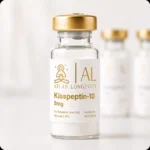 Peptide Vials
 Peptide Pens
 Peptide Nasal Sprays
 Peptide Protocols